Endarachne binghamiae
J. Ag.
iNaturalist · cc-by-nc
(c) plocamium, some rights reserved (CC BY-NC)
(c) plocamium, some rights reserved (CC BY-NC)
iNaturalist · cc-by-nc
(c) mandnmac, some rights reserved (CC BY-NC)
(c) mandnmac, some rights reserved (CC BY-NC)
iNaturalist · cc-by-nc
(c) mandnmac, some rights reserved (CC BY-NC)
(c) mandnmac, some rights reserved (CC BY-NC)
What to Eat
Edible parts: Algae, Frond, Seaweed
The fronds are used as a cooked vegetable.
Where to Find It
It grows on exposed shores. It grows on the lower intertidal zone.
Asia, Australia, China,
Countries: United Arab Emirates, Afghanistan, Armenia, Australia, Azerbaijan, Bangladesh, Bahrain, Brunei, Bhutan, China, Georgia, Indonesia, Israel, India, Iraq, Iran, Jordan, Japan, Kyrgyzstan, Cambodia, North Korea, South Korea, Kuwait, Kazakhstan, Laos, Lebanon, Sri Lanka, Myanmar, Mongolia, Maldives, Malaysia, Nepal, Oman, Philippines, Pakistan, Qatar, Saudi Arabia, Singapore, Syria, Thailand, Tajikistan, Timor-Leste, Turkmenistan, Turkey, Taiwan, Uzbekistan, Vietnam, Yemen
How to Identify
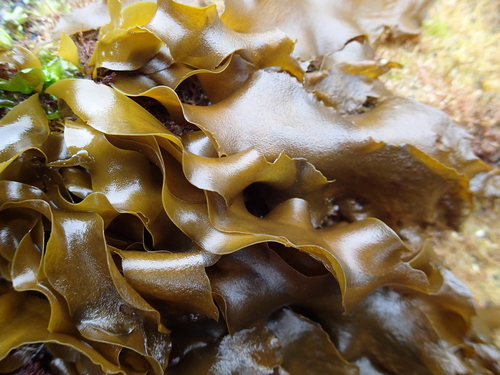
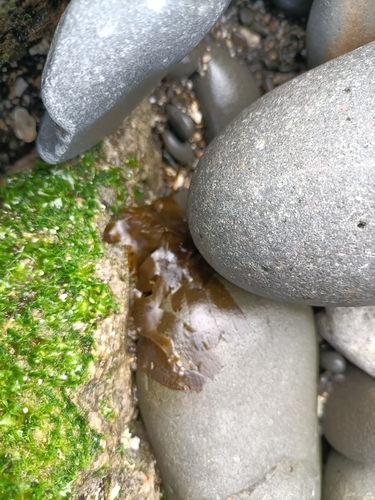
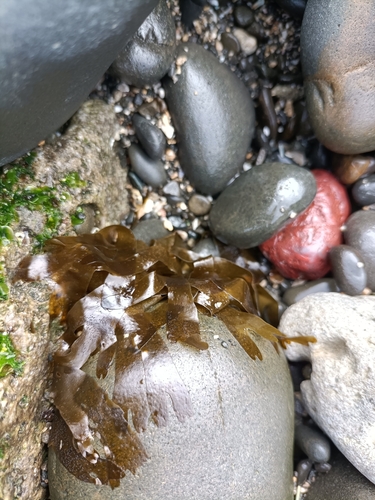
A seaweed. It has several blades which taper along their length. These come from a small disk like centre. It is tough and slippery.
References (4)
- Cribb, A.B., 1996, Seaweeds of Queensland A Naturalist's Guide. The Queensland Naturalists' Club Handbook No. 2. p 47
- Kiple, K.F. & Ornelas, K.C., (eds), 2000, The Cambridge World History of Food. CUP p 235
- Tseng, C.K., 1983, Common seaweeds of China. Beijing.
- Xia, B., and Abbott, I.A., 1987, Edible seaweeds of China and their place in the Chinese diet. Economic Botany 41:341-53


