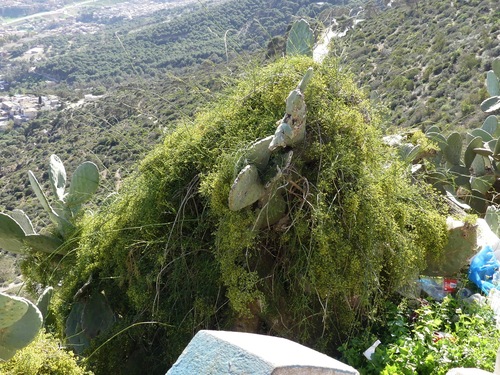
Ephedra breana
Phil.
Pingo-pingo, Tume

iNaturalist · cc-by-nc
(c) avocat, some rights reserved (CC BY-NC), uploaded by avocat
(c) avocat, some rights reserved (CC BY-NC), uploaded by avocat
iNaturalist · cc-by-nc
(c) Juan Mauricio Contreras, some rights reserved (CC BY-NC)
(c) Juan Mauricio Contreras, some rights reserved (CC BY-NC)
iNaturalist · cc-by
(c) GREGORY ANTHONY PAUCA TANCO, some rights reserved (CC BY)
(c) GREGORY ANTHONY PAUCA TANCO, some rights reserved (CC BY)
What to Eat
Edible parts: Fruit
The fruit is eaten.
Known Hazards
Where to Find It
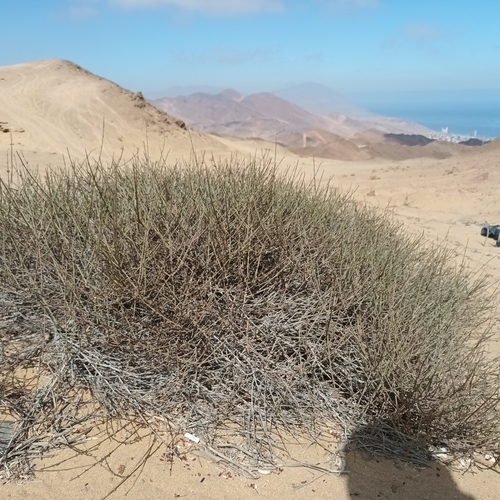
It is a temperate plant. In Chile it can grow from 500 m altitude to 3,500 m above sea level. It grows in dry areas with a winter rainfall of 100-300 mm. It can grow in areas with very low rainfall. It grows in full sun. It suits a hardiness zone of 8. It can tolerate some snow.
Andes, Argentina, Chile, South America,
How to Identify
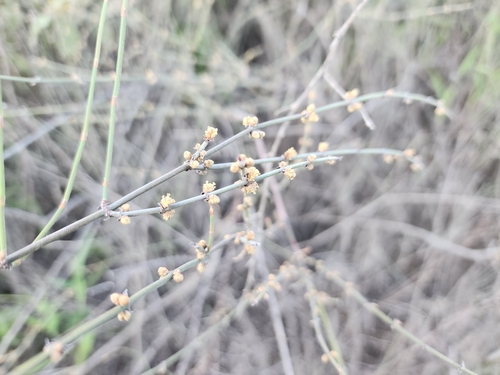
A shrub. It grows 2 m high. The stems are 1-2 mm across and internodes 2-5 cm long. The leaves are in rings of 2-3.
Wikipedia
Source ↗Ephedra breana (frutilla de campo, pingo-pingo) is a species of Ephedra growing from northwest Argentina through to Chile and Bolivia.
Notes
There are about 40 Ephedra species.
Names & Synonyms
Granada, Sanguinaria
References (5)
- Aldunate, C. et al, 1983, Ethnobotany of pre-Altiplanic Community in the Andes of Northern Chile. Economic Botany 37( ) p 120-134
- Rapoport, E., H., et al, 2003, Plantas Nativas Comestibles de la Patagonia Andina Argentino/Chilena Parte 1, Department de Ecologi Centro Regional Universitario Briloche p 28
- Ugalde, P. C., et al, 2020, 13,000 years of sociocultural plant use in the Atacama Desert of northern Chile. Vegetation History and Archaeobotany. Springer
- Villagran, C., et al, 1999, La Tradicion Altiplanica: Estudio Etnobotanico en Los Andes de Iquique, Primera Region, Chile. Chungara, volumen 31 No. 1 pp 81-186
- www.chileflora.com