Eragrostis lanipes
C.E. Hubb.
Love Grass, Creeping Wanderrie
PoaceaeSeeds/Nuts
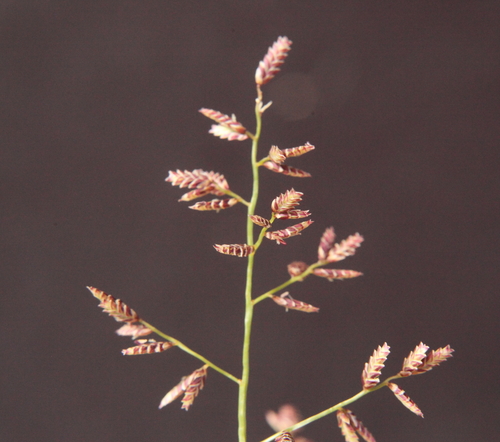
iNaturalist · cc-by-nc
(c) geoffbyrne, some rights reserved (CC BY-NC)
(c) geoffbyrne, some rights reserved (CC BY-NC)
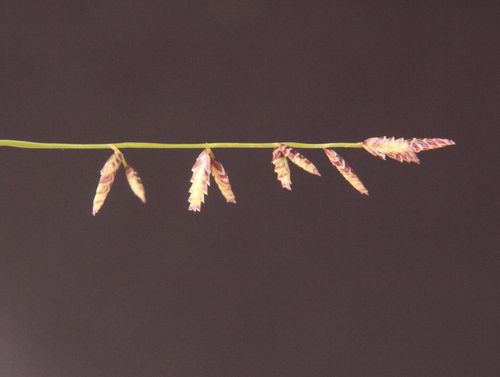
iNaturalist · cc-by-nc
(c) geoffbyrne, some rights reserved (CC BY-NC)
(c) geoffbyrne, some rights reserved (CC BY-NC)
What to Eat
Edible parts: Seeds, Cereal
The seeds are harvested and used as a cereal grain.
Where to Find It
It suits temperate places. It needs an open sunny position.
Australia*,
Countries: Australia
How to Identify
A grass which keeps growing from year to year. It grows 20-50 cm tall. It forms spreading clumps. The bases of the clumps form bulbs. They are woolly. The leaves are 4-10 cm long by 0.2-0.3 cm wide. They can be flat or rolled inwards. The stem is 20-50 cm long and slender and smooth. The branched flower head is 10-20 cm long by 3-8 cm wide. It is open and loose. The spikelets are 0.5 cm long and green or purple.
How to Grow
Plants can be grown from seed or division of the rhizomes.
Notes
There are about 300 Eragrostis species.
References (6)
- Cancilla, D., 2018, Ethnobotanical and Ethnozoological Values Desktop Assessment - Eliwana Project. p 43
- Cherikoff V. & Isaacs, J., The Bush Food Handbook. How to gather, grow, process and cook Australian Wild Foods. Ti Tree Press, Australia p 189
- Elliot, W.R., & Jones, D.L., 1984, Encyclopedia of Australian Plants suitable for cultivation. Vol 3. Lothian. p 423
- Famine foods (As Eragrostis clendandii)
- Irvine, (As Eragrostis clendandii)
- Paczkowska, G. & Chapman, A.R., 2000, The Western Australian Flora. A Descriptive Catalogue. Western Australian Herbarium. p 105


