Eragrostis tef
(Zuccagni) Trotter
Teff

(c) Rasbak, some rights reserved (CC BY-SA)
(c) Ryan E. Gray, some rights reserved (CC BY-NC)
(c) Ryan E. Gray, some rights reserved (CC BY-NC)
What to Eat
Edible parts: Seeds, Cereal
The seed is cooked and used as a cereal for making bread and fermented foods. In Ethiopia, where it is a staple, it is used to make 'enjera' — a fermented, pancake-like bread that is spongy, soft, thin, and sour in taste. The seed is very small but easy to harvest. Protein content is approximately 13%.
Where to Find It
A tropical plant. A drought resistant grass. It grows in places with a distinct dry season. It grows best at about 2000 m altitude in Ethiopia. The temperatures are about 25-28°C. It is grown from 1700 m to 2800 m. Brown teff is grown at the higher locations. The rainfall in this region is about 950-1000 mm. It can be grown with rainfall of 400 mm. Soils should be permeable. It can tolerate frost. It can grow in arid places. In Argentina it grows between 1,200-1,300 m above sea level.
Africa, Argentina, Asia, Australia, Botswana, Brazil, Britain, Canada, Central Africa, Congo, East Africa, Egypt, Eritrea, Ethiopia, Europe, Fiji, France, Germany, Ghana, Guyana, India, Indochina, Japan, Kenya, Lesotho, Madagascar, Malawi, Middle East, Mozambique, Myanmar, Namibia, New Caledonia, North Africa, North America, Pacific, Saudi Arabia, SE Asia, Somalia, South Africa, Southern Africa, South America, Sudan, Tanzania, Thailand, Uganda, USA, West Africa, Yemen, Zambia, Zimbabwe,
How to Identify
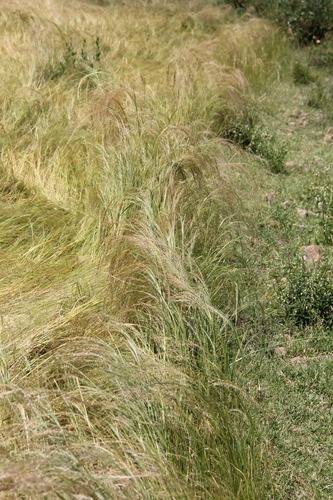
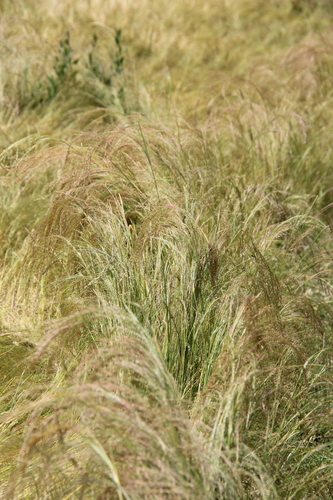
A millet grass. It is an annual tufted grass. It grows 60-120 cm tall. It has a slender stem and long narrow smooth leaves. The flowers occur in loose open panicles. These are 15-35 cm long. The branches are very thin and droop over. The seeds are very small. They are 1-1.5 mm long. There are about 2500-3000 seeds per gram. A brown seeded and a white seeded kind are recognised.
Nutrition Score: 65/100
| Part | Moisture | kJ | kcal | Protein | Vit A | Vit C | Iron | Zinc |
|---|---|---|---|---|---|---|---|---|
| Seeds | 9.3 | 1541 | 368 | 8.9 | — | — | 9.9 | 20 |
How to Grow
Teff is best grown in fallowed land or after legume crops. Land preparation needs to be very thorough. A fine firm weed free seed bed is needed. Seed are mostly broadcast. Driving sheep or cattle over the land is used to trample in the seed. 25-30 kg of seed per hectare are recommended. Nitrogen fertiliser is recommended. It is usually harvested with sickles.
Propagation: Sow seed in early spring in a greenhouse, barely covering it. Germination is usually quick and reliable. Prick seedlings out into individual pots as soon as they are large enough to handle and plant out after the last expected frost. Seed can also be sown in situ in late April, though cool summers may not provide a long enough growing season for the crop to ripen.
Medicinal Uses
None known
Other Uses
None known
Wikipedia
Source ↗An annual grass growing to 1 m (3 ft 3 in) tall. Hermaphroditic with wind pollination. Flowers August to September, with seeds ripening September to October. Tolerates light sandy, medium loamy, and heavy clay soils with good drainage. Adapts to mildly acidic through mildly alkaline pH. Requires full sun and tolerates both dry and moist soil. Hardy to UK zone 9.
Production
It is fast growing. Plants take between 90-120 days for early varieties and 120-160 days for late maturing varieties. Yields range between 300 and 3000 kg per hectare. Seeds can be stored for many years as a reserve food supply.
Other Information
A staple food in some parts of Ethiopia. It is mostly eaten by the wealthier people. It is a cultivated food plant. It is grown on 2.5 million ha.
Notes
The seeds have high food value. There are about 300 Eragrostis species. It is gluten free. It is a C4 plant. It contains no gluten.
Names & Synonyms
Bousa, Ersho, Ethiopian lovegrass, Injara, Injera
References (31)
- Ambasta, S.P. (Ed.), 2000, The Useful Plants of India. CSIR India. p 198
- Boll. Soc. Bot. Ital. 1918:62. 1918
- Facciola, S., 1998, Cornucopia 2: a Source Book of Edible Plants. Kampong Publications, p 175
- FAO, 1988, Traditional Food Plants, FAO Food and Nutrition Paper 42. FAO Rome p 264
- Hedrick, U.P., 1919, (Ed.), Sturtevant's edible plants of the world. p 508 (As Poa abyssinica)
- Heywood, V.H., Brummitt, R.K., Culham, A., and Seberg, O., 2007, Flowering Plant Families of the World. Royal Botanical Gardens, Kew. p 394
- Jardin, C., 1970, List of Foods Used In Africa, FAO Nutrition Information Document Series No 2.p 3
- Kiple, K.F. & Ornelas, K.C., (eds), 2000, The Cambridge World History of Food. CUP p 116, 1868
- Lazarides, M. & Hince, B., 1993, Handbook of Economic Plants of Australia, CSIRO. p 92
- Maundu, P. et al, 1999, Traditional Food Plants of Kenya. National Museum of Kenya. 288p
- Molla, A., Ethiopian Plant Names. http://www.ethiopic.com/aplants.htm (As Eragrostis abyssinica)
- Mutie, F. M., et al, 2023, Important Medicinal and Food Taxa (Orders and Families) in Kenya, Based on Three Quantitative Approaches. Plants 2023, 12, 1145
- Nyadanu, D., et al, 2015, Agro-biodiversity and challenges of on-farm conservation: the case of plant genetic resources of neglected and underutilized crop species in Ghana. Genet. Resourc. Crop Evol. 62(7):
- Peters, C. R., O'Brien, E. M., and Drummond, R.B., 1992, Edible Wild plants of Sub-saharan Africa. Kew. p 22
- Plants for a Future database, The Field, Penpol, Lostwithiel, Cornwall, PL22 0NG, UK. http://www.scs.leeds.ac.uk/pfaf/
- PROSEA (Plant Resources of South East Asia) handbook Volume 10 Cereals. p 150
- Purseglove, J.W., 1972, Tropical Crops. Monocotyledons. Longmans p 157
- Royal Botanic Gardens, Kew (1999). Survey of Economic Plants for Arid and Semi-Arid Lands (SEPASAL) database. Published on the Internet; http://www.rbgkew.org.uk/ceb/sepasal/internet [Accessed 3rd June 2011]
- Reis, S. V. and Lipp, F. L., 1982, New Plant Sources for Drugs and Foods from the New York Botanical Garden herbarium. Harvard. p 11
- Ruiters-Welcome, A. K., 2019, Food plants of southern Africa. Ph.D. thesis. Univ. of Johannesburg p 87
- Seyfu Ketema. 1997. Tef. Eragrostis tef (Zucc.) Trotter. Promoting the conservation and use of underutilized and neglected crops. 12. Institute of Plant Genetics and Crop Plant Research, Gatersleben/International Plant Genetic Resources Institute, Rome, Italy
- Smith, P.M., 1979, Tef, in Simmonds, N.W., (ed), Crop Plant Evolution. Longmans. London. p 308
- Tefera, H. & Belay, G., 2006. Eragrostis tef (Zuccagni) Trotter. [Internet] Record from Protabase. Brink, M. & Belay, G. (Editors). PROTA (Plant Resources of Tropical Africa), Wageningen, Netherlands. < http://database.prota.org/search.htm>. Accessed 16 October 2009.
- Ulian, T., et al, 2020, Unlocking plant resources to support food security and promote sustainable agriculture. Plants, People, Planet. 2020;2:421–445.
- USDA, ARS, National Genetic Resources Program. Germplasm Resources Information Network - (GRIN). [Online Database] National Germplasm Resources Laboratory, Beltsville, Maryland. Available: www.ars-grin.gov/cgi-bin/npgs/html/econ.pl (10 April 2000)
- van Wyk, B., 2005, Food Plants of the World. An illustrated guide. Timber press. p 189
- Vaughan, J. C. & Geissler, C. A., 2009, The new Oxford Book of Food Plants. Oxford University Press. p 4
- Vickery, M.L. and Vickery, B., 1979, Plant Products of Tropical Africa, Macmillan. p 13
- Welcome, A. K. & Van Wyk, B.-E., 2019, An inventory and analysis of the food plants of southern Africa. South African Journal of Botany 122 (2019) 136–179
- Wiersema, J. H. & Leon, B., 2013, World Economic Plants. A Standard Reference CRC Press. 2nd Ed. p 277
- World Checklist of Useful Plant Species 2020. Royal Botanic Gardens, Kew


