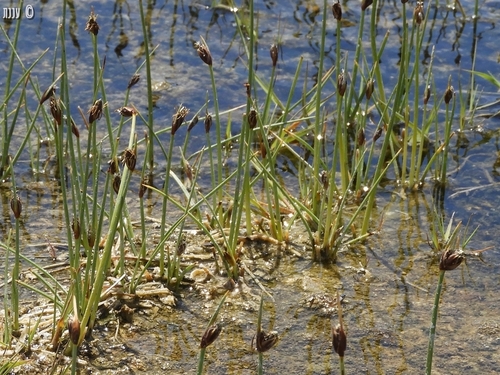
Cyperus odoratus
L.
Fragrant or rusty flatsedge

(c) Zihao Wang, some rights reserved (CC BY), uploaded by Zihao Wang

(c) Dan Johnson, some rights reserved (CC BY-NC), uploaded by Dan Johnson

(c) Franz Xaver, some rights reserved (CC BY-SA)
What to Eat
Both seeds and roots are edible. Edible Uses & Rating: Moderate to good depending on availability. Taste, Processing & Kitchen Notes: Roots are starchy with earthy notes; seeds resemble small grains. Roasting enhances palatability. Seasonality (Phenology): Seeds mature in warm months; roots are harvestable most of the year. Safety & Cautions (Food Use): Cook to reduce microbial risk. Harvest & Processing Workflow: Collect seeds once dry; dig roots during dormancy. Cultivar/Selection Notes: No improved selections. Look-Alikes & Confusion Risks: Similar to other flatsedges; scent may aid recognition. Traditional/Indigenous Use Summary: Likely gathered where abundant, though documentation is limited.
Known Hazards
Where to Find It
Widely distributed in wetlands across the Americas. The native range of this species is New World, Tropical & Subtropical Old World to Caucasus.
US. USA. Alabama, Andaman Is., Angola, Argentina Northeast, Argentina Northwest, Arizona, Arkansas, Aruba, Bahamas, Bangladesh, Belize, Benin, Bermuda, Bolivia, Borneo, Brazil North, Brazil Northeast, Brazil South, Brazil Southeast, Brazil West-Central, California, Caroline Is., Cayman Is., Central American Pacific Is., Chile Central, China Southeast, Christmas I., Cocos (Keeling) Is., Colombia, Congo, Connecticut, Cook Is., Costa Rica, Cuba, Delaware, District of Columbia, Dominican Republic, DR Congo, Ecuador, El Salvador, Equatorial Guinea, Fiji, Florida, French Guiana, Gabon, Galápagos, Georgia, Ghana, Gilbert Is., Guatemala, Guinea, Gulf of Guinea Is., Guyana, Haiti, Honduras, Illinois, India, Indiana, Iowa, Iran, Iraq, Ivory Coast, Jamaica, Japan, Jawa, Kansas, Kazan-retto, Kentucky, Korea, Leeward Is., Lesser Sunda Is., Louisiana, Madagascar, Maine, Malaya, Maluku, Marianas, Marquesas, Marshall Is., Maryland, Massachusetts, Mauritania, Mexico Central, Mexico Gulf, Mexico Northeast, Mexico Northwest, Mexico Southeast, Mexico Southwest, Michigan, Minnesota, Mississippi, Missouri, Myanmar, Nansei-shoto, Nebraska, Netherlands Antilles, New Guinea, New Jersey, New Mexico, New South Wales, New York, Nicaragua, Nicobar Is., Nigeria, North Carolina, North Caucasus, North Dakota, Ogasawara-shoto, Ohio, Oklahoma, Ontario, Oregon, Panamá, Paraguay, Pennsylvania, Peru, Philippines, Puerto Rico, Queensland, Québec, Rhode I., Samoa, Senegal, South Carolina, South Dakota, Sulawesi, Sumatera, Suriname, Taiwan, Tennessee, Texas, Thailand, Tokelau-Manihiki, Transcaucasus, Trinidad-Tobago, Tuamotu, Tubuai Is., Uruguay, Vanuatu, Venezuela, Venezuelan Antilles, Vermont, Vietnam, Virginia, Wallis-Futuna Is., Washington, West Virginia, Windward Is., Wisconsin
How to Identify
Cyperus odoratus is a ANNUAL/PERENNIAL growing to 0.8 m (2ft 7in) by 0.2 m (0ft 8in) at a fast rate. See above for USDA hardiness. It is hardy to UK zone 7. The flowers are pollinated by Wind. It is noted for attracting wildlife. Suitable for: light (sandy), medium (loamy) and heavy (clay) soils. Suitable pH: mildly acid, neutral and basic (mildly alkaline) soils. It cannot grow in the shade. It prefers moist or wet soil.
How to Grow
A versatile wetland sedge offering multiple edible parts. Growing Conditions: Prefers saturated soils and warm climates. Habitat & Range: Widely distributed in wetlands across the Americas. Size & Landscape Performance: Tall and architectural in marsh gardens. Cultivation (Horticulture): Occasionally used in habitat restoration. Pests & Problems: Few issues beyond drought stress. Identification & Habit: Flattened spikelets arranged in rows; aromatic tissues when crushed. Pollinators: Wind-pollinated. Plant Name: Fragrant Flatsedge. Family: Cyperaceae. Genus: Cyperus. Common Names: Rusty flatsedge. USDA Hardiness Zones: Approximately 6–10. Height/Spread: 30–100 cm tall.
Propagation: Seeds and rhizomes.
Medicinal Uses
Cyperus odoratus (commonly known as fragrant flatsedge or rust flatsedge) has several documented medicinal uses in traditional, folk, and preliminary pharmacological studies. It is used in traditional medicine for its sedative and diuretic properties and for the treatment of various infections. Medicinal Uses and Pharmacological Activities: Antibacterial & Antifungal: Studies indicate that C. odoratus has potential as a natural antimicrobial agent. Analgesic & Antioxidant: Research shows the plant possesses significant pain-relieving (analgesic) and antioxidant properties. Anthelmintic: It has been shown to have anthelmintic activity and is used to treat intestinal parasitic infections. Cytotoxic Activity: Extracts have demonstrated efficacy in studies against cancer cell lines (e.g., human hepatocellular carcinoma) and have the potential to inhibit cell proliferation. Traditional Uses: Wound Care & Inflammation: It is used in folk medicine, particularly in Bangladesh, to treat wounds, tumors, and piles. Urinary/Uterine Health: In some regions, infusions of the roots are used for urinary infections and uterine fibroids. Digestive & Other: It is used to relieve stomach aches, and in some contexts, as an aphrodisiac. Scientific Studies: Although these traditional uses are commonly used, scientific evidence to fully validate them in clinical trials remains limited, with many studies being in vitro or animal-based. It has been suggested as a "herbal switch plant" due to its rich chemical composition of secondary metabolites, such as sesquiterpenes. Note: It is often confused with its close relative, Cyperus rotundus (Nutgrass), which is more commonly used in Ayurvedic medicine for similar, but more extensively researched, conditions.
Other Uses
Occasionally used in habitat restoration. Provides habitat for aquatic insects and birds.
Names & Synonyms
Fragrant Flatsedge. Flatsedge.
More from Cyperaceae