Melia azederach
L.
Bead Tree, Pride of India, Chinaberry
What to Eat
Edible parts: Fruit, Leaves, Oil
Oil. Leaves - cooked. A bitter flavour, they are used as a pot-herb, in curries, soups etc. Fruit. A sweetish flavour, it is eaten by children though some people believe it to be poisonous. The fruit is between 1 and 5cm in diameter and contains a single seed. Both these reports, of edible leaves and fruits, should be treated with some caution. The fruit is poisonous according to one report where it says that the ripe fruit is more poisonous than the green fruit and that they have sometimes caused human fatalities. A cooling drink is made from the sap - it is actually a gum. This gum is tasteless, clear to dark amber and of good solubility. The sap is obtained from incisions that are made near the base of the trunk in the spring.
Known Hazards
Where to Find It
E. Asia - N. India to China. Naturalized in the Mediterranean.
Coming Soon
How to Identify
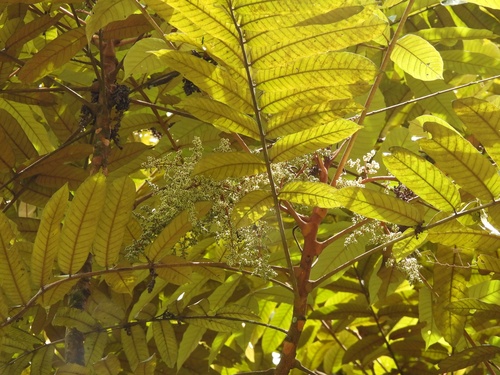
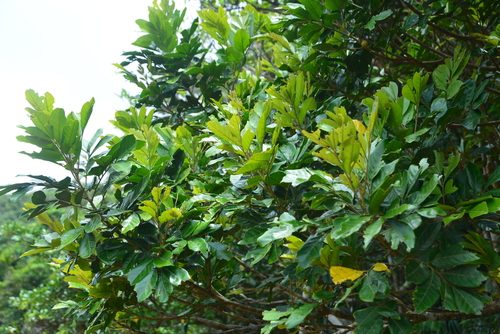
Melia azederach is a deciduous Tree growing to 9 m (29ft) by 9 m (29ft) at a fast rate. See above for USDA hardiness. It is hardy to UK zone 9. It is in flower in June, and the seeds ripen from October to November. The species is hermaphrodite (has both male and female organs). Suitable for: light (sandy), medium (loamy) and heavy (clay) soils and prefers well-drained soil. Suitable pH: mildly acid, neutral and basic (mildly alkaline) soils. It cannot grow in the shade. It prefers dry or moist soil and can tolerate drought.
How to Grow
Requires a sunny sheltered position. Succeeds in most well-drained soils and in hot dry conditions. Likes sandy soils. Grows well in mild coastal areas. A very ornamental tree, it is not very cold tolerant being killed by temperatures lower than about -5°c. It only succeeds outdoors in the mildest areas of Britain, seldom growing larger than a shrub. It is hardy on a sunny wall in S.W. England. It is often cultivated in warmer regions than Britain for its many useful qualities. The flowers are produced on the current years wood and have a delicate sweet perfume. The trees do not normally require pruning. The seeds have a strong scent of musk and the wood is also musk-scented. Trees are very susceptible to forest fire, though they sprout back readily from the roots. They are planted for re-afforestation in their native areas, where they are fast growing though short-lived. Plants in this genus are notably resistant to honey fungus.
Propagation: Seed - sow late winter in a greenhouse. The seed is best sown as soon as it is ripe in the autumn. The seed usually germinates well. When they are large enough to handle, prick the seedlings out into individual pots and grow them on in the greenhouse for at least their first winter. Plant them out into their permanent positions in late spring or early summer, after the last expected frosts. Root cuttings.
Medicinal Uses
Anthelmintic Antiasthmatic Antirheumatic Antiseptic Aphrodisiac Astringent Bitter Diuretic Emetic Emmenagogue Febrifuge Laxative Lithontripic Parasiticide Poultice Purgative Skin Stomachic Tonic Vermifuge. Used externally in the treatment of rheumatism. An aqueous extract reduces the intensity of asthmatic attacks. (This report does not specify the part of the plant that is used.) The leaf juice is anthelmintic, antilithic, diuretic and emmenagogue. A decoction is astringent and stomachic. The leaves are harvested during the growing season and can be used fresh or dried. The flowers and leaves are applied as a poultice in the treatment of neuralgia and nervous headache. The stem bark is anthelmintic, astringent and bitter tonic. It is used as a tonic in India. It can be harvested at any time of the year and is used fresh or dried. The fruit is antiseptic and febrifuge. The pulp is used as a vermifuge. The fruit is harvested in the autumn when it is fully ripe and can be used fresh or dried. The seed is antirheumatic. It is used externally. The root bark is emetic, emmenagogue, purgative and vermifuge. It is highly effective against ringworm and other parasitic skin diseases. It can be harvested at any time of the year and is used fresh or dried. A gum that exudes from the tree is considered by some to have aphrodisiac properties. This plant should be used with caution, preferably under the supervision of a qualified practitioner. Excess causes diarrhoea, vomiting and symptoms of narcotic poisoning.
Other Uses
Beads Biomass Containers Fuel Furniture Gum Insecticide Lighting Oil Parasiticide Repellent Varnish Wood. The seed contains up to 40% of a drying oil. It is used for lighting, varnish etc. The musk-scented seeds are used as beads in rosaries. The fruits are a source of a flea powder and an insecticide. The whole fruit is ground up and used. The fruit pulp is also used as an insect repellent. The leaves repel mosquitoes and other insects. Wood - tough, durable, moderately heavy, somewhat brittle, handsomely marked, takes an excellent polish. It has a musk-like aroma. It is used for making furniture, packing cases etc. Because it is fast-growing, it is often used as a fuel.
Names & Synonyms
Bead Tree, Chinaberry, Abori esing, Arebevu, Bakain, Bakaina, Bakam limbodo, Bitter lian, Chinaberry, Deikna, Dieng-jah-rasang, Drek, False sycamore, Ghoraneem, Ghoranim, Gringging, Hutchu bevu, Indian lilac, Karinvembu, Ku lian pi, Lian, Lien, Mahanim, Mahanimba, Malai vembu, Mindi kecil, Mindi, Neemtita, Padrai, Paraiso, Pejri, Persian lilac, Pride of India, Sima veppu, Thamaga, Turaka vepa, White cedar, cape lilac, ceylon cedar, china tree, chuan lian zi, cortex meliae, ku lian pi, lian, lunumidella, marimara, sichuan pagoda tree, szechwan chinaberry, texas umbrella, white cedar