Simarouba glauca
DC.
Paradise Tree, Bitterwood, Dysentery-bark

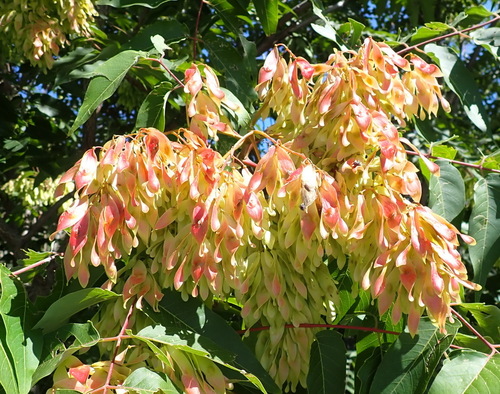
(c) isabella_plummer, some rights reserved (CC BY-NC)

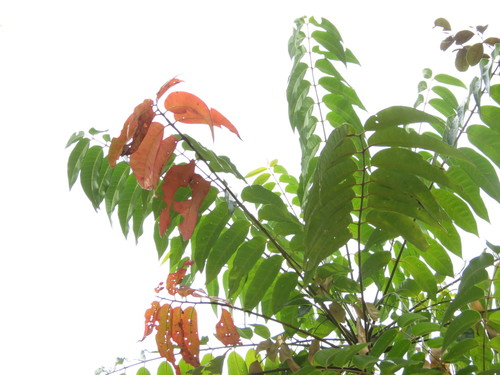
(c) Vishwathiga Jayasankar, some rights reserved (CC BY-NC), uploaded by Vishwathiga Jayasankar

(c) Martin Reith, some rights reserved (CC BY-NC), uploaded by Martin Reith
What to Eat
Edible parts: Fruit, Oil, Seed
Oil. Fruit - raw. The thick, white juicy flesh is slightly astringent, sweetish, and insipid. The fruit closely resembles an olive, hence the local name 'aceituno' The fruit is eaten commonly, but is of inferior quality and not highly esteemed. The oval fruits are mostly 15 - 20mm long. The seeds contain 60 - 75% edible oil that can be extracted by conventional methods. Each well-grown tree yields 15 to 30 Kg nutlets equivalent to 2.5-5 kg oil and about the same quantity of oilcake. This amounts to 1000-2000 kg oil/ha/year and about the same quantity of oilcake. The oil is largely used in the preparation of bakery products in Central America. In India too it can be used in the manufacture of vanaspati, vegetable oil and/or margarine. The oil is free from bad cholesterol.
Where to Find It
Central America - Panama to Mexico. Caribbean - Cuba to southern Florida.
NORTHERN AMERICA: United States (Florida), Mexico (south) SOUTHERN AMERICA: Bahamas, Cuba, Dominican Republic, Haiti, Jamaica, United States (Puerto Rico), Belize, Costa Rica, Guatemala, Honduras, Nicaragua, El Salvador
How to Identify
Simarouba glauca is an evergreen Tree growing to 15 m (49ft) by 15 m (49ft) at a fast rate. See above for USDA hardiness. It is hardy to UK zone 10. The flowers are pollinated by Bees. The plant is not self-fertile. Suitable for: light (sandy), medium (loamy) and heavy (clay) soils. Suitable pH: mildly acid, neutral and basic (mildly alkaline) soils and can grow in very alkaline soils. It can grow in semi-shade (light woodland) or no shade. It prefers moist or wet soil.
How to Grow
A plant of the moist, lowland tropics, where it is found at elevations up to 800 metres. It grows best in areas where the mean annual temperature ranges between 22 - 29°c, but can tolerate a range of 18 - 34°c. It prefers a mean annual rainfall in the range 2,000 - 3,000mm, but tolerates 1,200 - 4,000mm, growing in areas with a distinct dry season and where there is no dry season. Shade tolerant. Prefers sandy soils in the wild. In the wild, it is found on rocky, shallow calcareous soils of mountain slopes and ridges, as well as on the deeper soils of the ravines and alluvial plains. The plant develops a shallow root system, often suitable to mountain soils. Prefers a pH in the range 6 - 8, tolerating 5.5 - 8.5. Flowering Time: Mid Spring Late Spring/Early Summer. Bloom Color: Pale Yellow Inconspicuous/none.
Propagation: Seed - best sown as soon as it is ripe, it has a viability of only a few months.
Medicinal Uses
Antidiarrhoeal Antihaemorrhoidal Astringent Cancer Digestive Dysentery Emmenagogue Febrifuge Malaria Parasiticide Tonic. The leaves and bark have a long history of medicinal use in the tropics, particularly in the treatment of malaria, fevers and dysentery; as an astringent to stop bleeding; and as a tonic. They are also used as a digestive, emmenagogue and to treat parasites both within and on the body. Research has discovered a range of medically active compounds in the plant. The main active compounds are a group of triterpenes called quassinoids. The antiprotozoal and antimalarial properties of these chemicals have been documented for many years. Several of the quassinoids found in simarouba, such as ailanthinone, glaucarubinone, and holacanthone, are considered the plant's main therapeutic constituents and are the ones documented to be antiprotozoal, anti-amoebic, antimalarial, and even toxic to cancer and leukaemia cells. Studies have shown that the plant is over 90% effective against amoebic dysentery The bark, and/or its three main quassinoids, have been shown to be an effective treatment against malaria, including strains that have become resistant to drug treatment. Research has also shown that the bark has good antiviral properties, effective against herpes, influenza, polio, and vaccinia viruses. The quassinoids responsible for the anti-amoebic and antimalarial properties have also been shown to possess active cancer-killing properties. The bark is used as a bitter tonic. It is known as 'Jamaica Bark' or 'Orinoco Simaruba Oil'. A decoction is taken internally in the treatment of diarrhoea, dysentery, malaria, fevers, haemorrhages, intestinal parasites and colitis.
Other Uses
Charcoal Compost Containers Cosmetic Fuel Furniture Mulch Oil Parasiticide Plant breeding Soap making Soil conditioner Soil stabilization Varnish Wood. Agroforestry Uses: The tree has a well-developed root system and an evergreen, dense canopy - it efficiently checks soil erosion, supports soil microbial life, and improves groundwater availability. It is shade tolerant and occurs as an under-storey tree, particularly under the canopy of large fruit trees where birds perch and deposit the seeds. It is found as an associated species of the subtropical moist forest, sharing a position with other common trees of the home and humid perennial gardens, such as mango (Mangifera indica), royal palm (Roystonea borinquena), avocado (Persea americana) and plantain (Musa x paridisiaca). The oilcake being rich in nitrogen (8%), phosphorus (1.1%) and potash (1.2%), is good organic manure. The pulp and leaf litter can be economically used in the manufacture of vermicompost (about 8 tons/ha/year). Other Uses An oil obtained from the seed can be used for industrial purposes in the manufacture of bio-fuels, soaps, detergents, lubricants, varnishes, cosmetics, pharmaceuticals etc. The seed shells can be used in the manufacture of particleboard, activated charcoal or as fuel. Freshly cut, the heartwood is whitish or cream coloured with occasionally a yellow or greenish cast - when dry it becomes a uniform cream colour with occasional oily streaks; it is not differentiated from the sapwood. The lustre is rather high; the texture medium and uniform; the grain usually straight; without odour but with a bitter quinine-like taste. The wood is moderately light in weight; not very strong; somewhat brittle; not durable outdoors and is very susceptible to dry-wood termite attack and prone to blue stain. It works easily and machines to a smooth clean surface; it is easy to finish and to glue. The wood is used for interior construction, boxes and crates, furniture components, veneer and plywood, pattern making, millwork, particleboard and fibreboard. The wood is used for fuel, especially because it burns readily when still green and freshly cut.
Names & Synonyms
aceituno, bitterwood, dysentery-bark, paradise tree, paradise-tree, pasaque.