Erodium hirtum
(Forsk.) Willd.
Tumayr

(c) joaobrito, some rights reserved (CC BY-NC)
(c) Steve Daniels, some rights reserved (CC BY-NC)
(c) Steve Daniels, some rights reserved (CC BY-NC)
What to Eat
Edible parts: Root
The root is edible, though no further details are available.
Where to Find It
It is a Mediterranean plant. It can grow in arid places.
Africa, Algeria, Egypt, Europe, Greece, Iraq, Israel, Jordan, Lebanon, Libya, Mediterranean, Middle East, Morocco, North Africa, Sahara, Saudi Arabia, Sinai, Syria, Tunisia, Turkey, Türkiye, Yemen,
How to Identify
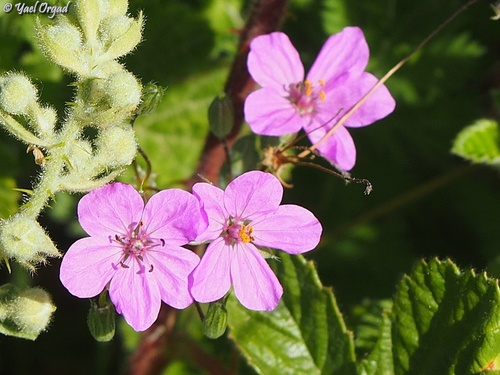
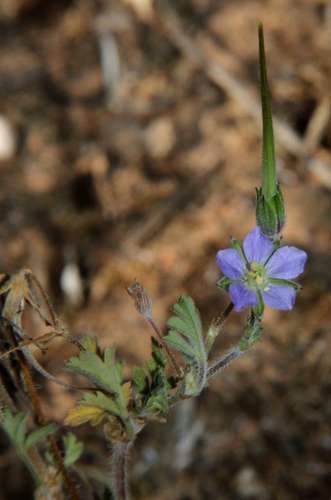
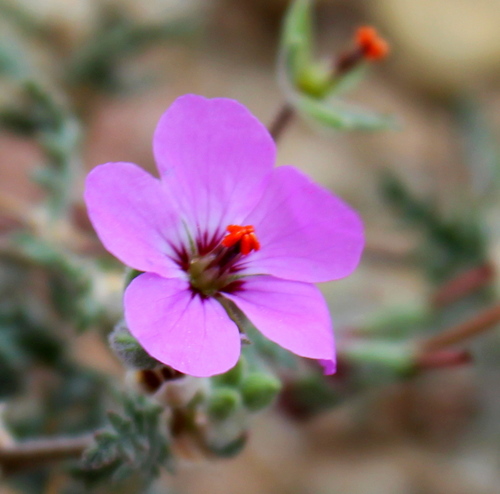
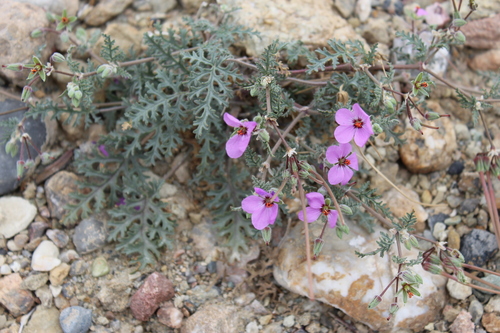
A low-growing perennial reaching 30 cm in height with hermaphroditic flowers. Adapts to light sandy, medium loamy, and heavy clay soils preferring good drainage. Thrives in neutral to alkaline soils in full sun. Tolerates both dry and moist soil conditions.
How to Grow
Propagation: Sow seed in situ as soon as it is ripe in late summer, or alternatively in late spring; it usually germinates readily. Division can be done in spring. Larger clumps can be replanted directly into their permanent positions, though smaller clumps are best potted up and grown on in a cold frame until rooting well before planting out in spring.
Medicinal Uses
None known
Other Uses
A green dye can be obtained from the whole plant and requires no mordant.
Wikipedia
A low-growing perennial reaching 30 cm in height with hermaphroditic flowers. Adapts to light sandy, medium loamy, and heavy clay soils preferring good drainage. Thrives in neutral to alkaline soils in full sun. Tolerates both dry and moist soil conditions.
Notes
There are about 200 Erodium species.
References (5)
- Bailey, C. and Danin, A., 1981, Bedouin Plant Utilization in Sinai and the Negev. Economic Botany 35(2): 145-162
- Davis, S.D., Heywood, V.H., & Hamilton, A.C. (eds), 1994, Centres of plant Diversity. WWF. Vol 2. p 340
- Jardin, C., 1970, List of Foods Used In Africa, FAO Nutrition Information Document Series No 2.p 76
- Plants for a Future database, The Field, Penpol, Lostwithiel, Cornwall, PL22 0NG, UK. http://www.scs.leeds.ac.uk/pfaf/
- Royal Botanic Gardens, Kew (1999). Survey of Economic Plants for Arid and Semi-Arid Lands (SEPASAL) database. Published on the Internet; http://www.rbgkew.org.uk/ceb/sepasal/internet [Accessed 16th April 2011]