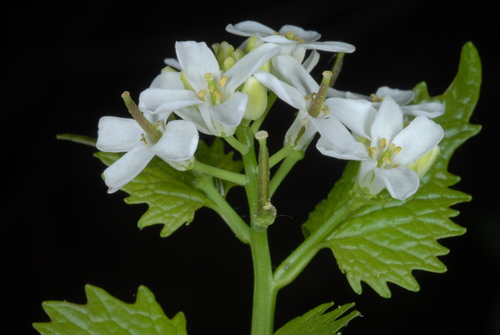
Lepidium fremontii
S.Watson.
Desert Pepperweed

(c) Jim Morefield, some rights reserved (CC BY)

(c) Steve Ganley, some rights reserved (CC BY-NC), uploaded by Steve Ganley

(c) Bryant, some rights reserved (CC BY-NC)
What to Eat
Edible parts: Leaves, Seed
Drink. Young leaves - raw or cooked. A hot cress-like flavour. Seed - dried and ground into a powder which can be used as a mush or mixed with cereal flours to make bread. The seed can also be used as a flavouring. The seeds can be pounded, mixed with water and used as a beverage.
Where to Find It
South-western N. America.
NORTHERN AMERICA: United States (Arizona (northwest), California (southeast), Nevada, Utah (Washington Co.))
How to Identify
Lepidium fremontii is a PERENNIAL growing to 0.5 m (1ft 8in). The species is hermaphrodite (has both male and female organs) and is pollinated by Insects. Suitable for: light (sandy), medium (loamy) and heavy (clay) soils. Suitable pH: mildly acid, neutral and basic (mildly alkaline) soils. It can grow in semi-shade (light woodland) or no shade. It prefers dry or moist soil.
How to Grow
We have almost no information on this species and do not know if it will be hardy in Britain, though judging by its native range it should succeed outdoors at least in the milder parts of the country. The following notes are based on the general needs of the genus. Succeeds in most soils.
Propagation: Seed - sow spring in a cold frame. When they are large enough to handle, prick the seedlings out into individual pots and plant them out in the summer. Division in spring.