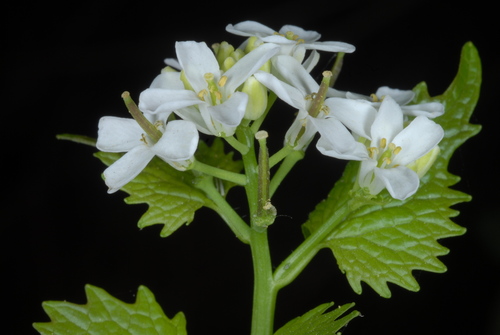
Lepidium graminifolium
L.
Grassleaf pepperweed

no rights reserved, uploaded by Quentin Groom

(c) Богданович Светлана, some rights reserved (CC BY-NC), uploaded by Богданович Светлана

(c) Богданович Светлана, some rights reserved (CC BY-NC), uploaded by Богданович Светлана
What to Eat
Edible parts: Leaves
Young leaves - raw or cooked. A hot cress-like flavour.
Where to Find It
Mediterranean region to the Near East. An occasionally established casual in Britain.
TEMPERATE ASIA: Lebanon, Syria, Turkey EUROPE: Austria, Switzerland, Germany, Hungary, Slovakia, Latvia, Ukraine (incl. Krym), Albania, Bulgaria, Bosnia and Herzegovina, Greece, Croatia, Italy (incl. Sardinia, Sicily), North Macedonia, Montenegro, Romania, Spain (incl. Baleares), France (incl. Corsica), Portugal AFRICA: Algeria (north), Morocco
How to Identify
Lepidium graminifolium is a PERENNIAL growing to 0.1 m (0ft 4in). It is in flower from June to July, and the seeds ripen from July to August. The species is hermaphrodite (has both male and female organs) and is pollinated by Insects. Suitable for: light (sandy), medium (loamy) and heavy (clay) soils. Suitable pH: mildly acid, neutral and basic (mildly alkaline) soils. It can grow in semi-shade (light woodland) or no shade. It prefers dry or moist soil.
How to Grow
We have almost no information on this species and do not know if it will be hardy in Britain, though judging by its native range it should succeed outdoors at least in the milder parts of the country. The following notes are based on the general needs of the genus. Succeeds in most soils.
Propagation: Seed - sow spring in a cold frame. When they are large enough to handle, prick the seedlings out into individual pots and plant them out in the summer. Division in spring.