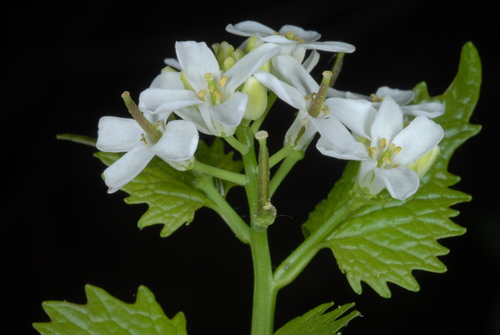
Lepidium oleraceum
Forst.

no rights reserved, uploaded by Peter de Lange
What to Eat
Edible parts: Leaves
Young leaves - raw or cooked. A hot cress-like flavour, they can be added to salads or used as a pot-herb. High in vitamin C.
Where to Find It
New Zealand.
Coming Soon
How to Identify
Lepidium oleraceum is a PERENNIAL. The species is hermaphrodite (has both male and female organs) and is pollinated by Insects. Suitable for: light (sandy), medium (loamy) and heavy (clay) soils. Suitable pH: mildly acid, neutral and basic (mildly alkaline) soils. It can grow in semi-shade (light woodland) or no shade. It prefers moist soil.
How to Grow
We have very little information on this species and are not sure if it will be hardy in Britain, though one report says that it has been cultivated for its edible leaves in Britain. Assuming it is hardy, then it is likely to be very easily grown and will succeed in most soils in full sun or light shade.
Propagation: Seed - sow spring in a cold frame. When they are large enough to handle, prick the seedlings out into individual pots and plant them out in the summer. Division in spring.
Medicinal Uses
Vitamin CNone known