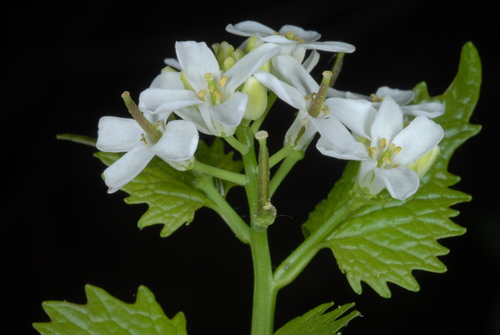
Lepidium ruderale
L.
Narrow Leaved Peppergrass, Rroadside pepperweed

(c) Michal Ducháček, some rights reserved (CC BY-NC), uploaded by Michal Ducháček

(c) Sebastian J. Dunkl, some rights reserved (CC BY-NC), uploaded by Sebastian J. Dunkl

(c) Илья Сухов, some rights reserved (CC BY-NC), uploaded by Илья Сухов
What to Eat
Edible parts: Leaves
Young leaves - raw or cooked. A hot cress-like flavour.
Where to Find It
Europe, including Britain, from Scandanavia south and east to the Mediterranean and southwest Asia.
TEMPERATE ASIA: Kuwait, Iran, Iraq, Israel (introd.?), Turkey, Russian Federation-Ciscaucasia (Ciscaucasia), Armenia, Azerbaijan, Georgia, Russian Federation (Dagestan), Russian Federation (Buryatia, Yakutia-Sakha, Altay, Krasnoyarsk (south), Irkutsk, Kemerovskaja oblast, Kurganskaja oblast, Novosibirsk, Omsk, Tomsk, Tyumen (south)), Kazakhstan, Turkmenistan, Mongolia, China (Xinjiang Uygur Zizhiqu) TROPICAL ASIA: India (Jammu and Kashmir, Tamil Nadu) EUROPE: Denmark, Finland (south), Norway (south), Sweden (south), Austria, Belgium, Switzerland, Czech Republic, Germany, Hungary, Netherlands, Poland, Slovakia, Russian Federation (European part), Belarus, Estonia, Lithuania, Latvia, Moldova, Ukraine (incl. Krym), Albania, Bulgaria, Bosnia and Herzegovina, Croatia, Italy, North Macedonia, Montenegro, Romania, Serbia, Slovenia, Spain, France
How to Identify
Lepidium ruderale is a ANNUAL/BIENNIAL growing to 0.3 m (1ft). It is not frost tender. It is in flower from May to July. The species is hermaphrodite (has both male and female organs). The plant is self-fertile. Suitable for: light (sandy), medium (loamy) and heavy (clay) soils. Suitable pH: mildly acid, neutral and basic (mildly alkaline) soils. It can grow in semi-shade (light woodland) or no shade. It prefers moist soil.
How to Grow
An easily grown plant, it succeeds in most soils.
Propagation: Seed - sow spring or late summer in situ. The seed should germinate within 3 weeks.
Medicinal Uses
Hypotensive Skin. The plant is used in the treatment of impetigo. An aqueous extract of the herb causes a drop in blood pressure and depresses respiration.