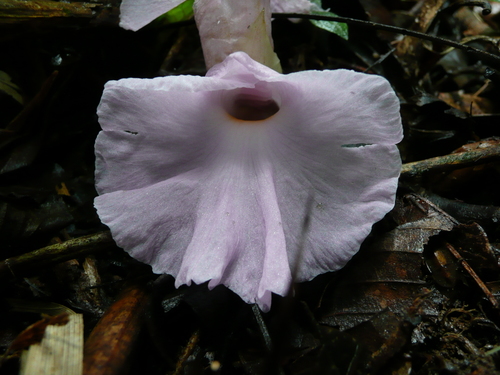
Etlingera gracilis
(Valeton) R. M. Smith
Ketimbang gadjah
What to Eat
Edible parts: Spice
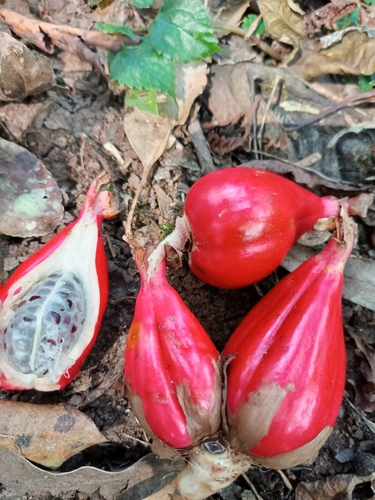
Fruit - raw or cooked. A sour flavour, they can be prepared as a condiment for food, with the same taste as the tamarind (Tamarindus indica). The red, globose, berry-like fruit is around 20mm in diameter.
Where to Find It
A tropical plant. It grows in lowland forests along streams. It grows in Sumatra.
Asia, Indonesia*, SE Asia,
How to Identify
A ginger family herb. It keeps growing from year to year. It grows 2-3 m tall. The leaves are narrowly sword shaped. They are 36-50 cm long by 8-12 cm wide. The fruiting heads are on slender stalks 50 cm long. The fruit are round and 2 cm across. They are red.
How to Grow
We have no specific information for this species, but plants in this genus generally prefer a sunny position and a moist but well-drained, fertile, humus-rich soil.
Propagation: Seed - Division of the rhizomes.
Wikipedia
Source ↗Etlingera gracilis is a monocotyledonous plant species first described by Theodoric Valeton, and given its current name by Rosemary Margaret Smith. Etlingera gracilis is part of the genus Etlingera and the family Zingiberaceae. The species' range is in Sumatra. No subspecies are listed in the Catalog of Life.
Notes
There are about 70 Etlingera species.
Names & Synonyms
References (2)
- PROSEA handbook Volume 13 Spices. p 276
- World Checklist of Useful Plant Species 2020. Royal Botanic Gardens, Kew