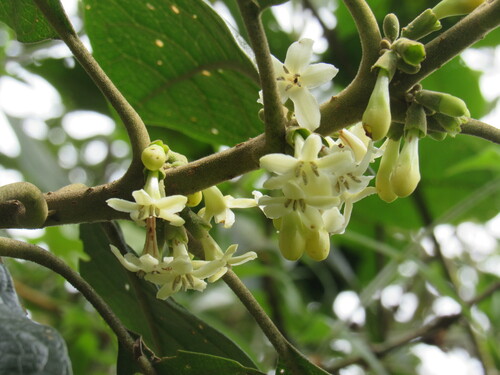
Lycopus virginicus
L.
Bugleweed, Virginia water horehound

(c) wonderful_world, some rights reserved (CC BY-NC), uploaded by wonderful_world

(c) Mark Kluge, some rights reserved (CC BY-NC), uploaded by Mark Kluge
What to Eat
Edible parts: Root
Root - cooked.
Known Hazards
Where to Find It
Eastern N. America - New York and Wisconsin south to Georgia and Texas.
NORTHERN AMERICA: United States (Connecticut, Indiana, Maine, Massachusetts, Michigan, New Hampshire, New York, Ohio, Pennsylvania, Rhode Island, Vermont, West Virginia, Iowa, Kansas, Minnesota, Missouri, Nebraska, Oklahoma, Wisconsin, Alabama, Arkansas, Florida, Georgia, Kentucky, Mississippi, North Carolina, Tennessee, Virginia, Texas)
How to Identify
Lycopus virginicus is a PERENNIAL growing to 0.6 m (2ft) by 0.5 m (1ft 8in). See above for USDA hardiness. It is hardy to UK zone 5. It is in flower from July to September. The species is hermaphrodite (has both male and female organs) and is pollinated by Bees, flies. Suitable for: light (sandy), medium (loamy) and heavy (clay) soils. Suitable pH: mildly acid, neutral and basic (mildly alkaline) soils. It can grow in semi-shade (light woodland) or no shade. It prefers moist or wet soil.
How to Grow
Tolerates most soil types so long as they are wet. Succeeds in full sun or in partial shade, in damp meadows or in wet places by ponds or streams.
Propagation: Seed - sow spring or autumn in a cold frame. Prick out the seedlings into individual pots when they are large enough to handle and grow them on in the greenhouse for their first year. Plant them out into their permanent positions in early summer. Division in spring or autumn. Larger clumps can be replanted direct into their permanent positions, though it is best to pot up smaller clumps and grow them on in a cold frame until they are rooting well. Plant them out in the spring.
Medicinal Uses
Antianxiety Antidandruff Astringent Cardiac Hypoglycaemic Narcotic Sedative. Bugleweed has sedative properties and is used in modern herbalism principally to treat an overactive thyroid gland and the racing heartbeat that often accompanies this condition. The whole plant is used as an astringent, hypoglycaemic, mild narcotic and mild sedative. It also slows and strengthens heart contractions. The plant has been shown to be of value in the treatment of hyperthyroidism, it is also used in the treatment of coughs, bleeding from the lungs and consumption, excessive menstruation etc. It should not be prescribed for pregnant women or patients with hypothyroidism. The plant is harvested as flowering begins and can be use fresh or dried, in an infusion or as a tincture. The root has been chewed, a portion swallowed and the rest applied externally in the treatment of snakebites. Current uses are predominantly for increased activity of the thyroid gland and for premenstrual syndrome symptoms such as breast pain. The German Commission E Monographs, a therapeutic guide to herbal medicine, approve Lycopus for nervousness and premenstrual syndrome (see for critics of commission E).
Names & Synonyms
Sweet Bugle, Water Bugle, Virginia Water Horehound, Gypsywort