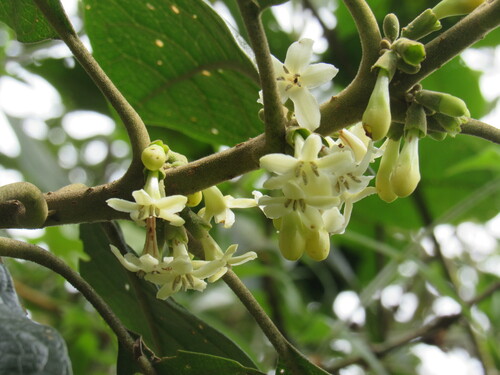
Thymus pannonicus
All.
Eurasian thyme

(c) carnifex, some rights reserved (CC BY), uploaded by carnifex

(c) Gaia Bazzi, some rights reserved (CC BY-NC), uploaded by Gaia Bazzi
What to Eat
Condiment. The leaves are sometimes used as a condiment. If the leaves are to be dried, the plants should be harvested in early and late summer just before the flowers open and the leaves should be dried quickly.
Where to Find It
S.W. and C. Europe.
TEMPERATE ASIA: Russian Federation-Ciscaucasia (Ciscaucasia), Russian Federation-Western Siberia (Western Siberia), Kazakhstan, Kyrgyzstan EUROPE: Czechoslovakia, Austria, Hungary, Poland, Russian Federation-European part (European part (south)), Moldova, Ukraine (incl. Krym), Former Yugoslavia, Bulgaria, Greece, Italy, Romania
How to Identify
Thymus pannonicus is a PERENNIAL growing to 0.2 m (0ft 8in). See above for USDA hardiness. It is hardy to UK zone 5. The species is hermaphrodite (has both male and female organs) and is pollinated by Insects. Suitable for: light (sandy) and medium (loamy) soils and prefers well-drained soil. Suitable pH: mildly acid, neutral and basic (mildly alkaline) soils. It cannot grow in the shade. It prefers dry or moist soil and can tolerate drought.
How to Grow
Requires a light well-drained preferably calcareous soil in a sunny position. Succeeds in dry soils. Thymes dislike wet conditions, especially in the winter. A layer of gravel on the soil around them will help protect the foliage from wet soils. The flowers are rich in nectar and are very attractive to honey bees. This is a very difficult genus taxonomically, the species hybridize freely with each other and often intergrade into each other.
Propagation: Seed - sow spring in a cold frame. Seed can also be sown in autumn in a greenhouse. Surface sow or barely cover the seed. Germination can be erratic. When they are large enough to handle, prick the seedlings out into individual pots and grow them on in the greenhouse for at least their first winter. Plant them out into their permanent positions in late spring or early summer, after the last expected frosts. Division in spring or autumn. Larger divisions can be planted out direct into their permanent positions. We have found that it is best to pot up smaller divisions and grow them on in light shade in a greenhouse or cold frame until they are growing away well. Plant them out in the summer or the following spring. Cuttings of young shoots, 5 - 8cm with a heel, May/June in a frame. Cuttings of half-ripe wood, 5 - 8cm with a heel, July/August in a frame. Layering.
Medicinal Uses
Antiseptic Deodorant Disinfectant. The leaves, and especially the essential oil contained in them, are strongly antiseptic, deodorant and disinfectant. The plant can be used fresh at any time of the year, or it can be harvested as it comes into flower and either be distilled for the oil or dried for later use.
Other Uses
Deodorant Disinfectant Essential. The essential oil obtained from the leaves is also used in perfumery, as a mouth wash, medicinally etc.