Euclea divinorum
Hiern.
Diamond-leaved euclea
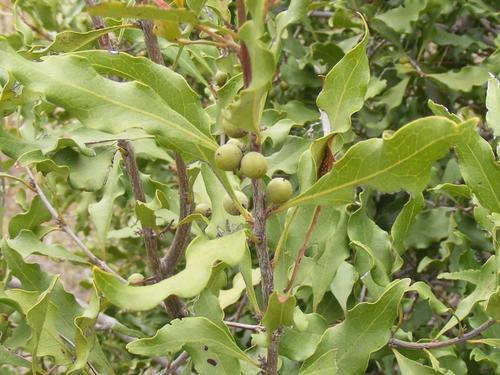
no rights reserved, uploaded by Andrew Deacon
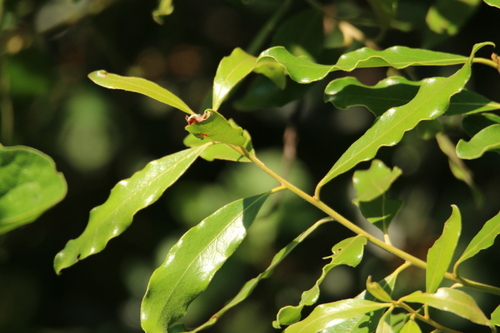
(c) tjeerd, some rights reserved (CC BY-NC), uploaded by tjeerd
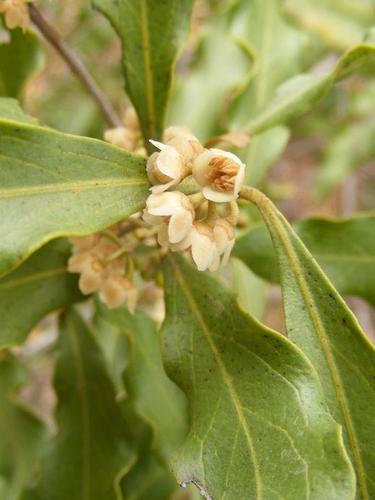
no rights reserved, uploaded by Andrew Deacon
What to Eat
Edible parts: Fruit, Leaves
The thin fleshy part of the fruit is edible, though not very palatable. An infusion of the bark is used as a condiment in soup preparation. The roots are used in the fermentation process for making beer. The leaves are considered an appetiser and are also burned to produce plant ash used as an edible salt. It is regarded as a famine food.
Where to Find It
A tropical plant. It grows in open woodland. It grows in dry, hot areas below 900 m altitude in South Africa. It grows up to 2,400 m altitude in East Africa. It can grow in arid places. It grows in areas with mean annual temperatures of 17°C and rainfall of 700 mm.
Africa, Angola, Botswana, Burundi, Central Africa, Congo, Djibouti, East Africa, Eritrea, Eswatini, Ethiopia, Kenya, Malawi, Mozambique, Namibia, Rwanda, Socotra, Somalia, South Africa, Southern Africa, Southern Africa, Sudan, Swaziland, Tanzania, Uganda, Zambia, Zimbabwe,
How to Identify
A shrub or small tree. It grows up to 6 m tall. It can be 18 m tall. It often branches from the base. The bark is grey. It is smooth when young and cracked when old. The crown of the tree has many branches and is leafy. The leaves are leathery and with a wavy surface. They are simple leaves and usually almost opposite each other. The upper surface is grey green and the lower surface is paler. Leaves are 3.5-9 cm long and 1-2.5 cm wide. They are oval or sword shaped and taper towards each end. The tip is round. The edges of the leaves is usually very wavy. The flowers are small, cream and cup shaped. They are produced in short dense heads in the axils of leaves. Male and female flowers occur on separate plants. The flowers and stalks are covered with tiny rusty-brown dots. The fruit is small round berries on stalks. They have a thin flesh and usually one seed. They are edible.
Nutrition Score: 42/100
| Part | Moisture | kJ | kcal | Protein | Vit A | Vit C | Iron | Zinc |
|---|---|---|---|---|---|---|---|---|
| Fruit | 8 | 1128 | 270 | 3.5 | — | — | — | — |
How to Grow
A plant of drier areas in the tropics and subtropics, where it can be found at elevations up to 2,400 metres. It grows best in areas where the mean annual temperatures are around 17c, and the mean annual rainfall around 700mm. Prefers mesic calcareous valley clays and sometimes rocky ground. Moderately tolerant of heavy metals in the soil, tolerating high concentrations of nickel, but only relatively low levels of copper, and often becomes locally abundant on metalliferous soils. It is particularly common on arsenical soils. The plant has a good coppicing ability and root suckers are common, growing up some distance from the tree. Plants tends to dominate pastures to the detriment of wildlife and pastoralism. In some situations only the use of arboricides can solve the problem. A dioecious species, both male and female forms need to be grown if fruit and seeds are required.
Propagation: No pre-treatment is necessary. Fresh seed germinates readily. Seed has only a short viability under normal storage conditions, losing viability within about 2 months. Can also be propagated by suckers.
Medicinal Uses
The fruits act as a mild laxative but can also have a strong purgative effect. In traditional medicine, root extracts and dried powdered roots are used both internally and externally. Taken internally, they treat gastro-intestinal disturbances, cancer, miscarriage, and jaundice. Applied externally, they address ulcers, leprosy, wounds, arthritis, snakebites, headache, toothache, and gonorrhoea. The fruits, bark, and roots are also used as a purgative in soup and as a tonic for anaemia. The leaves treat diarrhoea. Research on the root-bark has isolated triterpenoids, naphthoquinones, and naphthoquinone dimers and trimers — including 7-methyljuglone, isodiospyrin, and flavonoids. One triterpenoid compound and 7-methyljuglone both showed cytotoxicity, with 7-methyljuglone active against a wider range of cell lines. Four flavonoid compounds have been isolated from the aerial parts: (+)-catechin, and glycosides of aromadendrin, quercetin, and myricetin.
Other Uses
The bark contains tannins and is used to produce fast reddish-brown dyes. The roots dye vegetable fibres used in weaving mats and baskets into shades of brown or black when iron-rich mud is applied as a mordant after dyeing. To use for dyeing, roots are dug up and beaten to bruise the bark. Roughly equal quantities of fresh roots and palm leaves or other fibres are needed. Fibres are left in a boiling root extract, then dried; the longer they remain, the darker the result, ranging from pale to dark brown or black. The root-bark contains a rich combination of dyeing compounds and can be used with or without metallic salt mordants, as the tannins present provide a mordanting effect. Isolated naphthoquinones including 7-methyljuglone, isodiospyrin, and flavonoids all contribute to the dyeing properties. The roots are chewed as a disinfectant and to colour the lips and mouth red. The fruits are used as a purple dye for basket fibres by the Kwanyama Ovambos of northern Namibia, and are boiled to produce purple ink. Mixed with fruits of Berchemia discolor, crushed and boiled with palm leaf strips and left to stand for one to several days, they produce a purplish-brown basket dye. Used alone without mordant they give purple, which is less fast than the darker colour achieved with the mixture. The roots and twigs are used as toothbrushes and there is evidence they not only clean teeth but also inhibit the growth of tooth-attacking bacteria due to their high polyphenolic content. The plant is used to purify drinking water: branches are added to gourds or pots of water and left to soak for several hours. It is one of the species used in the treatment of milk to increase digestibility, palatability, and preservation — milk treated this way can sometimes be stored for over a year without spoiling, which is important for household food security. The wood is white with brown spots, heavy, hard, and strong, with pinkish to cream-coloured sapwood that turns apricot on exposure to air. It is used for building poles, tool handles, spoons, and carving, and as fuel. Because of its tolerance of high arsenic soil levels, the species can be used to reclaim gold mine pit wastes. It is particularly common on arsenical soils associated with gold deposits or reefs, and has been suggested as a potential indicator species for the presence of gold.
Wikipedia
Source ↗Euclea divinorum, called diamond leaf, diamond-leaved euclea, magic guarri, and toothbrush tree, is a species of flowering plant in the genus Euclea, native to eastern and southern Africa. A shrub or small tree, it has many uses in Africa, including as a source for dye for wool, for tanning leather, and an ink, and as a preservative for milk (allowing it to keep for up to a year), and, by chewing on a twig, as a toothbrush.
Other Information
It is a famine food.
Names & Synonyms
Achondradoho, Cheptuya, Dangula, Dedeho, Indlelanyamatane-lebovu, Iwaruka, Kanho-kanho, Magic gwarri, Maqayita, Mawbulawe, Mdaa, Mdala, Measka, Mi'eessaa, Mkenye, Motlhakola, Motlhakolane, Mthlakula, Mubhununu, Mudziviriratsuro, Mugurameno, Mukinyai, Mukuthi, Mungunya, Munyenya, Mushangura, Musikizi, Mutangule, Nginyai, Nhlangula, Nhleta nyamazana, Ounsi, Sijelele, Towerghwarrie, Umhlangula, Umtshekesane, Unsi
References (48)
- Addis, G., Asfaw, Z & Woldu, Z., 2013, Ethnobotany of Wild and Semi-wild Edible Plants of Konso Ethnic Community, South Ethiopia. Ethnobotany Research and Applications. 11:121-141
- Ashagre, M., et al, 2016, Ethnobotanical study of wild edible plants in Burji District, Segan Area Zone of Southern Nations, Nationalities and Peoples Region (SNNPR), Ethiopia. Journal of Ethnobiology and Ethnomedicine (2016) 12:32
- Assefa, A. & Abebe, T., 2010, Wild Edible Trees and Shrubs in the Semi-arid Lowlands of Southern Ethiopia. Journal of Science and Development 1 (1) 2010
- Balemie, K., & Kebebew, F., 2006, Ethnobotanical study of wild edible plants in Derashe and Kucha Districts, South Ethiopia. Journal of Ethnobiology and Ethnomedicine.
- Cunningham, 1985,
- Dharani, N., 2002, Field Guide to common Trees & Shrubs of East Africa. Struik. p 102
- Drummond, R. B., 1981, Common Trees of the Central Watershed Woodlands of Zimbabwe, National Herbarium Salisbury. p 182
- Fowler, D. G., 2007, Zambian Plants: Their Vernacular Names and Uses. Kew. p 24
- Fox, F. W. & Young, M. E. N., 1982, Food from the Veld. Delta Books. p 186
- Gemedo-Dalle, T., et al, 2005, Plant Biodiversity and Ethnobotany of Borana Pastoralists in Southern Oromia, Ethiopia. Economic Botany 59(1) pp. 43-65
- INFOODS:FAO/INFOODS Databases
- Jardin, C., 1970, List of Foods Used In Africa, FAO Nutrition Information Document Series No 2.p 135
- Kidane, B., et al, 2014, Ethnobotany of Wild and Semi-wild Edible Fruit Species used by Maale and Ari Ethnic Communities in South Ethiopia. Ethnobotany Research and Applications. Vol. 12, 1546-3465-12-455
- Kokwaro, J. O. and Johns. T., Luo Biological Dictionary. p 121
- Long, C., 2005, Swaziland's Flora - siSwati names and Uses http://www.sntc.org.sz/flora/
- Lulekal, E., et al, 2011, Wild edible plants in Ethiopia: a review on their potential to combat food insecurity. Afrika Focus - Vol. 24, No 2. pp 71-121
- Magwede, K., van Wyk, B.-E., & van Wyk, A. E., 2019, An inventory of Vhavenḓa useful plants. South African Journal of Botany 122 (2019) 57–89
- Mannheimer, C. A. & Curtis. B.A. (eds), 2009, Le Roux and Muller's Field Guide to the Trees and Shrubs of Namibia. Windhoek: Macmillan Education Namibia. p 384
- Maroyi, A., 2011, The Gathering and Consumption of Wild Edible Plants in Nhema Communal Area, Midlands Province, Zimbabwe. Ecology of Food and Nutrition 50:6, 506-525
- Maroyi, A. & Cheikhyoussef, A., 2017, Traditional knowledge of wild edible fruit in southern Africa: A comparative use patterns in Namibia and Zimbabwe. Indian Journal of Traditional Knowledge. 16(3): 385-392
- Mashile, S. P., et al, 2019, Indigenous fruit plants species of the Mapulana of Ehlanzeni district in Mpumalanga province, South Africa. South African Journal of Botany 122 (2019) 180–183
- Maundu, P. et al, 1999, Traditional Food Plants of Kenya. National Museum of Kenya. 288p
- Mbuya, L.P., Msanga, H.P., Ruffo, C.K., Birnie, A & Tengnas, B., 1994, Useful Trees and Shrubs for Tanzania. Regional Soil Conservation Unit. Technical Handbook No 6. p 262
- Molla, A., Ethiopian Plant Names. http://www.ethiopic.com/aplants.htm
- Msuya, T. S., et al, 2010, Availability, Preference and Consumption of Indigenous Foods in the Eastern Arc Mountains, Tanzania, Ecology of Food and Nutrition, 49:3, 208-227
- Mutie, F. G., 2020, Conservation of Wild Food Plants and Their Potential for Combatting Food Insecurity in Kenya as Exemplified by the Drylands of Kitui County. Plants 2020, 9, 1017
- Mutie, F. M., et al, 2023, Important Medicinal and Food Taxa (Orders and Families) in Kenya, Based on Three Quantitative Approaches. Plants 2023, 12, 1145
- Ojelel, S., et al, 2019, Wild edible plants used by communities in and around selected forest reserves of Teso-Karamoja region, Uganda. Journal of Ethnobiology and Ethnomedicine (2019) 15:3
- Palgrave, K.C., 1996, Trees of Southern Africa. Struik Publishers. p 737
- Palmer, E and Pitman, N., 1972, Trees of Southern Africa. Vol. 3. A.A. Balkema, Cape Town p 1779
- Peters, C. R., O'Brien, E. M., and Drummond, R.B., 1992, Edible Wild plants of Sub-saharan Africa. Kew. p 106
- Plowes, N. J. & Taylor, F. W., 1997, The Processing of Indigenous Fruits and other Wildfoods of Southern Africa. in Smartt, L. & Haq. (Eds) Domestication, Production and Utilization of New Crops. ICUC p 191
- Rodin, 1985,
- Roodt, V., 1998, Trees & Shrubs of the Okavango Delta. Medicinal Uses and Nutritional value. The Shell Field Guide Series: Part 1. Shell Botswana. p 109
- Royal Botanic Gardens, Kew (1999). Survey of Economic Plants for Arid and Semi-Arid Lands (SEPASAL) database. Published on the Internet; http://www.rbgkew.org.uk/ceb/sepasal/internet [Accessed 16th April 2011]
- Ruiters-Welcome, A. K., 2019, Food plants of southern Africa. Ph.D. thesis. Univ. of Johannesburg p 53
- Schmidt, E., Lotter, M., & McCleland, W., 2007, Trees and shrubs of Mpumalanga and Kruger National Park. Jacana Media p 522
- Seidemann J., 2005, World Spice Plants. Economic Usage, Botany, Taxonomy. Springer. p 151
- Swaziland's Flora Database http://www.sntc.org.sz/flora
- Termote, C., et al, 2014, Assessing the potential of wild foods to reduce the cost of a nutritionally adequate diet: An example from eastern Baringo District, Kenya. Food and Nutrition Bulletin, vol. 35, no. 4
- Trans. Cambridge Philos. Soc. 12:99. 1873
- van Wyk, B, van Wyk, P, and van Wyk B., 2000, Photographic guide to Trees of Southern Africa. Briza. p 140
- Wehmeyer, A. S, 1986, Edible Wild Plants of Southern Africa. Data on the Nutrient Contents of over 300 species
- Welcome, A. K. & Van Wyk, B.-E., 2019, An inventory and analysis of the food plants of southern Africa. South African Journal of Botany 122 (2019) 136–179
- White, F., Dowsett-Lemaire, F. and Chapman, J. D., 2001, Evergreen Forest Flora of Malawi. Kew. p 229
- World Checklist of Useful Plant Species 2020. Royal Botanic Gardens, Kew
- www.worldagroforestrycentre.org/treedb/
- www.zimbabweflora.co.zw 2011


