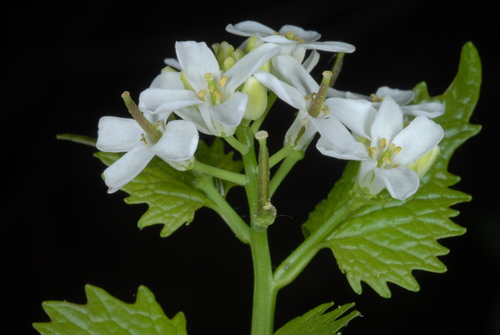
Cochlearia macrocarpa
Waldst.&Kit.

GBIF

Meise Botanic Garden

GBIF
What to Eat
Condiment. The root is a condiment. It is used like horseradish (Armoracia rusticana) and is said to be less acrid.
Where to Find It
C. Europe.
EUROPE: Hungary, Slovakia, Bulgaria, Croatia, Romania
How to Identify
Cochlearia macrocarpa is a . The species is hermaphrodite (has both male and female organs) and is pollinated by Bees, flies, beetles. The plant is self-fertile. Suitable for: light (sandy), medium (loamy) and heavy (clay) soils and prefers well-drained soil. Suitable pH: mildly acid, neutral and basic (mildly alkaline) soils. It cannot grow in the shade. It prefers moist soil.
How to Grow
We have virtually no information on this species or its hardiness in Britain and do not even know if it is a perennial or annual. There is no record of it in 'Flora Europaea'. It is likely to succeed in an acid or calcareous sandy or gritty well-drained soils in a sunny position.
Propagation: Seed - sow spring or autumn in situ. Germination usually takes place within 2 - 3 weeks at 15°c.