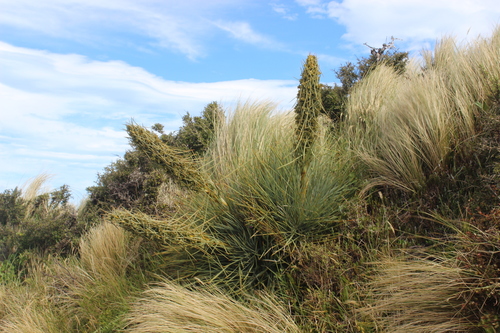
Conium maculatum
L.
Hemlock, Poison hemlock

(c) Kate Bullock, some rights reserved (CC BY-NC), uploaded by Kate Bullock

(c) Sebastian J. Dunkl, some rights reserved (CC BY-NC), uploaded by Sebastian J. Dunkl

(c) L.J. Lamera, some rights reserved (CC BY), uploaded by L.J. Lamera
What to Eat
Edible parts: Leaves
Leaves - cooked. Although toxic, plants found in the south of England are comparatively harmless and the leaves are used as a pot-herb. They can also be dried for later use. The toxic principle is said to be destroyed by thorough cooking or drying. Caution is advised, especially on the remarks about plants in southern England. See the notes above on toxicity.
Known Hazards
Where to Find It
Europe, including Britain, from Norway and Finland south and east to N. Africa and Iran.
TEMPERATE ASIA: Afghanistan, Iran, Iraq, Israel, Jordan, Lebanon, Syria, Turkey, Russian Federation-Ciscaucasia (Ciscaucasia), Armenia, Azerbaijan, Georgia, Russian Federation (Dagestan), Russian Federation-Western Siberia (Western Siberia), Kazakhstan, Kyrgyzstan, Tajikistan, Turkmenistan, Uzbekistan TROPICAL ASIA: India (Jammu and Kashmir), Pakistan (north) EUROPE: Denmark, Finland, United Kingdom, Ireland, Norway, Sweden, Austria, Belgium, Switzerland, Czech Republic, Germany, Hungary, Netherlands, Poland, Slovakia, Belarus, Estonia, Lithuania, Latvia, Moldova, Ukraine, Albania, Bulgaria, Bosnia and Herzegovina, Greece, Italy, North Macedonia, Montenegro, Romania, Serbia, Slovenia, Spain, France, Portugal AFRICA: Algeria, Morocco, Tunisia, Ethiopia
How to Identify
Conium maculatum is a BIENNIAL growing to 2 m (6ft) by 1 m (3ft 3in). See above for USDA hardiness. It is hardy to UK zone 5 and is not frost tender. It is in flower from June to July. The species is hermaphrodite (has both male and female organs) and is pollinated by Insects. The plant is self-fertile. Suitable for: light (sandy), medium (loamy) and heavy (clay) soils. Suitable pH: mildly acid, neutral and basic (mildly alkaline) soils. It can grow in semi-shade (light woodland) or no shade. It prefers moist soil.
How to Grow
A fairly common weed in Britain, it succeeds in most soils in sun or light shade and avoids acid soils in the wild. It prefers a damp rich soil. This is the plant that Socrates is said to have used to kill himself, though this is probably an error. It requires a large dose if it is to be lethal (this contradicts with the notes above on toxicity), and death from this plant can be very painful whilst Socrates is said to have died without pain. Another report says that poisonous doses cause paralysis, which starts at the feet and moves up the body. There is no pain, the mind remains clear and lucid until death, which is caused by asphyxia when paralysis reaches the chest. The whole plant has a foetid smell.
Propagation: Seed - best sown in situ as soon as it is ripe in the late summer. It usually germinates in the autumn.
Medicinal Uses
Analgesic Antirheumatic Antispasmodic Cancer Emetic Epilepsy Galactofuge Homeopathy Sedative. Hemlock is a very poisonous plant that has a long history of medicinal use, though it is very rarely used in modern herbalism. It is a narcotic plant that sedates and relieves pain. The plant contains coniine, an extremely toxic substance that can also cause congenital defects. The whole plant is analgesic, antispasmodic, emetic, galactofuge and sedative[4, 7, 9, 21, 213, 222]. It is a traditional folk treatment for cancer and was formerly widely used internally in very small doses to treat a variety of complaints including tumours, epilepsy, whooping cough, rabies and as an antidote to strychnine poisoning. It is still used externally, usually in ointments and oils, in the treatment of mastitis, malignant tumours (especially breast cancer) anal fissure and haemorrhoids. The leaves and stems should be harvested when the first fruits are forming, since they are then at their most active medicinally. The fruits are gathered either when fully ripe, or before they turn from green to yellow, and are then dried. Because of the extremely toxic nature of this herb, it is seldom employed nowadays. Use with extreme caution and only under the guidance of a qualified practitioner. See also the notes above on toxicity. A homeopathic remedy is prepared from a tincture of the fresh plant, harvested when in flower. It is used for treating complaints such as dizziness, coughs, insomnia, exhaustion, arteriosclerosis and prostate problems.
Names & Synonyms
beaver poison; carrot-fern; fool's-parsley; hemlock; herb bennet; kecksies; kex; musquash root; poison parsley; spotted corobane; spotted-hemlock; spotted-parsley. Spanish: encaje cimarrón; panalillo; perejil de chucho; perejil de monte; zanahoria silvestre. French: cigue maculee; cigue tache; cigue tachetee; grande ciguë Chinese: du shen. Brazil: cicuta; funcho-selvagem. Germany: Gefleckter Schierling. Guatemala: perejil de chucho; perejil de monte. Italy: cicuta maggiore. Netherlands: gevlekte scheerling. Sweden: odört.