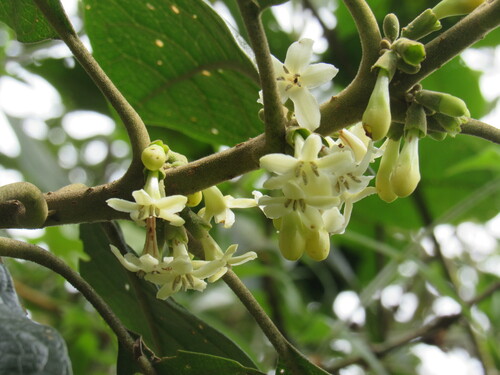
Leucas lanata
Benth.

(c) T. Abe Lloyd, some rights reserved (CC BY-NC), uploaded by T. Abe Lloyd

(c) T. Abe Lloyd, some rights reserved (CC BY-NC), uploaded by T. Abe Lloyd

(c) T. Abe Lloyd, some rights reserved (CC BY-NC), uploaded by T. Abe Lloyd
What to Eat
Edible parts: Leaves, Shoots
Young shoots - cooked. Used as a vegetable.
Where to Find It
E. Asia - India.
Coming Soon
How to Identify
Leucas lanata is a PERENNIAL growing to 0.4 m (1ft 6in). The species is hermaphrodite (has both male and female organs). Suitable for: light (sandy), medium (loamy) and heavy (clay) soils. Suitable pH: mildly acid, neutral and basic (mildly alkaline) soils. It can grow in semi-shade (light woodland) or no shade. It prefers moist soil.
How to Grow
We have very little information on this species and do not know if it will succeed outdoors in Britain, though judging by its native range it should be hardy at least in the milder areas of the country.
Propagation: Seed -
Medicinal Uses
In general, the crushed leaves of Leucas species are applied to wounds, sores, especially those of the eyes and nose, chronic skin diseases, such as psoriasis and scabies. The crushed leaves are also used to treat mild fevers, colds, rheumatism and snake bites, and as a decoction against roundworm, mainly for children.