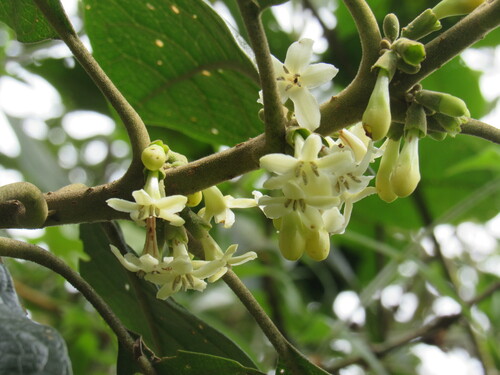
Lycopus americanus
Muhl.
Water Horehound, American water horehound

(c) Dan Mullen, some rights reserved (CC BY-NC-ND)

no rights reserved

(c) Douglas Goldman, some rights reserved (CC BY-SA), uploaded by Douglas Goldman
What to Eat
Edible parts: Root
Root - raw or cooked. This contradicts with the report in that the plant does not form tubers on its rhizomes.
Where to Find It
N. America - Newfoundland to British Columbia, south to Florida, Texas, Utah and California.
NORTHERN AMERICA: Canada (Québec, Nova Scotia, Ontario, Prince Edward Island, Newfoundland and Labrador, Saskatchewan, Alberta, Manitoba, British Columbia), United States (Connecticut, Indiana, Maine, Massachusetts, Michigan, New Hampshire, New Jersey, New York, Ohio, Pennsylvania, Rhode Island, Vermont, West Virginia, Iowa, Kansas, Minnesota, Missouri, Nebraska, North Dakota, South Dakota, Illinois, Oklahoma, Wisconsin, Idaho, Montana, Oregon, Washington, Wyoming, Alabama, Delaware, Florida, Georgia, Kentucky, Louisiana, Maryland, Mississippi, North Carolina, South Carolina, Tennessee, Virginia, New Mexico, Texas, Arizona, California, Utah)
How to Identify
Lycopus americanus is a PERENNIAL growing to 0.5 m (1ft 8in). See above for USDA hardiness. It is hardy to UK zone 4. It is in flower from July to September. The species is hermaphrodite (has both male and female organs) and is pollinated by Bees, flies. Suitable for: light (sandy), medium (loamy) and heavy (clay) soils. Suitable pH: mildly acid, neutral and basic (mildly alkaline) soils. It can grow in semi-shade (light woodland) or no shade. It prefers moist or wet soil.
How to Grow
Succeeds in damp meadows or in wet places by ponds or streams.
Propagation: Seed - sow spring or autumn in a cold frame. Prick out the seedlings into individual pots when they are large enough to handle and grow them on in the greenhouse for their first year. Plant them out into their permanent positions in early summer. Division in spring or autumn. Larger clumps can be replanted direct into their permanent positions, though it is best to pot up smaller clumps and grow them on in a cold frame until they are rooting well. Plant them out in the spring.
Medicinal Uses
Astringent Narcotic Sedative. The whole plant is used as an astringent, hypoglycaemic, mild narcotic and mild sedative. It also slows and strengthens heart contractions. The plant has been shown to be of value in the treatment of hyperthyroidism, it is also used in the treatment of coughs, bleeding from the lungs and consumption, excessive menstruation etc. It should not be prescribed for pregnant women or patients with hypothyroidism. The plant is harvested as flowering begins and can be use fresh or dried, in an infusion or as a tincture.
Other Uses
Dye. The juice gives a permanent colour to linen and wool and does not wash out. The colour is not mentioned.