Faradaya splendida
F. Muell.
October glory, Potato Vine
(c) Evert Materman, some rights reserved (CC BY-NC)
(c) Evert Materman, some rights reserved (CC BY-NC)
(c) cesdamess, some rights reserved (CC BY-NC)
What to Eat
Edible parts: Fruit, Seeds
The fruit are eaten fresh. The seeds inside the berries are also edible.
Known Hazards
Where to Find It
A tropical plant. It can grow in the subtropics. It does best in rich moist soils. The soils need to be well drained. It needs a protected partly shaded position. It is damaged by drought and frost. It grows naturally in the lowland and upland rainforest. In tropical Queensland it grows from sea level to 1000 m altitude.
Australia*, India, Indonesia, Pacific, Papua New Guinea, PNG, SE Asia, Singapore,
How to Identify
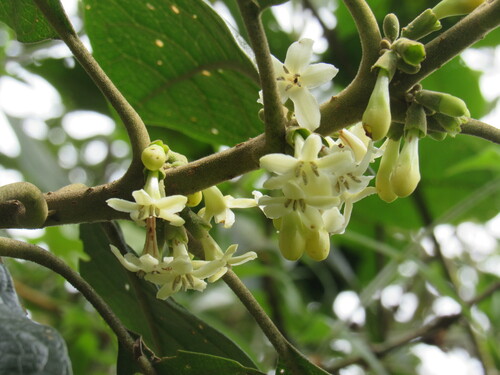
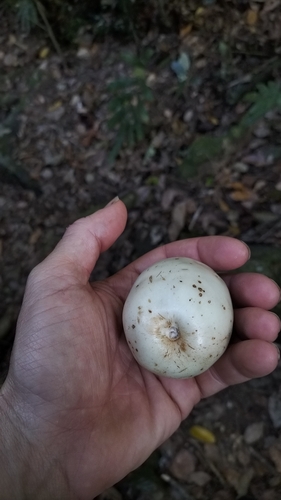
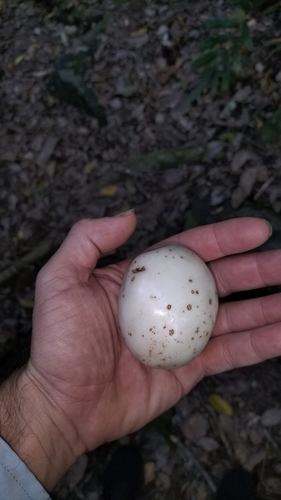
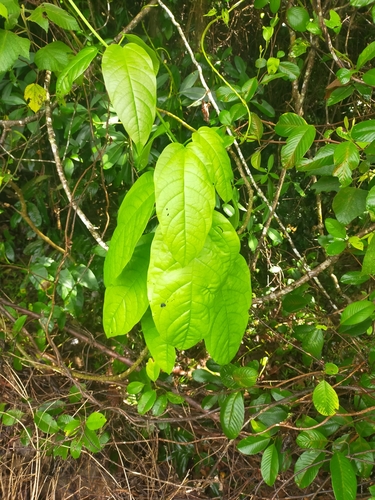
It is an evergreen climbing vine. It climbs to a height of 15 m. The stem is vigorous. The leaves are light green and glossy. They are oval or narrowly heart shaped. They are 10-40 cm long and 6-8 cm wide. The leaf stalks are 2-5 cm long. The leaves are fairly thin textured with glands at the base of the leaf blade. The flowers are white. They have 4 lobes and are cup shaped. They are 5 cm across. The occur in clusters at the ends of branches. The flowers have a scent. The fruit are cream coloured oval berries. They are 9 cm long by 6 cm across. They are edible. The white flesh of the fruit turns yellow when squashed. There is one seed inside. The seed is 4.5 cm long by 3.5 cm wide.
How to Grow
Plants can be grown from seed or by cuttings. Seed should be sown fresh. They germinate readily.
Medicinal Uses
The fruit and seeds are traditionally consumed as food.
Production
Fruit are produced August to April in Australia.
Names & Synonyms
Buku, Bunga faradaya, Mumini, Pitutu
References (20)
- Ambasta, S.P. (Ed.), 2000, The Useful Plants of India. CSIR India. p 219
- Bodkin, F., 1991, Encyclopedia Botanica. Cornstalk publishing, p 469
- Borrell, O.W., 1989, An Annotated Checklist of the Flora of Kairiru Island, New Guinea. Marcellin College, Victoria Australia. p 145, 226
- Burkill, I.H., 1966, A Dictionary of the Economic Products of the Malay Peninsula. Ministry of Agriculture and Cooperatives, Kuala Lumpur, Malaysia. Vol 1 (A-H) p 1013
- Cooper W & Cooper W T, 1994, Fruits of the Rain Forest. RD Press p 128
- Cooper, W. and Cooper, W., 2004, Fruits of the Australian Tropical Rainforest. Nokomis Editions, Victoria, Australia. p 236
- Cribb, A.B. & J.W., 1976, Wild Food in Australia, Fontana. p 75
- Elliot, W.R., & Jones, D.L., 1992, Encyclopedia of Australian Plants suitable for cultivation. Vol 4. Lothian. p 276
- Fragm. 5:21. 1865
- Greig, D., 1996, Flowering Natives for Home Gardens. Angus & Robertson. p 181
- Henty, E.E., 1980, Harmful Plants in Papua New Guinea. Botany Bulletin No 12. Division Botany, Lae, Papua New Guinea. p 134
- Hibbert, M., 2002, The Aussie Plant Finder 2002, Florilegium. p 101
- Hinton, B & B., 1982, A Wilderness in Bloom. Wildflowers of tropical Australia. p 38
- Jackes, B.R., 2001, Plants of the Tropics. Rainforest to Heath. An Identification Guide. James Cook University. p 58
- Jones, D.L. & Gray, B., 1977, Australian Climbing Plants. Reed. p 102
- Lord, E.E., & Willis, J.H., 1999, Shrubs and Trees for Australian gardens. Lothian. p 322
- Molyneux, B. and Forrester, S., 1997, The Austraflora A-Z of Australian Plants. Reed. p 95
- Recher, P, 2001, Fruit Spirit Botanical Gardens Plant Index. www.nrg.com.au/~recher/ seedlist.html p 6
- Sukarya, D. G., (Ed.) 2013, 3,500 Plant Species of the Botanic Gardens of Indonesia. LIPI p 928
- Townsend, K., 1994, Across the Top. Gardening with Australian Plants in the tropics. Society for Growing Australian Plants, Townsville Branch Inc. p 210