Ferula dubjanskyi
Korovin
Dzhaudzhamyr
ApiaceaeLeaves
iNaturalist · cc-by-nc
(c) Petr Kosachev, some rights reserved (CC BY-NC)
(c) Petr Kosachev, some rights reserved (CC BY-NC)
iNaturalist · cc-by-nc
(c) Petr Kosachev, some rights reserved (CC BY-NC)
(c) Petr Kosachev, some rights reserved (CC BY-NC)

iNaturalist · cc-by-nc
(c) Alex, some rights reserved (CC BY-NC)
(c) Alex, some rights reserved (CC BY-NC)
What to Eat
Edible parts: Vegetable
The plant is eaten as a vegetable.
Where to Find It
It is a temperate plant. It grows on sandy slopes in deserts between 400-600 m above sea level in western China.
Asia, Central Asia, China, Kazakhstan, Kyrgyzstan, Mongolia, Uzbekistan,
Countries: United Arab Emirates, Afghanistan, Armenia, Azerbaijan, Bangladesh, Bahrain, Brunei, Bhutan, China, Georgia, Indonesia, Israel, India, Iraq, Iran, Jordan, Japan, Kyrgyzstan, Cambodia, North Korea, South Korea, Kuwait, Kazakhstan, Laos, Lebanon, Sri Lanka, Myanmar, Mongolia, Maldives, Malaysia, Nepal, Oman, Philippines, Pakistan, Qatar, Saudi Arabia, Singapore, Syria, Thailand, Tajikistan, Timor-Leste, Turkmenistan, Turkey, Taiwan, Uzbekistan, Vietnam, Yemen
How to Identify
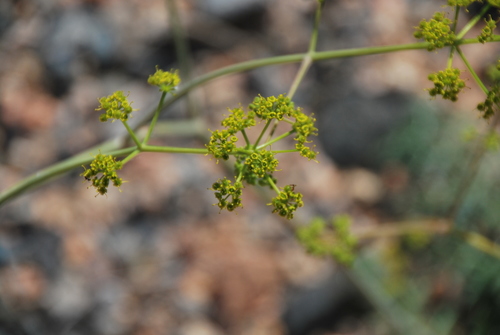
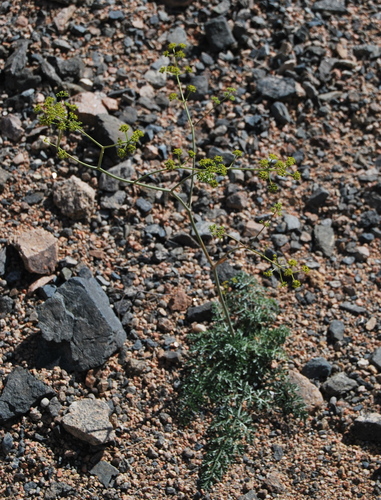
A herb. It grows 50-70 cm tall. There is a single stem that is branched. The leaves are broadly oval and with leaflets along the stalk. The least segments are narrowly oval 5-10 mm long and with lobes. They are hairy underneath. The flowers are in compound groups at the top of the plant.
References (3)
- Pavlov, Fl. centr. Kazakh. 2:539. 1934
- USDA, ARS, National Genetic Resources Program. Germplasm Resources Information Network - (GRIN). [Online Database] National Germplasm Resources Laboratory, Beltsville, Maryland. Available: www.ars-grin.gov/cgi-bin/npgs/html/econ.pl (10 April 2000)
- World Checklist of Useful Plant Species 2020. Royal Botanic Gardens, Kew