Floydia prealta
(F. Muell) L.A.S. Johnson & B.G. Briggs
Ball Nut, Possum Nut
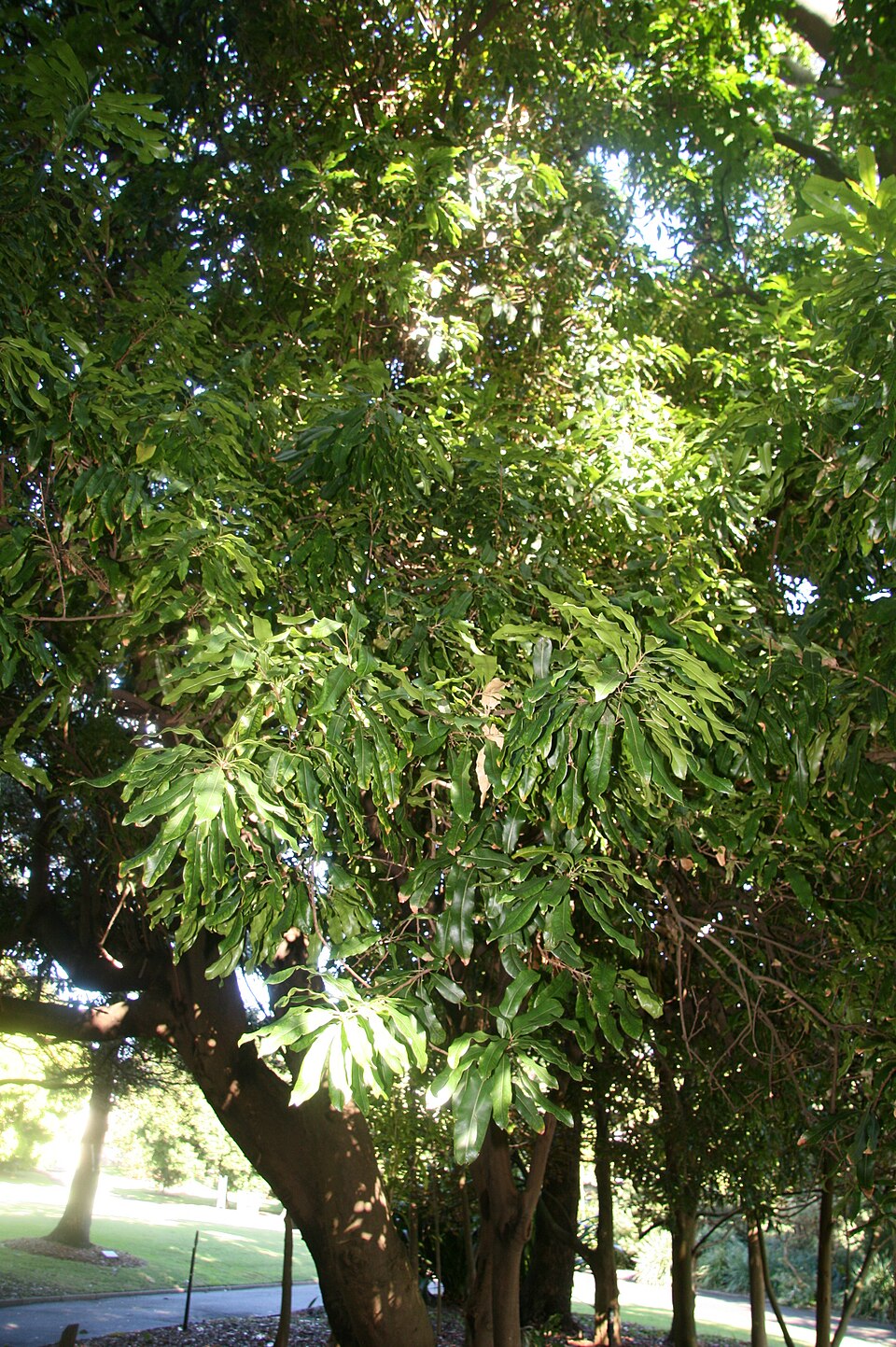
Wikimedia Commons - Casliber

Wikimedia Commons - Casliber
What to Eat
Edible parts: Seeds, Nut
The seeds or nuts are eaten.
Where to Find It
A tropical plant. They need well drained organically rich soil. They benefit from shade when young. They can tolerate moderate frosts. It grows in rainforest in SE Queensland and NSW in Australia. Melbourne Botanic Gardens.
Australia*,
How to Identify
A medium sized tree. It grows 15-25 m high and spreads 10-15 m wide. The crown is bushy. The bark is grey-brown. It is wrinkled and has corky pustules. The young shoots are pale green. The leaves are 10-25 cm long by 2-3 cm wide. They are alternate and sword shaped. They are dark green and shiny and have a stiff texture. The edges are wavy. The flowers are in racemes 5-12 cm long. They grow in the axils of leaves or from leafless branches. The flowers are 1.2 cm long. They are cream and like narrow tubes. The fruit are woody follicles 4-5 cm across. There are 1-2 seeds.
How to Grow
Plants are grown from seed. Seed need to be sown fresh. Seeds take 3-6 months to germinate.
Medicinal Uses
Darlingia ferruginea contains the alkaloids darlingine, ferrugine, ferruginine and 3α-benzoyloxy-2α-hydroxybenzyltropane.
Notes
There is only one Floydia species.
Names & Synonyms
References (6)
- Bot. J. Linn. Soc. 70:176. 1975
- Flora of Australia Volume 16, Elaeagnaceae, Proteaceae 1. Melbourne: CSIRO Australia (1995) p 417, 418, 313,
- Lazarides, M. & Hince, B., 1993, Handbook of Economic Plants of Australia, CSIRO. p 115
- Lord, E.E., & Willis, J.H., 1999, Shrubs and Trees for Australian gardens. Lothian. p 16
- Nicholson, N & H., 1996, Australian Rainforest Plants 3, Terania Rainforest Publishing. NSW. p 31
- Williams, J.B., Harden, G.J., and McDonald, W.J.F., 1984, Trees and shrubs in rainforests of New South Wales and Southern Queensland. Univ. of New England, Armidale. p 97, 99
More from Proteaceae


