Fraxinus excelsior
L.
English Ash, European ash, Common ash
(c) nicky-by-nature, some rights reserved (CC BY-NC)

(c) rothleyschool, some rights reserved (CC BY-NC)
(c) Jakob Fahr, some rights reserved (CC BY-NC), uploaded by Jakob Fahr
What to Eat
Edible parts: Fruit, Seeds, Manna, Leaves - tea, Sap
Immature seeds are commonly pickled in salt and vinegar and used as a condiment. Leaves are sometimes used as an adulterant for tea. A manna is obtained from the tree, though no further details are given. An edible oil similar to sunflower oil is extracted from the seed.
Known Hazards
Where to Find It
It is a temperate plant. It is native to Europe. It grows in moist woods and along riverbanks. It does well on lime rich soils. It suits hardiness zones 4-10. Arboretum Tasmania. Hobart Botanical Gardens.
Andorra, Argentina, Asia, Australia, Austria, Azerbaijan, Balkans, Belgium, Bosnia, Britain, Bulgaria, Canada, Caucasus, Central Asia, Czech, Denmark, Europe, France, Georgia, Germany, Greece, Himalayas, Hungary, Ireland, Italy, Korea, Lithuania, Luxembourg, Mediterranean, Netherlands, North America, Norway, Poland, Romania, Russia, San Marino, Scandinavia, Siberia, Sicily, Slovenia, South America, Spain, Sweden, Switzerland, Tajikistan, Tasmania, Yugoslavia,
How to Identify
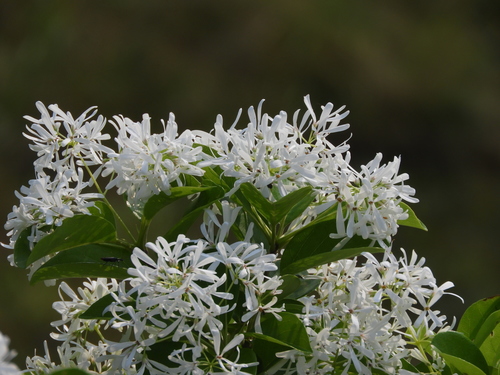
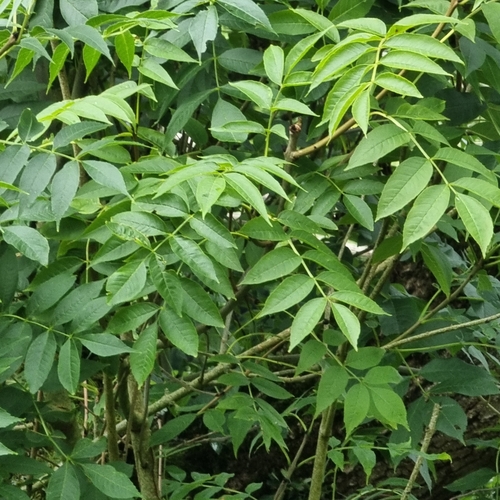
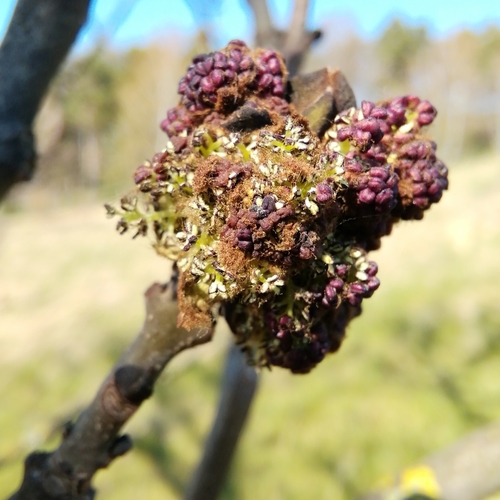
A large deciduous tree. It can grow 42 m high. The crown is broad. The bark is firm and ridged. The leaves are dark green. The leaves are made up of several leaflets. There are 9-11 narrow leaflets along the stalk. The leaflets are 5-8 cm long. They have teeth around the edge and turn yellow in autumn. The flower buds are velvety black. Male and female flowers often occur on the same tree on separate twigs. The fruit have a seedcase with wide wings enclosing it.
How to Grow
Prefers a deep loamy soil, even if it is on the heavy side. Most members of this genus are gross feeders and require a rich soil. Plants can succeed in very exposed positions, including maritime exposure, though they can become wind-shaped. Thrives in alkaline soils but not in shallow soils over chalk. Tolerates a pH as low as 4.5, but prefers a base-rich soil above 5.5. Trees are surprisingly tolerant of seasonally water-logged soils. Dislikes dryness at the roots, especially in late spring. Very intolerant of shade, young plants fail to develop properly in such a position and often die. Although the dormant plant is very cold-hardy, the young growth in spring, even on mature plants, is frost-tender and so it is best to grow the plants in a position sheltered from the early morning sun. A fast growing tree, it is sometimes cultivated for its valuable timber. Very tolerant of cutting, ash was also at one time frequently coppiced for its wood. However, modern use of plastics have reduced its economic values. There are many named varieties, selected for their ornamental value. Trees have a light canopy and cast little shade. A food plant for many insect species, there are 41 associated insect species. Trees can be male, female, monoecious or hermaphrodite, they can also change sex from year to year. Trees take 30 - 40 years to flower from seed. The flowers are produced on one-year old wood. This species is notably resistant to honey fungus. In garden design, as well as the above-ground architecture of a plant, root structure considerations help in choosing plants that work together for their optimal soil requirements including nutrients and water.
Propagation: Seed is best harvested green — fully developed but not yet dried on the tree — and sown immediately in a cold frame, where it usually germinates in spring. Stored seed requires cold stratification; approximately 5% will germinate in the first year, with the remainder germinating in the second. Prick seedlings into individual pots when large enough and grow on in a cold frame through their first winter. Plant out into permanent positions or a nursery bed in late spring or early summer the following year. Where sufficient seed is available, sow directly into an outdoor seedbed in autumn and grow on for 2 years before transplanting. Cuttings of mature wood placed in a sheltered outdoor bed in winter will sometimes strike.
Medicinal Uses
The leaves are astringent, cathartic, diaphoretic, mildly diuretic, laxative, and purgative, and serve as a mild substitute for senna pods as a laxative. Leaves should be gathered in June, well dried, and stored in airtight containers. The bark is antiperiodic, astringent, and a bitter tonic, occasionally used in modern herbalism for the treatment of fevers. The seeds, including their wings, have been used as a carminative and will store for 12 months if gathered when ripe.
Other Uses
A green dye is obtained from the leaves. The bark yields tannin. A tying material can be obtained from the wood. The tree tolerates extreme exposure and grows relatively fast, making it suitable for shelterbelts, though it comes into leaf late and loses its leaves early in autumn, which limits its effectiveness as shelter. Wood is hard, light, flexible, strong, resilient, and highly valued for tool handles, oars, furniture, and posts. It is an excellent fuel, burning well even when green, though some sources suggest it burns better when properly seasoned.
Wikipedia
Source ↗Fraxinus excelsior, known as the ash, or European ash or common ash to distinguish it from other types of ash, is a flowering plant species in the olive family Oleaceae. It is native throughout mainland Europe east to the Caucasus and Alborz mountains, and west to Great Britain and Ireland, the latter determining its western boundary. The northernmost location is in the Trondheimsfjord region of Norway. The species is widely cultivated and reportedly naturalised in New Zealand and in scattered locales in the United States and Canada. The wood has many uses as it is flexible, workable, strong and lightweight.
Production
They are fast growing.
Other Information
It is cultivated in Sicily for Manna.
Notes
There are about 65 Fraxinus species. They are mostly temperate and subtropical.
Names & Synonyms
Bijeli jasen, Ipini, Veliki jesen
References (26)
- Bodkin, F., 1991, Encyclopedia Botanica. Cornstalk publishing, p 479
- Brickell, C. (Ed.), 1999, The Royal Horticultural Society A-Z Encyclopedia of Garden Plants. Convent Garden Books. p 445
- Bussman, R. W., et al, 2016, A comparative ethnobotany of Khevsureti, Samtskhe-Javakheti, Tusheti, Svaneti, and Racha-Lechkhumi, Republic of Georgia (Sakartvelo), Caucasus. Journal of Ethnobiology and Ethnomedicine (2016) 12:4
- Bussman, R. W. et al, 2017, Ethnobotany of Samtskhe-Javakheti, Sakartvelo (Republic of Georgia), Caucasus. Indian Journal of Traditional Knowledge Vol. 16(1) pp 7-24
- Bussman, R. W., et al, 2021, Unity in diversity—food plants and fungi of Sakartvelo (Republic of Georgia), Caucasus. Journal of Ethnobiology and Ethnomedicine (2021) 17:72 p 9
- Coombes, A.J., 2000, Trees. Dorling Kindersley Handbooks. p 229
- Cundall, P., (ed.), 2004, Gardening Australia: flora: the gardener's bible. ABC Books. p 611
- Esperanca, M. J., 1988. Surviving in the wild. A glance at the wild plants and their uses. Vol. 1. p 67
- Etherington, K., & Imwold, D., (Eds), 2001, Botanica's Trees & Shrubs. The illustrated A-Z of over 8500 trees and shrubs. Random House, Australia. p 333
- Facciola, S., 1998, Cornucopia 2: a Source Book of Edible Plants. Kampong Publications, p 162
- Green, P. S., 2003, Synopsis of the Oleaceae from the Indian Sub-Continent. Kew Bulletin, Vol. 58, No. 2 (2003), pp. 257-295
- Hibbert, M., 2002, The Aussie Plant Finder 2002, Florilegium. p 103
- Harris, E & J., 1983, Field Guide to the Trees and Shrubs of Britain. Reader's Digest. p 164
- Hedrick, U.P., 1919, (Ed.), Sturtevant's edible plants of the world. p 319
- http://nordicfood lab/org/blog/2102/9/wild-edible-plants-an-overview
- Lord, E.E., & Willis, J.H., 1999, Shrubs and Trees for Australian gardens. Lothian. p 56
- Mabey, R., 1973, Food for Free. A Guide to the edible wild plants of Britain, Collins. p 182
- Michael, P., 2007, Edible Wild Plants and Herbs. Grub Street. London. p 14
- Plants for a Future database, The Field, Penpol, Lostwithiel, Cornwall, PL22 0NG, UK. http://www.scs.leeds.ac.uk/pfaf/
- Postman, J. D., et al, 2012, Recent NPGS Coordinated Expeditions in the Trans-Caucasus Region to Collect Wild Relatives of Temperate Fruit and Nut Crops. In Acta Horticulturae Number 948 p 191-198
- Redzic, S. J., 2006, Wild Edible Plants and their Traditional Use in the Human Nutrition in Bosnia-Herzegovina. Ecology of Food and Nutrition, 45:189-232
- Sfikas, G., 1984, Trees and shrubs of Greece. Efstathiadis Group. Athens. p 182
- Sp. pl. 2:1057. 1753
- Svanberg, I. et al, 2012, Uses of tree saps in northern and eastern parts of Europe. Acta Societatis Botanicorum Poloniae 81 (4): 343-357
- www.worldagroforestrycentre.org/treedb/
- Young, J., (Ed.), 2001, Botanica's Pocket Trees and Shrubs. Random House. p 393