Galium bungei
Steud.
RubiaceaeLeaves
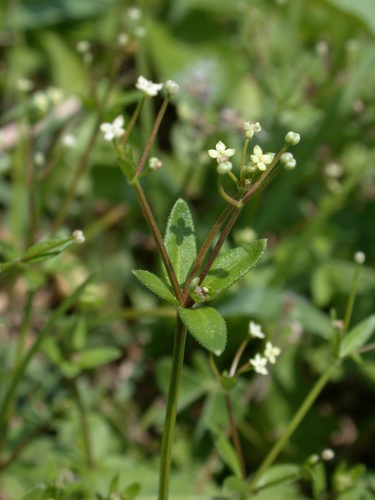
iNaturalist · cc-by-nc
(c) lecanorchis, some rights reserved (CC BY-NC)
(c) lecanorchis, some rights reserved (CC BY-NC)

iNaturalist · cc-by-nc
(c) Chen Shu, some rights reserved (CC BY-NC), uploaded by Chen Shu
(c) Chen Shu, some rights reserved (CC BY-NC), uploaded by Chen Shu

iNaturalist · cc-by
(c) Cheng-Tao Lin, some rights reserved (CC BY), uploaded by Cheng-Tao Lin
(c) Cheng-Tao Lin, some rights reserved (CC BY), uploaded by Cheng-Tao Lin
What to Eat
Edible parts: Leaves
The leaves are eaten.
Where to Find It
It is a temperate plant. In China it grows from near sea level to 3,600 m above sea level. In Sichuan and Yunnan.
Asia, China, Japan, Korea, Taiwan,
Countries: United Arab Emirates, Afghanistan, Armenia, Azerbaijan, Bangladesh, Bahrain, Brunei, Bhutan, China, Georgia, Indonesia, Israel, India, Iraq, Iran, Jordan, Japan, Kyrgyzstan, Cambodia, North Korea, South Korea, Kuwait, Kazakhstan, Laos, Lebanon, Sri Lanka, Myanmar, Mongolia, Maldives, Malaysia, Nepal, Oman, Philippines, Pakistan, Qatar, Saudi Arabia, Singapore, Syria, Thailand, Tajikistan, Timor-Leste, Turkmenistan, Turkey, Taiwan, Uzbekistan, Vietnam, Yemen
How to Identify
A herb. It keeps growing from year to year. It grows 5-50 cm tall. The stems are 4 angled. The leaves are in rings of 4. They are narrowly oblong and 8-20 mm long by 3-7 mm wide.
Notes
There are about 300 Galium species. There are 60 species in tropical America.
Names & Synonyms
Galium gracile Bunge
References (1)
- Plants for a Future database, The Field, Penpol, Lostwithiel, Cornwall, PL22 0NG, UK. http://www.scs.leeds.ac.uk/pfaf/ (As Galium gracile)


