Garcinia lateriflora
Blume
Kandis
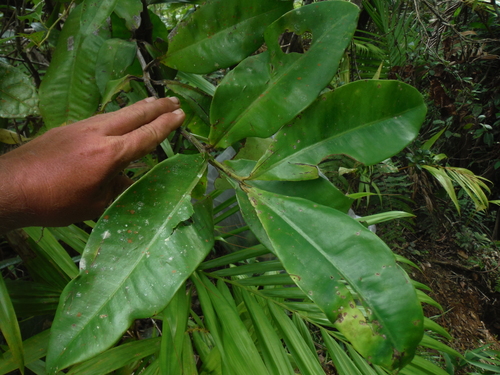
iNaturalist · cc-by-nc
(c) Martin Reith, some rights reserved (CC BY-NC), uploaded by Martin Reith
(c) Martin Reith, some rights reserved (CC BY-NC), uploaded by Martin Reith

iNaturalist · cc-by
(c) Lucas Rubio, some rights reserved (CC BY), uploaded by Lucas Rubio
(c) Lucas Rubio, some rights reserved (CC BY), uploaded by Lucas Rubio

iNaturalist · cc-by-nc
(c) augochlora, some rights reserved (CC BY-NC), uploaded by augochlora
(c) augochlora, some rights reserved (CC BY-NC), uploaded by augochlora
What to Eat
Edible parts: Seeds, Fruit, Leaves
The fleshy fruit is eaten raw after being carefully skinned or dried whole. Young leaves serve as a souring agent in cooking.
Where to Find It
A tropical plant. They are abundant at low altitudes throughout the Philippines.
Asia, Indonesia, Pacific, Philippines, SE Asia,
Countries: United Arab Emirates, Afghanistan, Armenia, Australia, Azerbaijan, Bangladesh, Bahrain, Brunei, Bhutan, China, Fiji, Micronesia, Georgia, Indonesia, Israel, India, Iraq, Iran, Jordan, Japan, Kyrgyzstan, Cambodia, Kiribati, North Korea, South Korea, Kuwait, Kazakhstan, Laos, Lebanon, Sri Lanka, Marshall Islands, Myanmar, Mongolia, Maldives, Malaysia, Nepal, Nauru, New Zealand, Oman, Papua New Guinea, Philippines, Pakistan, Palau, Qatar, Saudi Arabia, Solomon Islands, Singapore, Syria, Thailand, Tajikistan, Timor-Leste, Turkmenistan, Tonga, Turkey, Tuvalu, Taiwan, Uzbekistan, Vietnam, Vanuatu, Samoa, Yemen
How to Identify
A small tree. The branches are more or less angular, smooth and yellowish green. The leaves are opposite, scattered, oblong and abruptly pointed. The base of the leaves is blunt with yellowish green leaf stalks. The flowers are bisexual and yellowish white. They are carried singly. The fruit is egg shaped, smooth, greenish and with 2 or 4 seeds.
Notes
There are about 300 Garcinia species.
Names & Synonyms
Djawura, Kandis, Kariis, Manggus hutan
References (9)
- Arora, R. K., 2014, Diversity in Underutilized Plant Species - An Asia-Pacific Perspective. Bioversity International. p 73
- Bijdr. 5:214. 1825
- Coronel, R.E., 1982, Fruit Collections in the Philippines. IBPGR Newsletter p 10
- Giesen, W., 2013, Paludiculture: sustainable alternatives on degraded peat land in Indonesia (revised draft)
- Hariyadi, B., 2008, The Entwined Tree: Traditional Natural Resource Management of Serampas, Jambi, Indonesia. Ph. D thesis. Univ. or Hawaii. p 402
- Maghirang, R. G., et al, 2018. Ethnobotanical Studies of Some Plants Commonly Used as Vegetables in Selected Provinces of the Philippines. Journal of Nature Studies. 17(2), 30-43.
- Menninger, E.A., 1977, Edible Nuts of the World. Horticultural Books. Florida p 46
- Monsalud, M.R., Tongacan, A.L., Lopez, F.R., & Lagrimas, M.Q., 1966, Edible Wild Plants in Philippine Forests. Philippine Journal of Science. p 479
- Wickens, G.E., 1995, Edible Nuts. FAO Non-wood forest products. FAO, Rome. p 131


