Gardenia lutea
Fresen.
Cape jasmine
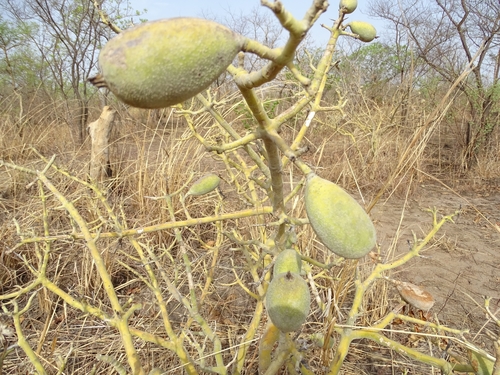
(c) Mohamed SAOUPKAI, some rights reserved (CC BY-NC)
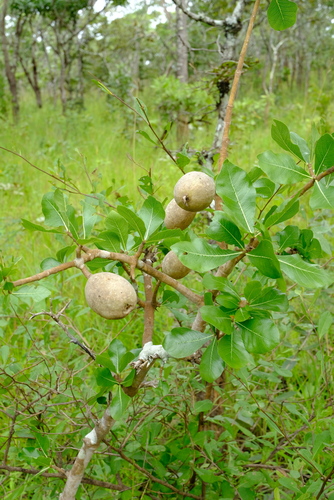
(c) Nick Helme, some rights reserved (CC BY-NC)

(c) Gombo Dani Abdoulaye, some rights reserved (CC BY-NC)
What to Eat
Edible parts: Fruit - caution, Seeds
The seeds are boiled and eaten with added salt, or cooked with onions and oil. The fruit flesh may also be consumed.
Known Hazards
Where to Find It
A tropical plant.
Africa, East Africa, Ethiopia, Sudan,
How to Identify
A shrub or small tree. It grows 1.8-2.4 m tall. The flowers are white. The fruit are large and brown.
Medicinal Uses
The fruit are used as medicine.
Other Information
It is a famine food.
Notes
There are about 200 Gardenia species. Chemical composition: Protein (crude) = 21.9% (dry). Fat = 6.2% (dry). Fibre (crude) = 7.0% (dry). Ash (insoluble) = 3.6% (dry). Carbohydrate (soluble): Starch = 28.2% (dry). Sucrose = 5.0% (dry). D-glucose = 0.1% (dry). D-fructose = Ø% (dry). Amino acids (g [16g N]]-1): Aspartic acid = 11.6g. Threonine = 3.7g. Serine = 4.8g. Glutamic acid = 16.0g. Proline = 4.3g. Glycine = 4.4g. Alanine = 5.2g. Valine = 5.7g. Cysteine = 1.1g. Methionine = 1.4g. Isoleucine = 4.6g. Leucine = 9.2g, Tyrosine = 3.4g. Phenylalanine = 6.5g. Lysine = 8.2g. Histidine = 3.2g. Arginine = 10.1g. Minerals: Sulphur = 0.21% (dry). Potassium = 0.24% (dry). Magnesium = 0.17% (dry). Na = 0.01% (dry). K = 1.40% (dry). Zinc = 28 mg/kg-1 (dry). Iron = 111 mg/kg-1 (dry). Manganese = 23 mg/kg-1 (dry). Copper = 6 mg/kg-1 (dry). The fruit are used as medicine.
Names & Synonyms
Fuwl umgawy, Gambiela
References (3)
- ABDELMUTI,
- Jardin, C., 1970, List of Foods Used In Africa, FAO Nutrition Information Document Series No 2.p 139
- Molla, A., Ethiopian Plant Names. http://www.ethiopic.com/aplants.htm


