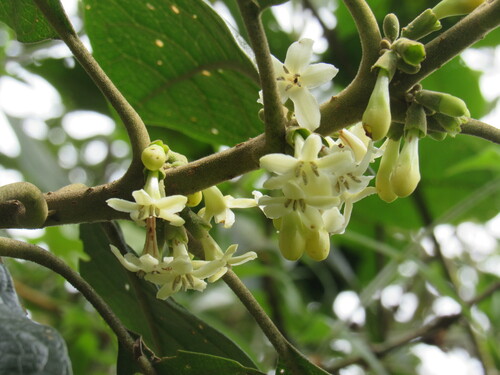
Hedeoma pulegioides
(L.) Pers.
American Pennyroyal, Squaw mint

(c) Erik Danielsen, some rights reserved (CC BY-NC), uploaded by Erik Danielsen

(c) Douglas Goldman, some rights reserved (CC BY-SA), uploaded by Douglas Goldman
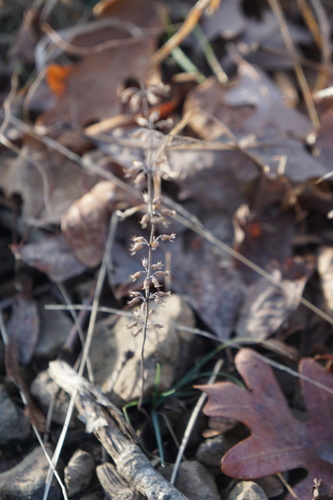
(c) Sara Rall, some rights reserved (CC BY-NC), uploaded by Sara Rall
What to Eat
Edible parts: Leaves - tea
The leaves have a strong mint-like aroma and flavour. They can be brewed into a refreshing tea that aids digestion, or used as a culinary flavouring. An essential oil from the plant is also used by the food industry to flavour beverages, ice cream, baked goods, and similar products.
Where to Find It
It grows in cool temperate climates. It grows in dry soil and waste places such as along roadsides. It suits plant hardiness zone 4.
Britain, Canada, Europe, France, Germany, Netherlands, North America*, USA,
How to Identify
A herb. It is a bushy annual plant. It grows up to about 45 cm high. The leaves are on long stalks and are rounded at their base. The leaves are oval and 2.5 cm long. The flowers are small and blue. They are in small clusters in the axils of leaves.
How to Grow
Plants are grown by seed.
Propagation: Sow seed in situ in spring or autumn.
Medicinal Uses
American pennyroyal has a long history of medicinal use among native North American Indian peoples and has become a traditional household remedy across North America. It is used mainly for digestive disorders, colds, whooping cough, painful menstruation, and as an aid in childbirth. A tea made from the leaves or flowering stems is carminative, rubefacient, and stimulant; it is used for colds because it promotes perspiration. A tea combined with brewer's yeast can induce an abortion. Plants are harvested when in flower and can be used fresh or dried. The essential oil is distilled from flowering plants and used medicinally in the same ways as the leaves. Caution is advised, as the pure essential oil is very toxic — ingestion can be lethal and skin contact can cause dermatitis.
Other Uses
The essential oil is used as an ingredient in commercial insect repellents and cleaning products. The plant itself acts as an insect repellent and, when rubbed on the body, is said to repel ticks.
Wikipedia
Source ↗Hedeoma pulegioides, also known as pennyrile, American pennyroyal, or American false pennyroyal, is a species of Hedeoma native to eastern North America, from Nova Scotia and southern Ontario west to Minnesota and South Dakota, and south to northern Georgia and Arkansas. It is a low-growing, strongly aromatic herbaceous annual plant from 15 to 30 cm tall, with a slender erect much-branched, somewhat hairy and square stem. The leaves are small, thin, and rather narrow, with a strong mintlike odor and pungent taste. The flowers are pale blue, monoecious, produced in small clusters; it flowers from mid to late summer. Other names are mock pennyroyal, squaw mint, tickweed, stinking balm, mosquito plant, and American false pennyroyal. The term "pennyroyal" (or pennyrile, from a dialectal pronunciation) is also used to describe a geographic province of western Kentucky, the Pennyroyal Plateau, where H. pulegioides grew in profusion sufficient to lend its name to the whole area.
Other Information
It is cultivated.
Notes
There are about 24 Hedeoma species.
Names & Synonyms
References (10)
- Brown, D., 2002, The Royal Horticultural Society encyclopedia of Herbs and their uses. DK Books. p 230
- Facciola, S., 1998, Cornucopia 2: a Source Book of Edible Plants. Kampong Publications, p 126
- Kermath, B. M., et al, 2014, Food Plants in the Americas: A survey of the domesticated, cultivated and wild plants used for Human food in North, Central and South America and the Caribbean. On line draft. p 406
- Lawton, B.P., 2002, Mints. A Family of Herbs and Ornamentals. Timber Press, Portland, Oregon. p 132
- MacKinnon, A., et al, 2009, Edible & Medicinal Plants of Canada. Lone Pine. p 283
- Plants for a Future database, The Field, Penpol, Lostwithiel, Cornwall, PL22 0NG, UK. http://www.scs.leeds.ac.uk/pfaf/
- Seidemann J., 2005, World Spice Plants. Economic Usage, Botany, Taxonomy. Springer. p 172
- Syn. pl. 2(1):131. 1806
- Wiersema, J. H. & Leon, B., 2013, World Economic Plants. A Standard Reference CRC Press. 2nd Ed. p 339
- World Checklist of Useful Plant Species 2020. Royal Botanic Gardens, Kew