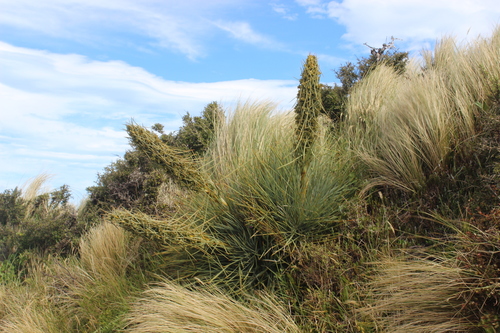
Heracleum tuberosum
Molina ex Willd.

© Institut Botànic de Barcelona (IBB, CSIC-Ajuntament de Barcelona)
What to Eat
Edible parts: Root
The root is edible and has a pleasant taste. It can reach 15cm in length and 8cm in width, and the plant produces roots abundantly. The roots are yellow in colour.
Known Hazards
Where to Find It
It usually grows in sandy soils near hedges.
Chile, South America,
How to Identify
A perennial with hermaphrodite, self-fertile flowers pollinated by insects. Adaptable to light sandy, medium loamy, and heavy clay soils across mildly acidic to basic pH levels. Grows in full shade, semi-shade, or full sun, preferring moist conditions.
How to Grow
We have almost no information on this species and do not know if it will be hardy in this country. The following notes are based on the general needs of the genus. Succeeds in any ordinary garden soil, doing best in moist soils or deep woodland.
Propagation: Sow seed mid to late spring or early autumn directly in situ. Divide plants in autumn.
Medicinal Uses
None known.
Other Uses
None known.
Wikipedia
A perennial with hermaphrodite, self-fertile flowers pollinated by insects. Adaptable to light sandy, medium loamy, and heavy clay soils across mildly acidic to basic pH levels. Grows in full shade, semi-shade, or full sun, preferring moist conditions.
References (2)
- Hedrick, U.P., 1919, (Ed.), Sturtevant's edible plants of the world. p 342
- Plants for a Future database, The Field, Penpol, Lostwithiel, Cornwall, PL22 0NG, UK. http://www.scs.leeds.ac.uk/pfaf/