Hierochloe odorata
(L.) P.Beauv.
Holy grass, Sweet grass, Vanilla grass

Wikimedia Commons - Hierochloe_odorata_(USDA).jpg
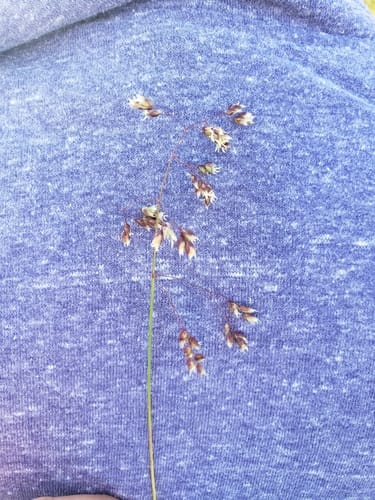
(c) Patrick Jackson, some rights reserved (CC BY)
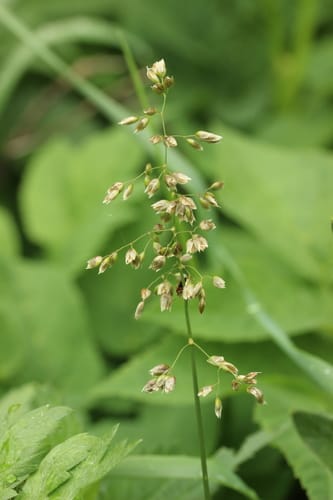
(c) Соколков Юрий Павлович, some rights reserved (CC BY-NC)
What to Eat
Edible parts: Seeds, Cereal, Leaves - flavouring
The seed can be cooked, though it is small and fiddly to work with. It almost certainly does not contain coumarin and should be safe to use. An essential oil from the leaves is used as a food flavouring in sweets and soft drinks, giving a strong vanilla-like flavour. The leaves are also added to vodka as a flavouring, and the plant is said to serve as a colouring agent, though no further details are given.
Where to Find It
It is a temperate plant. It grows in damp meadows and near lakes in the Rocky Mountains in Canada.
Alaska, Asia, Australia, Britain, Canada, Caucasus, China, Europe, France, India, Korea, Lithuania, Luxembourg, North America, Norway, Poland, Scandinavia, Tasmania, USA,
How to Identify
A tufting grass. It keeps growing from year to year. It has an aromatic smell. It has a creeping rootstock. The stalks are smooth and 30-60 cm high. The leaf blades are flat and 20-40 cm long. The flower is pyramid shaped. The spikelets have 3 flowers. They are shiny and yellow-brown or purplish.
How to Grow
Plants are grown from seed which needs to be stored for 6-12 months before sowing. They can also be grown by division of the clump.
Propagation: Sow seed in spring directly in situ, barely covering it; germination usually takes place within 2 weeks. If seed is scarce, sow in a cold frame in spring, prick the seedlings into individual pots when large enough to handle, and plant out in early summer. Division can be done in spring or summer and is very straightforward — virtually any piece of root will regrow into a new plant.
Medicinal Uses
A tea made from the leaves treats fevers, coughs, sore throats, chafing, and venereal infections. It is also used to stop vaginal bleeding and to expel afterbirth. The stems can be soaked in water and applied to treat windburn and chapping, or used as an eyewash. Some caution is advised when using this plant internally. The leaves are harvested in summer and dried for later use. Inhaling smoke from the burning leaves has been used in the treatment of colds.
Other Uses
The dried leaves are used as incense, and were formerly used as a strewing herb and as stuffing in pillows and mattresses. They also function as an insect repellent in clothes cupboards, where they impart a pleasant scent to clothing. The leaves are used to make aromatic baskets; when wet they can be sewn together, dried until tight, and sealed with resin over the stitches to form a waterproof container. Soaking the leaves in water produces a tonic hair wash. An essential oil distilled from the leaves is used in perfumery, where it acts as an excitant and fixative for other aromas. The plant has a very aggressive root system and has been used to stabilise banks.
Wikipedia
Source ↗Hierochloe odorata or Anthoxanthum nitens (commonly known as sweet grass, manna grass, Mary's grass or vanilla grass, and as holy grass in the UK, bison grass e.g. by Polish vodka producers) is an aromatic herb native to northern Eurasia and North America. It is considered sacred by many Indigenous peoples in Canada and the United States. It is used as a smudge in herbal medicine and in the production of distilled beverages (e.g., Żubrówka, Wisent). It owes its distinctive sweet scent to the presence of coumarin. This variety of grass is distinct from the species commonly known as buffalo grass in Australia and the United States (Stenotaphrum secundatum and Bouteloua dactyloides, respectively).
Notes
There are about 15-30 Hierochloe species. They grow in cool places.
Names & Synonyms
Marigras, Russian buffalo-grass, Zubrovka
References (15)
- Ambasta, S.P. (Ed.), 2000, The Useful Plants of India. CSIR India. p 267
- Brown, D., 2002, The Royal Horticultural Society encyclopedia of Herbs and their uses. DK Books. p 235
- Ess. Agrostogr. 62, 164. 1812
- Facciola, S., 1998, Cornucopia 2: a Source Book of Edible Plants. Kampong Publications, p 176
- Girard, N. J., 2020, Sustainable Foraging of Wild Edible Plants in Norway. A Biocultural Approach. M. Sc. thesis Norwegian University. p 133
- Hibbert, M., 2002, The Aussie Plant Finder 2002, Florilegium. p 140
- Lamp, C.A., Forbes, S.J. and Cade, J.W., 1990, Grasses of Temperate Australia. Inkata Press. p 174
- MacKinnon, A., et al, 2009, Edible & Medicinal Plants of Canada. Lone Pine. p 376
- Marinelli, J. (Ed), 2004, Plant. DK. p 271
- Morton,
- Plants for a Future database, The Field, Penpol, Lostwithiel, Cornwall, PL22 0NG, UK. http://www.scs.leeds.ac.uk/pfaf/
- Porsild, A.E., 1974, Rocky Mountain Wild Flowers. Natural History Series No. 2 National Museums of Canada. p 54
- Seidemann J., 2005, World Spice Plants. Economic Usage, Botany, Taxonomy. Springer. p 178
- Tanaka,
- Tasmanian Herbarium Vascular Plants list p 85


