Alopecurus aequalis
Sobol.
Shortawn foxtail
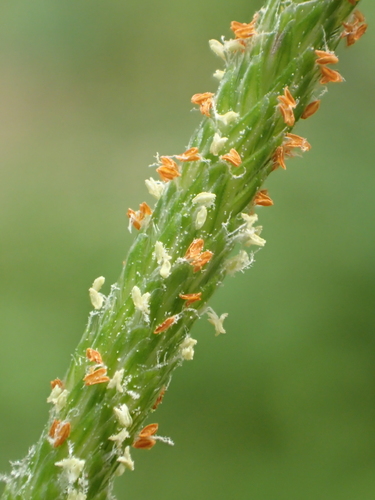
no rights reserved, uploaded by 葉子
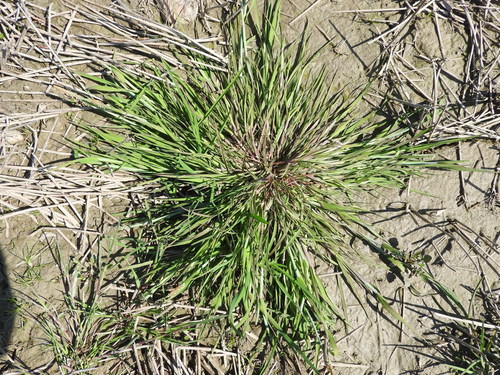
(c) Tomáš Chvojka, some rights reserved (CC BY-NC), uploaded by Tomáš Chvojka
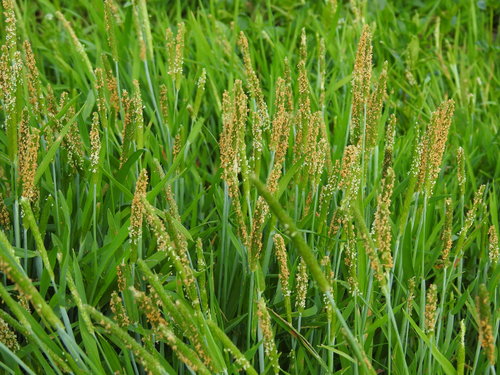
(c) Olesya Deineko, some rights reserved (CC BY-NC), uploaded by Olesya Deineko
What to Eat
Edible parts: Seeds, Cereal
The seeds can be cooked whole in the manner of millet, or more commonly ground into flour and used alongside other cereals in bread-making. The seeds are small and fiddly to harvest, making collection in meaningful quantities labour-intensive, and this plant is very much a famine food. Like other wild grasses, the seeds can also be parched, ground into meal, or boiled into porridge, though historical use by Native Americans is not well documented. The plant produces seeds from late summer into autumn, thriving in wet soils along lake edges. It is more widely noted as a forage grass for grazing animals than as a human food source.
Where to Find It
It is a temperate climate. It grows in wet areas and near the edges of ponds. In Pakistan it grows between 2,000-4,500 m altitude. In Argentina it grows from sea level to 1,000 m above sea level. In Sichuan and Yunnan.
Albania, Argentina, Asia, Australia, Bhutan, Britain, Central Asia, China, Europe, Himalayas, Iran, Japan, Kazakhstan, Korea, Kyrgyzstan, Luxembourg, Middle East, Mongolia, Myanmar, Nepal, North America, Pakistan, Russia, SE Asia, South America, Taiwan, Tajikistan, Tibet, Turkmenistan, USA, Uzbekistan,
How to Identify
An annual or perennial millet grass which grows up to 30 cm high. It can form roots at the lower nodes. The leaf blades are 2-10 cm long by 2-5 mm wide. The flower panicle is 2-6 cm long by 3-6 mm wide. It is cylinder shaped. The spikelets are 1.5-3 mm long.
How to Grow
See the plants native habitat for ideas on its cultivation needs. This species is a weed of cultivated cereals and can harbour pests common to cultivated crops.
Propagation: No detailed information is available for this species. Sow seed in situ in April, covering only just barely.
Medicinal Uses
The whole plant is antiphlogistic, depurative, and diuretic. It is used in the treatment of oedema, chickenpox, and snakebites.
Other Uses
No other uses are known.
Wikipedia
Source ↗Alopecurus aequalis is a common species of grass known as shortawn foxtail or orange foxtail. It is native to much of the temperate Northern Hemisphere from Eurasia to North America. It is most commonly found in areas near fresh water, such as the margins of ponds and ditches.
Other Information
Minor
Notes
There are about 35 Alopecurus species.
Names & Synonyms
Ttuksaepul
References (4)
- Fl. petrop. 16. 1799
- http://www.stoller-eser.com/Flora/ethnobotany_table.htm
- Kim, H. & Song, M., 2013, Ethnobotanical analysis for traditional knowledge of wild edible plants in North Jeolla Province (Korea). Genetic. Resour. Crop Evol. (2013) 60:1571-1585
- Plants for a Future database, The Field, Penpol, Lostwithiel, Cornwall, PL22 0NG, UK. http://www.scs.leeds.ac.uk/pfaf/


