Wurfbainia aromatica
Roxb.
Bengal cardamom, Nepal cardamom

Royal Botanic Garden Edinburgh

Royal Botanic Garden Edinburgh

Royal Botanic Garden Edinburgh
What to Eat
Edible parts: Seeds, Spice, Root, Fruit, Flowers
The seeds are used as a spice. The stems are boiled and eaten. The flowering shoots are used in curries and chutney. The rhizomes are used as a flavouring.
Where to Find It
A tropical plant. It grows in the tropical Himalayas.
Asia, Bangladesh, Bengal, Himalayas, India, Indochina, Myanmar, Nepal, Northeastern India, SE Asia, Vietnam,
How to Identify
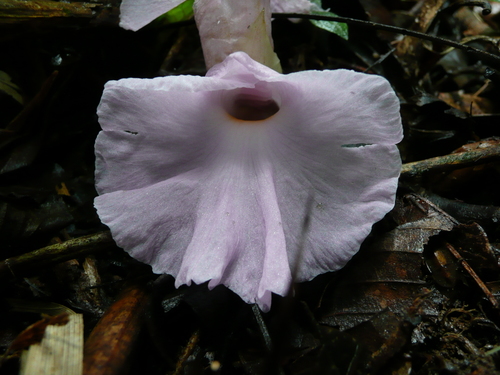
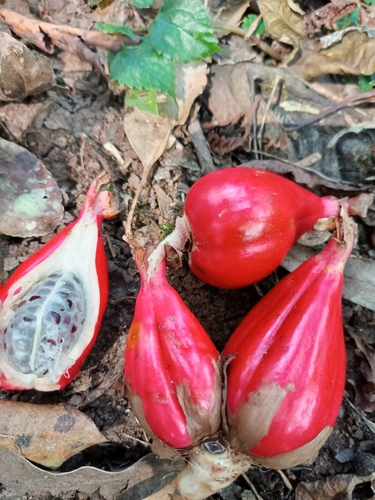
A ginger family herb. It has underground stems or rhizomes which produce leafy shoots. The leafy stem is about 1 m tall. The leaves are oblong or sword shaped and 15-30 cm long by 5-10 cm wide. The flowers occur in a round spike on a short stalk. The fruit is an oblong, 3 sided capsule. It is about 2.5 cm long.
Medicinal Uses
The seeds contain cineol, which has traditional uses as a flavoring.
Other Information
It is a cultivated food plant. It is sold in local markets.
Notes
There are about 150 Amomum species. They are mostly tropical. The seed contains cineol.
Names & Synonyms
Dhewtara, Khobu telli, Khuk, Morang elaichi, Namra, Papia, Thao qua, Tharo quar, Veldoda