Amomum dallachyi
F. Muell.
Native Ginger, Green Ginger, Prickly Ginger
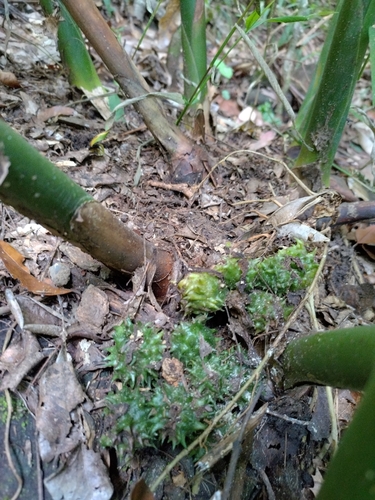
(c) sworboys, some rights reserved (CC BY-NC)
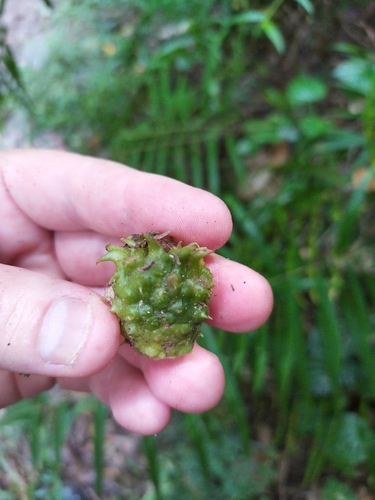
(c) sworboys, some rights reserved (CC BY-NC)
(c) sworboys, some rights reserved (CC BY-NC)
What to Eat
Edible parts: Fruit, Rhizome, Root
The fruit flesh, rhizome, and root are edible.
Where to Find It
It is a tropical plant. It grows in lowland and rainforest foothills. It needs plenty of water. It does best in shade. It is damaged by frost.
Asia, Australia*,
How to Identify
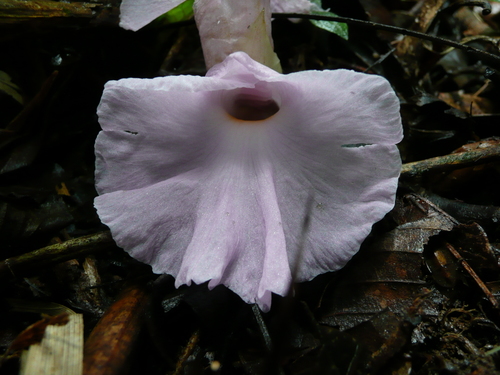
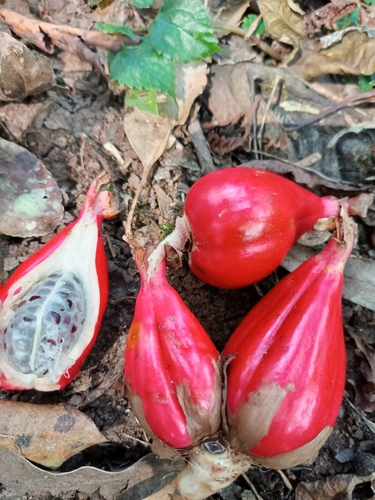
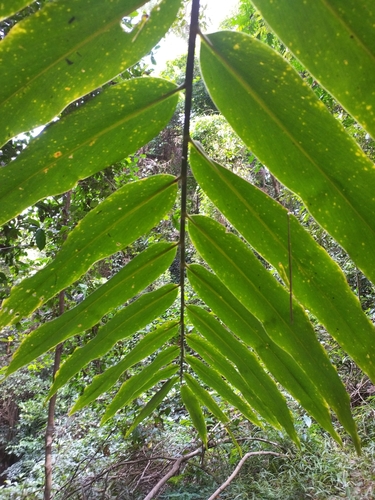
A ginger family herb up to 4 m high. It forms spreading clumps. The leaves are simple and up to 30-43 cm long and 5 cm wide. They reduce in size up the stem. The flowers are 2-5 cm long by 2 cm wide. They are yellow. They are on a short underground spike among a head of bracts at the base of the plant. The fruit are individual capsules 15-30 mm across in clusters at the base of the plant. They are round and split into 3 lobes. There are numerous seeds inside. They are black. The flesh of the fruit is edible.
How to Grow
Plants can be grown by seed or by division of the rhizome.
Wikipedia
Source ↗Amomum dallachyi, commonly known as a green ginger, is a plant in the ginger family that is native to Queensland, Australia.
Notes
There are about 150 Amomum species. They are mostly tropical.
Names & Synonyms
References (10)
- Bodkin, F., 1991, Encyclopedia Botanica. Cornstalk publishing, p 76
- Cherikoff V. & Isaacs, J., The Bush Food Handbook. How to gather, grow, process and cook Australian Wild Foods. Ti Tree Press, Australia p 151, 198
- Cooper W & Cooper W T, 1994, Fruits of the Rain Forest. RD Press p 32
- Cribb, A.B. & J.W., 1976, Wild Food in Australia, Fontana. p 96
- Elliot, W.R., & Jones, D.L., 1982, Encyclopedia of Australian Plants suitable for cultivation. Vol 2. Lothian. p 184
- Jackes, B.R., 2001, Plants of the Tropics. Rainforest to Heath. An Identification Guide. James Cook University. p 87
- Jones D, L, 1986, Ornamental Rainforest Plants in Australia, Reed Books, p 266
- Lazarides, M. & Hince, B., 1993, Handbook of Economic Plants of Australia, CSIRO. p 18
- Low, T., 1991, Wild Food Plants of Australia. Australian Nature FieldGuide, Angus & Robertson. p 64
- Scarth-Johnson, V., 2000, National Treasures. Flowering Plants of Cooktown and Northern Australia. Vera Scarth-Johnson Gallery Association. Cooktown, Australia. p 111