Etlingera polycarpa
(K. Schum.) A. D. Poulsen
ZingiberaceaeFruit

gbif · cc0
Royal Botanic Garden Edinburgh
Royal Botanic Garden Edinburgh

gbif · cc0
Royal Botanic Garden Edinburgh
Royal Botanic Garden Edinburgh

gbif · cc0
Royal Botanic Garden Edinburgh
Royal Botanic Garden Edinburgh
What to Eat
Edible parts: Fruit
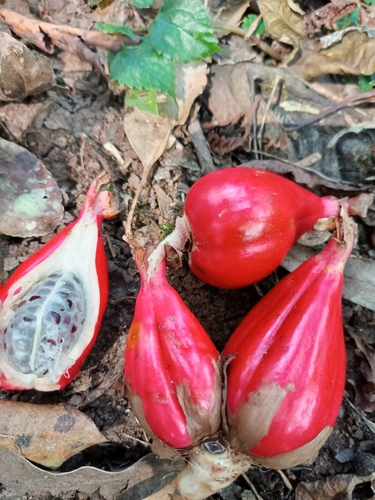
The fruit are eaten.
Where to Find It
A tropical plant. It has been collected in Sulawesi in Indonesia.
Asia, Indonesia*, Pacific, Papua New Guinea, PNG, SE Asia,
Countries: United Arab Emirates, Afghanistan, Armenia, Australia, Azerbaijan, Bangladesh, Bahrain, Brunei, Bhutan, China, Fiji, Micronesia, Georgia, Indonesia, Israel, India, Iraq, Iran, Jordan, Japan, Kyrgyzstan, Cambodia, Kiribati, North Korea, South Korea, Kuwait, Kazakhstan, Laos, Lebanon, Sri Lanka, Marshall Islands, Myanmar, Mongolia, Maldives, Malaysia, Nepal, Nauru, New Zealand, Oman, Papua New Guinea, Philippines, Pakistan, Palau, Qatar, Saudi Arabia, Solomon Islands, Singapore, Syria, Thailand, Tajikistan, Timor-Leste, Turkmenistan, Tonga, Turkey, Tuvalu, Taiwan, Uzbekistan, Vietnam, Vanuatu, Samoa, Yemen
How to Identify
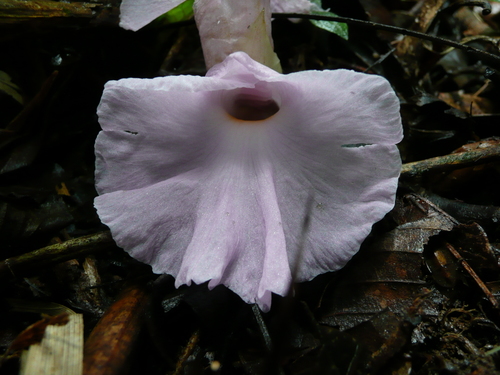
A ginger family herb. The stems are 5 m tall. The leaves are green on one side and purple on the other. The fruit are red and become lighter or orange as they ripen.
Wikipedia
Source ↗Etlingera polycarpa is a monocotyledonous plant species that was first described by Karl Moritz Schumann, and given its current name from Axel Dalberg Poulsen. Etlingera polycarpa is part of the genus Etlingera and the family Zingiberaceae. No subspecies are listed in the Catalog of Life.
Names & Synonyms
Amomum polycarpum K. Schum.Geanthus polycarpus (K. Schum.) Loes.
References (2)
- Powell, J.M., Ethnobotany. In Paijmans, K., 1976, New Guinea Vegetation. Australian National University Press. p 108 (As Amomum polycarpum)
- World Checklist of Useful Plant Species 2020. Royal Botanic Gardens, Kew