Oxalis bifida
Thunb.

(c) Dave U, some rights reserved (CC BY-SA), uploaded by Dave U

(c) magriet b, some rights reserved (CC BY-SA), uploaded by magriet b
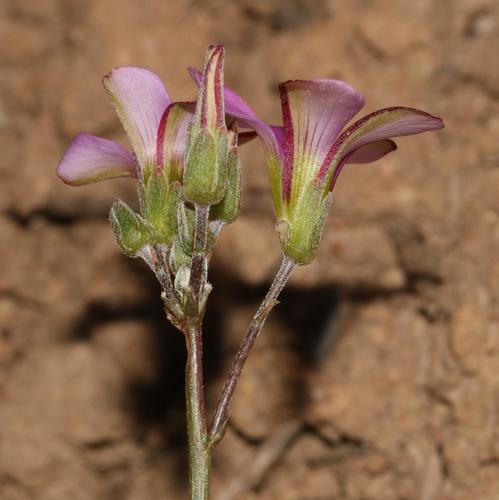
(c) Brian du Preez, some rights reserved (CC BY-SA), uploaded by Brian du Preez
What to Eat
Edible parts: Leaves, Roots
The leaves can be eaten raw or cooked; use in moderation due to oxalic acid content. The bulb can be eaten raw.
Known Hazards
Where to Find It
It is a subtropical plant.
Africa, South Africa*, Southern Africa,
How to Identify
Oxalis bifida is a bulbous perennial reaching 30cm tall, flowering from May to July with hermaphroditic blooms pollinated by insects. It prefers light sandy or medium loamy, well-drained soil in full sun, tolerating mildly acid, neutral, and mildly alkaline pH. The plant adapts to both dry and moist soils and is hardy to UK zone 9.
How to Grow
Easily grown in a sandy soil in a warm dry position. This species is not very cold hardy in Britain, though it might succeed outdoors in the milder areas of the country.
Propagation: Seed is best sown as soon as ripe in a cold frame. Prick out seedlings into individual pots when large enough to handle, then plant out in late spring or early summer. Division in spring — larger divisions can go directly into permanent positions. Smaller divisions are better potted up and grown on in light shade in a cold frame until well established before planting out in late spring or early summer.
Medicinal Uses
None known.
Other Uses
None known.
Wikipedia
Source ↗Oxalis bifida is a species of plant. The species was originally described by Carl Peter Thunberg in 1794.
Notes
There are about 500 Oxalis species.
References (5)
- Fox, F. W. & Young, M. E. N., 1982, Food from the Veld. Delta Books. p 286
- Jardin, C., 1970, List of Foods Used In Africa, FAO Nutrition Information Document Series No 2.p 92
- Plants for a Future database, The Field, Penpol, Lostwithiel, Cornwall, PL22 0NG, UK. http://www.scs.leeds.ac.uk/pfaf/
- Ruiters-Welcome, A. K., 2019, Food plants of southern Africa. Ph.D. thesis. Univ. of Johannesburg p 84
- Welcome, A. K. & Van Wyk, B.-E., 2019, An inventory and analysis of the food plants of southern Africa. South African Journal of Botany 122 (2019) 136–179


