Oxalis cernua
Thunb.

(c) Amelia Tauber, some rights reserved (CC BY)

(c) Karen, some rights reserved (CC BY-NC)
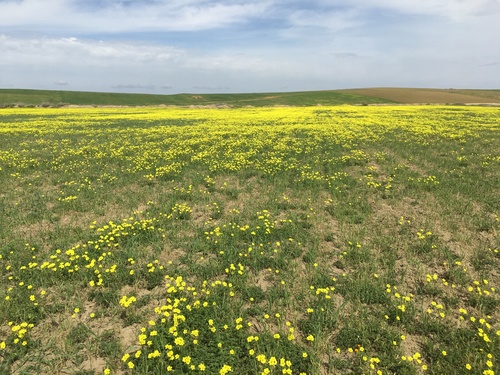
(c) Thomas Friedrich, some rights reserved (CC BY-NC)
What to Eat
Edible parts: Leaves, Bulbils
The leaves and bulbils are eaten.
Known Hazards
Where to Find It
It is a Mediterranean climate plant.
Africa, Algeria, Libya, Mediterranean, North Africa, South Africa, Southern Africa,
How to Identify
A Mediterranean climate herb in the Oxalidaceae family with edible leaves and bulbils.
Medicinal Uses
The plant is palatable and in modest quantities is reasonably harmless to humans and livestock. In South Africa it is a traditional ingredient in dishes such as waterblommetjiebredie ('water flower stew'). The plant has been used in various ways as a source of oxalic acid, as food, and in folk medicine. The raw bulbs have been used to deal with tapeworm and possibly other worms. The plant has been used as a diuretic, possibly hazardously. The lateral underground runners, which tend to be fleshy, have been eaten raw or boiled and served with milk. The golden petals can be used to produce a yellow dye.
Notes
There are about 500 Oxalis species.
References (4)
- Diss. Oxal. 14. 1781
- Hedrick, U.P., 1919, (Ed.), Sturtevant's edible plants of the world. p 456
- Jardin, C., 1970, List of Foods Used In Africa, FAO Nutrition Information Document Series No 2.p 92
- Terra, G. J. A., 1973, Tropical Vegetables. Communication 54e Royal Tropical Institute, Amsterdam, p 64


