Oxalis flava
L.
Pink Bulb Soursob
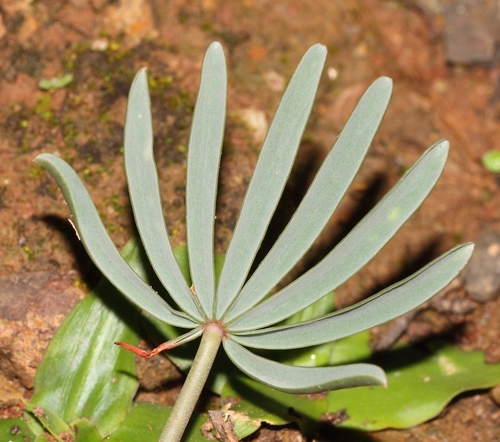
iNaturalist · cc-by-nc
(c) Marion Maclean, some rights reserved (CC BY-NC), uploaded by Marion Maclean
(c) Marion Maclean, some rights reserved (CC BY-NC), uploaded by Marion Maclean

iNaturalist · cc-by-nc
(c) Marion Maclean, some rights reserved (CC BY-NC), uploaded by Marion Maclean
(c) Marion Maclean, some rights reserved (CC BY-NC), uploaded by Marion Maclean

iNaturalist · cc-by-nc
(c) Gregory Nicolson, some rights reserved (CC BY-NC), uploaded by Gregory Nicolson
(c) Gregory Nicolson, some rights reserved (CC BY-NC), uploaded by Gregory Nicolson
What to Eat
Edible parts: Stems, Roots, Tubers, Bulb
The stems, roots, and tubers are used as vegetables.
Where to Find It
It grows in Mediterranean climate places. It can grow in arid places.
Africa, Australia, South Africa, Southern Africa, Tasmania,
Countries: Angola, Australia, Burkina Faso, Burundi, Benin, Botswana, Congo (DRC), Central African Republic, Congo (Republic), Cote d'Ivoire, Cameroon, Cape Verde, Djibouti, Algeria, Egypt, Eritrea, Ethiopia, Gabon, Ghana, Gambia, Guinea, Equatorial Guinea, Guinea-Bissau, Kenya, Comoros, Liberia, Lesotho, Libya, Morocco, Madagascar, Mali, Mauritania, Mauritius, Malawi, Mozambique, Namibia, Niger, Nigeria, Rwanda, Seychelles, Sudan, Sierra Leone, Senegal, Somalia, South Sudan, Sao Tome & Principe, Eswatini, Chad, Togo, Tunisia, Tanzania, Uganda, South Africa, Zambia, Zimbabwe
How to Identify
A herb that keeps growing from year to year. It has bulbs and rhizomes. The leaves near the base are jointed. There are 2-12 narrow leaflets. These are often folded length-wise. The flowers are yellow. They occur singly.
Nutrition Score: 35/100
| Part | Moisture | kJ | kcal | Protein | Vit A | Vit C | Iron | Zinc |
|---|---|---|---|---|---|---|---|---|
| Bulb | 58.7 | 673 | 161 | 1.5 | — | 1.6 | 0.4 | 0.4 |
Wikipedia
Source ↗Oxalis flava is a species of succulent that is native to Cape Province in South Africa. This plant was first described in 1753.
Notes
There are about 500 Oxalis species.
Names & Synonyms
Oxalis flabellifolia Jacq.
Oxalis lupinifolia Jacq.Oxalis pectinata Jacq.
References (8)
- Hibbert, M., 2002, The Aussie Plant Finder 2002, Florilegium. p 216
- Hussey, B.M.J., Keighery, G.J., Cousens, R.D., Dodd, J., Lloyd, S.G., 1997, Western Weeds. A guide to the weeds of Western Australia. Plant Protection Society of Western Australia. p 190
- Lazarides, M. & Hince, B., 1993, Handbook of Economic Plants of Australia, CSIRO. p 178
- Paczkowska, G . & Chapman, A.R., 2000, The Western Australian Flora. A Descriptive Calatogue. Western Australian Herbarium. p 415
- Royal Botanic Gardens, Kew (1999). Survey of Economic Plants for Arid and Semi-Arid Lands (SEPASAL) database. Published on the Internet; http://www.rbgkew.org.uk/ceb/sepasal/internet [Accessed 5th May 2011]
- Ruiters-Welcome, A. K., 2019, Food plants of southern Africa. Ph.D. thesis. Univ. of Johannesburg p 84
- Wehmeyer, A. S, 1986, Edible Wild Plants of Southern Africa. Data on the Nutrient Contents of over 300 species
- Welcome, A. K. & Van Wyk, B.-E., 2019, An inventory and analysis of the food plants of southern Africa. South African Journal of Botany 122 (2019) 136–179


