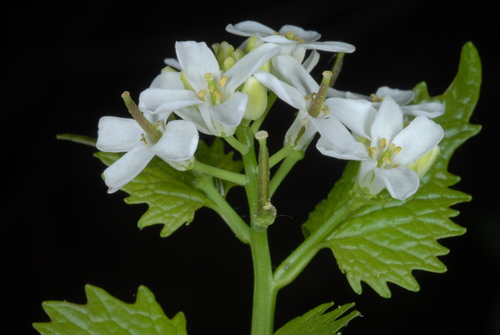
Pachyphragma macrophyllum
(Hoffm.) N. Busch
Caucasian pennycress
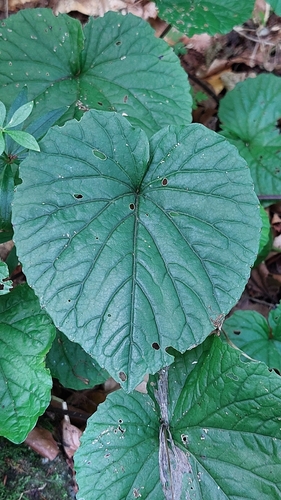
(c) ivansmirnov, some rights reserved (CC BY-NC)

(c) C. E. Timothy Paine, some rights reserved (CC BY-NC)

(c) Sergey Mayorov, some rights reserved (CC BY-NC), uploaded by Sergey Mayorov
What to Eat
Edible parts: Leaves
The leaves are edible.
Where to Find It
It is a temperate plant. It grows in wet beech forests to elevations of 1900 metres in Turkey. It will grow in shady places. It is very shade tolerant. It can stand light frosts. It will grow beneath trees and in shady places. It does best in moderately moist leafy soil. It suits hardiness zones 7-9.
Australia, Britain, Caucasus, Europe, North America, Tasmania, Turkey*, USA,
How to Identify
A cabbage family herb. It is a perennial plant. It grows to 0.3 m high. It spreads to 1 m across. It is a ground cover plant. It forms rhizomes. The leaves are large and round and green. They are 3-10 cm across. They have long stalks and are at the base of the plant. The flowers are white and in open spikes. The flowers are 18 mm across. They have 4 petals. The flattened fruit are held above the leaves. They are heart shaped.
How to Grow
It can be grown from seed then transplanted. It can also be grown by dividing the plants in spring. Cuttings can be taken from basal shoots which have roots attached.
Notes
There is only one Pachyphragma species.
Names & Synonyms
References (5)
- Cundall, P., (ed.), 2004, Gardening Australia: flora: the gardener's bible. ABC Books. p 970 (As Pachyphragma macrophylla)
- Hibbert, M., 2002, The Aussie Plant Finder 2002, Florilegium. p 217 (As Pachyphragma macrophylla)
- N. I. Kusnezow et al., Fl. caucas. crit. 3:151. 1908 (As Pachyphragma macrophylla)
- Plants for a Future database, The Field, Penpol, Lostwithiel, Cornwall, PL22 0NG, UK. http://www.scs.leeds.ac.uk/pfaf/ (As Pachyphragma macrophylla)
- Ryan, S., 2008, Dicksonia. Rare Plants Manual. Hyland House. p 108 (As Pachyphragma macrophylla)