Panicum maximum
Jacq.
Guinea grass seed
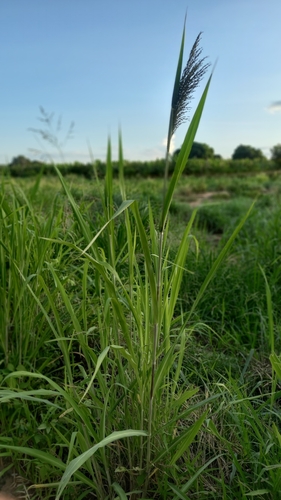
(c) Leticia, some rights reserved (CC BY-NC)
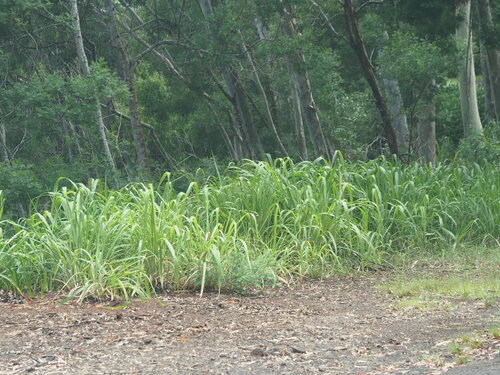
(c) Kevin Faccenda, some rights reserved (CC BY)
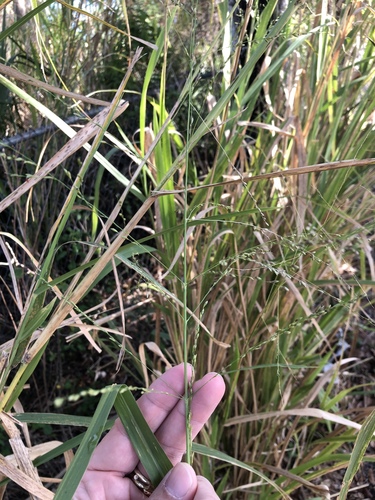
(c) Sam Kieschnick, some rights reserved (CC BY)
What to Eat
Edible parts: Seeds, Grains, Cereal
The seed can be cooked and eaten, though it is small and very fiddly to collect in any quantity, making it generally reserved for times of food shortage.
Known Hazards
Where to Find It
A tropical plant. It will grow on a range of soils but grows best on fertile soils. It is often on alluvial river flats. It can tolerate shade. It grows between 20-2,100 m above sea level. It grows in hot arid areas. It grows in areas with an annual rainfall between 300-1,500 mm. It can grow in arid places.
Africa*, Angola, Argentina, Asia, Australia, Botswana, Brazil, Burkina Faso, Cameroon, Central Africa, Central America, China, Congo DR, East Africa, Easter Island, Eswatini, Ghana, Guadeloupe, Guiana, Guianas, Guinea, Guinée, Guinea-Bissau, Guyana, Hawaii, India, Indochina, Indonesia, Iran, Japan, Kenya, Laos, Lesotho, Lesser Antilles, Madagascar, Malawi, Malaysia, Mediterranean, Middle East, Mozambique, Namibia, Nigeria, Norfolk Island, Pacific, Pakistan, Papua New Guinea, PNG, Philippines, Puerto Rico, SE Asia, Senegal, Sierra Leone, Slovenia, Somalia, South Africa, South America, Southern Africa, Sri Lanka, St Helena, St. Kitts and Nevis, Suriname, Swaziland, Taiwan, Tanzania, Tonga, Uganda, Uruguay, USA, Venezuela, West Africa, West Indies, Zambia, Zimbabwe,
How to Identify
A grass. which keeps growing from year to year. It forms tufts. It has short underground stems or rhizomes. It can be 2-3 m tall. The leaf blades are 15-30 cm long. The flower part of the flowering head has side branches in a ring. The flowering head is open and branched. It has a central upright stem. The long thin side branches grow out from this. The flowers are small and oval and 2-3 mm long. They are on small wavy stalks.
How to Grow
It grows best in areas where annual daytime temperatures are within the range 19 - 30°c, but can tolerate 6 - 35°c. When dormant, the plant can survive temperatures down to about -2°c, but young growth can be severely damaged at 0°c. It prefers a mean annual rainfall in the range 1,000 - 1,800mm, but tolerates 650 - 4,300mm. Prefers a lightly shaded position, but succeeds in full sun and quite deep shade. It grows especially well in shaded, damp areas under trees and shrubs. Grows best in a fertile, humus-rich loam, but tolerates most soil types and also low fertility. Prefers a well-drained soil, but tolerant of seasonal inundation. Prefers a pH in the range 5 - 7, tolerating 3.5 - 8.4. The plant is a very effective coloniser in ungrazed areas, particularly where some form of soil disturbance has occurred. It is well adapted to sloping, cleared land in rain forest areas. It can be an aggressive invader of annual and perennial crops in Brazil. The plant may become a persistent weed, especially in cultivated areas such as sugarcane fields. It should be controlled in the seedling stage, as it is very difficult to remove later when the grass has reached maturity. Yields of dry matter may be 6 - 60 tonnes per hectare. Although plants seed readily, heads ripen very unevenly and shatter readily. Hence seed must be hand-collected. Viability of the fresh seed is comparatively low - it is increased by storing the seeds dry for 6 - 18 months. Seed viability under natural conditions is short-lived. The plants should be allowed to reseed themselves at periodic intervals to insure stand maintenance.
Propagation: Seed has an initial dormancy when first harvested that can last up to 18 months; this can be overcome by removing the glumes from fresh seed. Seed is usually sown in situ — cover lightly and roll the ground. Stems root freely from nodes when in contact with moist soil, though rooted creeping stolons are rarely seen in the field due to the plant's erect growth habit. Crops can also be established by propagating from sprigs or by dividing the stools.
Medicinal Uses
The plant is said to be diuretic, laxative, and preventitive. It is used in the treatment of heartburn and tympanitis. Sap from the crushed fresh plant is applied as a cicatrisant on wounds and sores. The grass is tied around the head to bring relief from headaches.
Other Uses
The plant has been suggested as a biofuel for producing alcohol. The straw is useful for thatching, the culms serve as brooms, and the culms are also used for basket weaving.
Wikipedia
Source ↗A fast-growing perennial grass reaching 2 m tall with a spread of 0.1 m. Hardy to UK zone 10. Tolerates light sandy and medium loamy soils, thriving in well-drained conditions and poor soil. Adapts to mildly acid, neutral, and basic pH levels, even very acidic or alkaline soils. Grows in full shade, semi-shade, or open conditions, and tolerates both dry and moist soil with maritime exposure.
Notes
There are about 500 Panicum species. It is a good fodder grass.
Names & Synonyms
Baldhoole, Capim coloninho, Chipufu, Chiundzi, Gamelote, Gini hullu, Gini pullu, Ginigawat, Ginighas, Guinit, Linganga, Lipumbe, Lumbunga, Msonthe, Mundundu, Murumbu, Naporre, Pastoa colonial, Pasto guinea, Pokopoko, Rumput benggala, Silunbentam-o, Suket londa
References (31)
- Ambasta, S.P. (Ed.), 2000, The Useful Plants of India. CSIR India. p 426
- Burkill, H. M., 1985, The useful plants of west tropical Africa, Vol. 2. Kew.
- Burkill, I.H., 1966, A Dictionary of the Economic Products of the Malay Peninsula. Ministry of Agriculture and Cooperatives, Kuala Lumpur, Malaysia. Vol 2 (I-Z) p 1684
- Collectanea 1:76. 1787 ("1786"); Icon. pl. rar. 1:2, t. 13. 1787? ("1781-1786")
- CROSS-UPCOTT,
- Flora of Australia Volume 49, Oceanic Islands 1, Australian Government Publishing Service, Canberra. (1994) p 481
- Fowler, D. G., 2007, Zambian Plants: Their Vernacular Names and Uses. Kew. p 71
- Grivetti, L. E., 1980, Agricultural development: present and potential role of edible wild plants. Part 2: Sub-Saharan Africa, Report to the Department of State Agency for International Development. p 73
- http://www.botanic-gardens-ljubljana.com/en/plants
- Hussey, B.M.J., Keighery, G.J., Cousens, R.D., Dodd, J., Lloyd, S.G., 1997, Western Weeds. A guide to the weeds of Western Australia. Plant Protection Society of Western Australia. p 60
- Kumar, R. & Saikia, P., 2020, Wild edible plants of Jharkhand and their utilitarian perspectives. Indian Journal of Traditional Knowledge Vol 19 (2), April 2020, pp 237-250
- Lazarides, M. & Hince, B., 1993, Handbook of Economic Plants of Australia, CSIRO. p 180
- Long, C., 2005, Swaziland's Flora - siSwati names and Uses http://www.sntc.org.sz/flora/
- Malezas Comestibles del Cono Sur, INTA, 2009, Buernos Aires
- Peters, C. R., O'Brien, E. M., and Drummond, R.B., 1992, Edible Wild plants of Sub-saharan Africa. Kew. p 25
- Pickering, H., & Roe, E., 2009, Wild Flowers of the Victoria Falls Area. Helen Pickering, London. p 96
- Purseglove, J.W., 1972, Tropical Crops. Monocotyledons. Longmans p 199
- Royal Botanic Gardens, Kew (1999). Survey of Economic Plants for Arid and Semi-Arid Lands (SEPASAL) database. Published on the Internet; http://www.rbgkew.org.uk/ceb/sepasal/internet [Accessed 3rd June 2011]
- Ruiters-Welcome, A. K., 2019, Food plants of southern Africa. Ph.D. thesis. Univ. of Johannesburg p 89
- Scudder, 1962,
- Swaziland's Flora Database http://www.sntc.org.sz/flora
- TAIRA,
- Terashima, H., et al, 1992, Ethnobotany of the Lega in the Tropical Rainforest of Eastern Zaire (Congo): Part Two, Zone de Walikale, African Study Monographs, Suppl. 19:1-60
- Tredgold, M.H., 1986, Food Plants of Zimbabwe. Mambo Press. p 26
- Vernon, R., 1983, Field Guide to Important Arable Weeds of Zambia. Dept of Agriculture, Chilanga, Zambia. p 120
- von Katja Rembold, 2011, Conservation status of the vascular plants in East African rain forests. Dissertation Universitat Koblenz-Landau p 176
- Welcome, A. K. & Van Wyk, B.-E., 2019, An inventory and analysis of the food plants of southern Africa. South African Journal of Botany 122 (2019) 136–179
- Williams, C.N., Chew, W.Y., and Rajaratnam, J.A., 1989, Tree and Field Crops of the Wetter Regions of the Tropics. Longman, p 246
- World Checklist of Useful Plant Species 2020. Royal Botanic Gardens, Kew (As Urochloa maxima)
- Yuncker, T.G., 1959, Plants of Tonga, Bernice P. Bishop Museum, Hawaii, Bulletin 220. p 60
- Zizka, G., 1991, Flowering Plants of Easter Island. Palmarum Hortus Francofurtensis


