Panicum obtusum
Kunth
Blunt Panic Grass
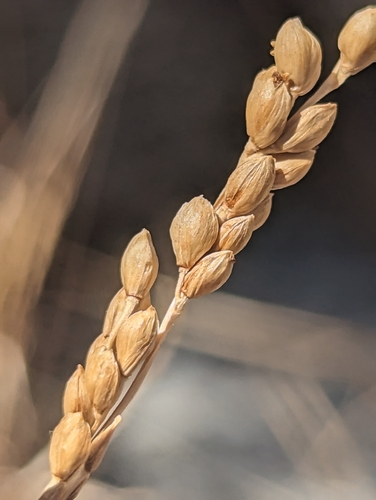
(c) Jaxon Lane, some rights reserved (CC BY-NC)
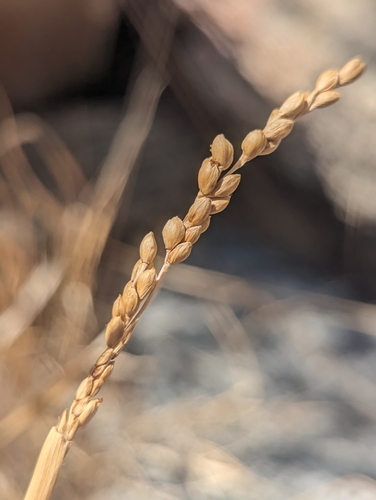
(c) Jaxon Lane, some rights reserved (CC BY-NC)
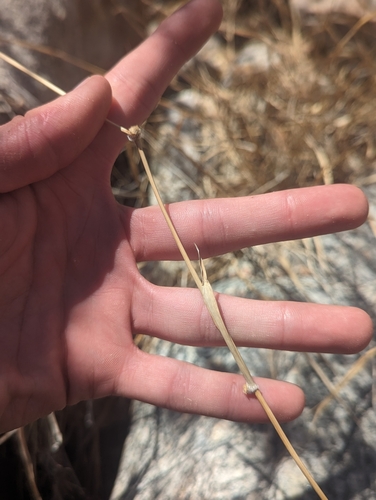
(c) Jaxon Lane, some rights reserved (CC BY-NC)
What to Eat
Edible parts: Seeds, Cereal
The seed can be cooked as a whole grain or ground into a powder and used as a flour alongside cornmeal. Although it is rather small and fiddly to use in quantity, it has a pleasant, mild flavour and can serve as a staple food.
Where to Find It
It is a subtropical plant. It mostly grows along the banks of rivers and ditches. It does best in a moderately fertile well-drained soil in full sun.
Central America, Mexico, North America, USA,
How to Identify
A perennial grass which grows up to 75 cm high. The plant can produce stolons more than 2 metres long and so can spread considerably.
How to Grow
Plants can be grown from seed which germinate within one week. Plants can be grown by division.
Propagation: Sow seed in spring in a greenhouse, covering only just lightly. Germination should occur within a week. Prick out seedlings into trays or individual pots and plant out after the last expected frosts. For division in spring, larger divisions can be planted directly into their permanent positions. Smaller divisions are better potted up and grown on in light shade in a cold frame until well established, then planted out in late spring or early summer.
Medicinal Uses
None known.
Other Uses
An infusion of the leaves is said to be a good wash for promoting faster hair growth. The dried and powdered stolons can be mixed with soapweed (Yucca species) and used as a tonic hair shampoo. The species is occasionally planted for erosion control.
Wikipedia
A perennial grass reaching 0.8 m tall. Flowers August to September. Hermaphroditic and wind-pollinated. Suitable for light sandy, medium loamy, and heavy clay soils with good drainage. Tolerates mildly acid, neutral, and basic soils. Requires full sun and prefers moist soil.
Notes
There are about 500 Panicum species.
Names & Synonyms
Vine mesquite, Obtuse Panicgrass
References (7)
- Beckstrom-Sternberg, Stephen M., and James A. Duke. "The Foodplant Database." http://probe.nalusda.gov:8300/cgi-bin/browse/foodplantdb.(ACEDB version 4.0 - data version July 1994)
- Facciola, S., 1998, Cornucopia 2: a Source Book of Edible Plants. Kampong Publications, p 178
- Kermath, B. M., et al, 2014, Food Plants in the Americas: A survey of the domesticated, cultivated and wild plants used for Human food in North, Central and South America and the Caribbean. On line draft. p 604
- Moerman, D. F., 2010, Native American Ethnobotany. Timber Press. p 377
- Plants for a Future database, The Field, Penpol, Lostwithiel, Cornwall, PL22 0NG, UK. http://www.scs.leeds.ac.uk/pfaf/
- Uphof,
- F. W. H. A. von Humboldt et al., Nov. gen. sp. 1:81[folio]; 1:98[quarto]. 1816


