Passiflora suberosa
L.
Corky passionflower

(c) Juan Sangiovanni, some rights reserved (CC BY-NC), uploaded by Juan Sangiovanni
(c) Ben Machado, some rights reserved (CC BY)
What to Eat
Edible parts: Fruit
Fruit - raw. The pulp surrounding the seeds is eaten. An agreeable flavour.The globose to ovoid, blue-black fruit is around 6 - 15mm in diameter.
Known Hazards
Where to Find It
A tropical plant. It grows in dry tropical coastal areas. In tropical Queensland it grows to 600 m altitude. In Yunnan.
Africa, America, Anguilla, Argentina, Asia, Australia, Bahamas, Brazil*, British Indian Ocean Terr., BIOT, Caribbean, Central America*, China, Colombia, Dominican Republic, East Africa, Fiji, Galapagos Islands, Guianas, Haiti, Indochina, Jamaica, Kenya, Lesser Antilles*, Maldives, Mexico, North America, Pacific, Paraguay, SE Asia, South Africa, Southern Africa, South America, Suriname, Taiwan, Tanzania, Turks & Caicos, Uganda, USA, Venezuela, Vietnam, West Indies*,
How to Identify
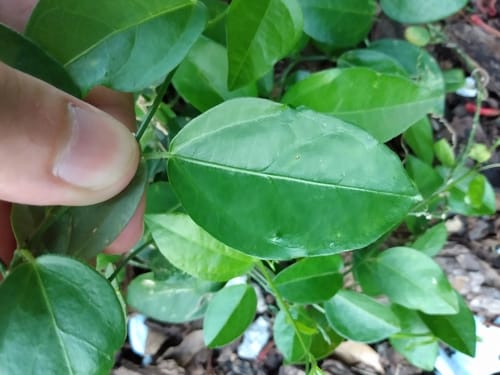
A climbing vine. It has wiry stems. The older stems have pale corky bark. The tendrils are in the axils of the leaves. The leaves can have 3 lobes. The central lobe is usually the largest. The flowers are small and yellow. They are in the axils of leaves. They are 8-30 mm across. The flowers have 5 petals. The berries are 1 cm across. There are several seeds inside.
How to Grow
Passiflora suberosa has a very wide native dristribution, from the warm temperate zone of southern S. America, through the tropical regions to the warm temperate zone of southern N. America, and can be found from sea level to 2,000 metres or more. Plants, at least from parts of its range, are tolerant of light and short-lived frosts. Moist, well-drained sandy or limestone soils, with or without humusy top layer. Prefers soils with organic content, but will still grow reasonably well in nutrient poor soils. Can tolerate moderate amounts of salt wind without injury. Established plants are very drought tolerant. The plant is a locally established weed in many tropical countries. It is an aggressive weed, which may smother the natural vegetation. It does best in the subcanopy layers where it smothers shrubs, small trees and the ground layer; though in some areas it also smothers the upper canopy layer. It is considered an invasive weed in some countries, such as South Africa, where it is listed as harmful, and as such is subject to eradication practices. The fruits have many seeds that are dispersed by fruit-eating birds.
Propagation: Seed - best sown as soon as it is ripe along with the pulp which will help break down the seed coat and speed up germination. Stored seed should be soaked for 24 hours in warm water and germination time can be reduced if the seed is then mixed with the juice of a fresh passion fruit (of any species). Even so, it can take 12 months for stored seed to germinate. Place the seed tray in a shady position, maintaining a temperature around 19 - 24°c. Prick the seedlings out into individual containers as soon as they are large enough to handle and plant out when large enough. Cuttings of young shoots, taken at the nodes. The cuttings root best in a neutral to slightly acid compost, but 100% sharp sand also produces good results. Cuttings of fully mature wood taken at a node. They can take 3 months. Layering. Very easy. Air layering.
Medicinal Uses
A leaf decoction is applied externally to treat urticaria and itch. A root decoction is taken to induce menstruation and to treat hysteria. A decoction of the plant, mixed with either a pinch of salt or with a decoction of young leaves of Momordica charantia, is taken to treat indigestion. The aerial parts of the plant contain simple indole alkaloids, tannins, coumarines, sterols, terpenes and the cyanogenic glycosides passisuberosin and epipassisuberosin. The fruits contain several anthocyanins.
Other Uses
The plant can be used to cover the ground, especially when growing in semi-shade.
Wikipedia
Source ↗Passiflora suberosa is a species of passionflower that is native to the Americas. It is commonly known as corkystem passionflower due to the corkiness of older stems. Other common names include corky passion vine, cork-bark passion flower, corkstem passionflower and corky passionfruit. In Latin America it is called Meloncillo. It is possibly also cryptic and have multiple species in one.
Notes
There are about 400 Passiflora species. It has become self sown in some warm temperate coastal places. It can be invasive.
Names & Synonyms
Ink berry, Kulavelau, Meloncillo, Nhanlong sube, Parcha yedra, Ranguveyo
References (24)
- Bortolotto, I. M., et al, 2018, Lista preliminar das plantas alimenticias nativas de Mato Grosso do Sul, Brasil. Iheringia, Serie Botanica, Porto Alegre, 73 (supl.):101-116
- Brack, P., et al, 2020, Frutas nativas do Rio Grande do Sul, Brasil: riqueza e potencial alimentício. Native fruits of Rio Grande do Sul, Brazil: richness and potential as food. Rodriguésia 71: e03102018.
- Cooper, W. and Cooper, W., 2004, Fruits of the Australian Tropical Rainforest. Nokomis Editions, Victoria, Australia. p 394
- Cribb, A.B. & J.W., 1976, Wild Food in Australia, Fontana. p 67
- Flora of Australia, Volume 8, Lecythidales to Batales, Australian Government Publishing Service, Canberra (1982) p 153
- http://www.botanic-gardens-ljubljana.com/en/plants
- Jackes, B.R., 2001, Plants of the Tropics. Rainforest to Heath. An Identification Guide. James Cook University. p 72
- Jones, D.L. & Gray, B., 1977, Australian Climbing Plants. Reed. p 155
- Kermath, B. M., et al, 2014, Food Plants in the Americas: A survey of the domesticated, cultivated and wild plants used for Human food in North, Central and South America and the Caribbean. On line draft. p 620
- Kinupp, V. F., 2007, Plantas alimenticias nao-convencionais da regiao metropolitana de Porto Alegre, RS, Brazil p 90
- Lazarides, M. & Hince, B., 1993, Handbook of Economic Plants of Australia, CSIRO. p 184
- Lopez-Diago, D. & Garcia, N., 2021, Wild edible fruits of Colombia. Biota ColomBiana 22 (2) p 47
- Low, T., 1991, Wild Herbs of Australia and New Zealand. Angus & Robertson. p 109 (Drawing)
- Marinelli, J. (Ed), 2004, Plant. DK. p 465
- Melzer, R. & Plumb, J., 2011, Plants of Capricornia. Belgamba, Rockhampton. p 541
- Morley, B. & Everard, B., 1970, Wild Flowers of the World. Ebury press. Plate 173
- Pearson, S. & A., 1992, Rainforest Plants of Eastern Australia. Kangaroo Press p 159
- Pham-Hoang Ho, 1999, An Illustrated Flora of Vietnam. Nha Xuat Ban Tre. p 559
- Plants of Haiti Smithsonian Institute http://botany.si.edu/antilles/West Indies
- Rangel-Landa, S., et al, 2017, Sociocultural and ecological factors influencing management of edible and non-edible plants: the case of Ixcatlan, Mexico. Journal of Ethnobiology and Ethnomedicine. 13:59
- Sp. pl. 2:958. 1753
- Sujanapal, P., & Sankaran, K. V., 2016, Common Plants of Maldives. FAO & Kerala FRI, p 198
- Topp, J. M. W., 1988, An Annotated Check List of the Flora of Diego Garcia, British Ocean Territory. Atoll Research Bulletin No. 313
- Townsend, K., 1999, Field Guide to Plants of the Dry Tropics. Society for Growing Australian Plants, Townsville Branch Inc. p 143


