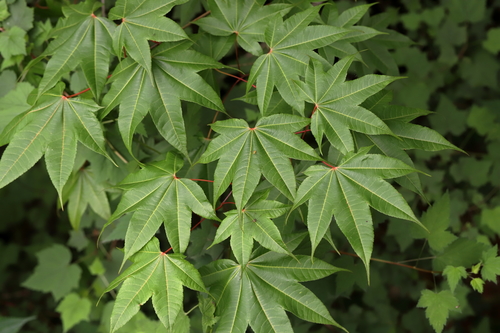
Paullinia pinnata
L.
Cheese and bread

(c) Marco Schmidt, some rights reserved (CC BY-SA)

(c) Clément Barbier, some rights reserved (CC BY-NC), uploaded by Clément Barbier

(c) Marco Schmidt, some rights reserved (CC BY-SA)
What to Eat
Edible parts: Leaves, Aril, Seeds, Fruit, Flowers
The white aril (layer around the seeds), fruit pulp, leaves, flowers, and seeds are eaten. It is reasonably commonly consumed in West Africa.
Known Hazards
Where to Find It
It is a tropical plant. It grows on coastal plains, swamps and sandy beaches. It grows in seasonally flooded forests. It grows along riverbanks and can grow on sand or clay. It grows between sea level to 1,600 m above sea level. In Argentina it grows below 500 m above sea level. It can grow in arid places.
Africa, America, Angola, Argentina, Belize, Benin, Bolivia, Botswana, Brazil, Burkina Faso, Burundi, Cameroon, Caribbean, Central Africa, Central African Republic, CAR, Central America, Chad, Colombia, Congo DR, Côte d'Ivoire, Cuba, Dominica, Dominican Republic, East Africa, Ecuador, El Salvador, Equatorial Guinea, Ethiopia, East Africa, French Guiana, Gabon, Gambia, Ghana, Grenada, Guatemala, Guiana, Guianas, Guinea, Guinée, Guinea-Bissau, Guyana, Haiti, Honduras, Ivory Coast, Kenya, Lesser Antilles, Liberia, Madagascar, Malawi, Mali, Martinique, Mauritius, Mexico, Mozambique, Myanmar, Niger, Nigeria, North America, Panama, Paraguay, Peru, Puerto Rico, Rwanda, Sahel, Sao Tome and Principe, SE Asia, Senegal, Sierra Leone, Southern Africa, South America*, Sudan, Suriname, Tanzania, Togo, Uganda, Venezuela, West Africa, West Indies*, Zambia, Zimbabwe,
How to Identify
A woody creeper or vine. It can be 5-10 m long. The leaves have 5 leaflets. The leaf stalk has wings. The flower racemes occur singly in the axils of leaves. They can be 10 cm long. The flower are in clusters without stalks. The flowers are white. The fruit is an oblong or pear shaped capsule. It is 3 cm long by 1.4 cm wide. It is pinkish red and has fine lines along it. The valves are woody and there is 1 or sometimes 3 seeds inside. These are 1 cm long by 0.8 cm wide and 0.6 cm thick. They are shiny and blue-purple to black. There is a white aril or layer around the seed. This is edible.
Nutrition Score: 29/100
| Part | Moisture | kJ | kcal | Protein | Vit A | Vit C | Iron | Zinc |
|---|---|---|---|---|---|---|---|---|
| Fruit aril | 83 | 1203 | 69 | 0.7 | — | — | 110 | — |
Medicinal Uses
The plant is used medicinally. An infusion of the leaves is used to treat metabolic disorders in young children.
Other Uses
The stems are much used for cordage. The stems and twigs are employed for cordage. The fibres obtained from the stems are used for making ropes. The roots are used as chewsticks to keep the teeth clean and healthy.
Wikipedia
Source ↗Paullinia pinnata is a flowering plant species in the genus of Paullinia found in South America and Africa. The long flexible stems of P. pinnata are used to poison fish in shallow pools, as described by the English naturalist Henry Walter Bates in his book The Naturalist on the River Amazons.
Other Information
It is reasonably commonly eaten in West Africa.
Names & Synonyms
Apgi, Barbasco, Beco-be-unhou, Belecapsulassule, Belekesu-lesuli, Bolo-coninlolo, Cinco-dedos, Cinco-fodja, Cinco-folha, Cipo-cinco-folha, Coledjoe, Coli-djoi, Cuiotche, Cundintadjo-o, D'jambolulu, Djambalulo, Feifi-finga, Fouli, Fruta-de-pomba, Kasisi, Kururu ape, Kutupurang, Leki-nou, Ludimi, Lukaka, Lumbwa, Maco, Mopumba, Mupeketatie, N'fankoko, N'resque, Ngudi nkayi, Palo sol, Runn, Timbo, Toa-ntini, Yesi kushi, Ysypo kururu
References (38)
- Abbiw, D.K., 1990, Useful Plants of Ghana. West African uses of wild and cultivated plants. Intermediate Technology Publications and the Royal Botanic Gardens, Kew. p 48
- Achigan-Dako, E, et al (Eds), 2009, Catalogue of Traditional Vegetables in Benin. International Foundation for Science.
- Ambe, G., 2001, Les fruits sauvages comestibles des savanes guinéennes de Côte-d’Ivoire : état de la connaissance par une population locale, les Malinké. Biotechnol. Agron. Soc. Environ. 5(1), 43-48
- Atato, A., et al, 2010, Diversity of Edible Wild Fruit Tree Species of Togo. Global Science Books.
- Atato, A., et al, 2012 Especes lianescentes a fruits comestibles du Togo. Fruits. 67(5): 353-368
- Batawila, K., et al, 2007, Diversite et gestion des legumes de cueillete au Togo. African Journal of Food, Agriculture, Nutrition and Development 7( 3& 4): 68
- Bojang, L., 1999, Non-wood Forest Products in The Gambia. EC-FAO Partnership Programme.
- Bongers, F. et al (Eds), Forest Climbing Plants of West Africa: Diversity, Ecology and Management. CABI
- Bortolotto, I. M., et al, 2018, Lista preliminar das plantas alimenticias nativas de Mato Grosso do Sul, Brasil. Iheringia, Serie Botanica, Porto Alegre, 73 (supl.):101-116
- Burkill, H. M., 1985, The useful plants of west tropical Africa, Vol. 5. Kew.
- Chapman, J. D. & Chapman, H. M., 2001, The Forest Flora of Taraba and Andamawa States, Nigeria. WWF & University of Canterbury. p 201
- Codjia, J. T. C., et al, 2003, Diversity and local valorisation of vegetal edible products in Benin. Cahiers Agricultures 12:1-12
- Facciola, S., 1998, Cornucopia 2: a Source Book of Edible Plants. Kampong Publications, p 226
- Food Composition Tables for use in Africa FAO http://www.fao.org/infoods/directory No. 1004
- Fowler, D. G., 2007, Zambian Plants: Their Vernacular Names and Uses. Kew. p 60
- Jardin, C., 1970, List of Foods Used In Africa, FAO Nutrition Information Document Series No 2.p 93, 153
- Kermath, B. M., et al, 2014, Food Plants in the Americas: A survey of the domesticated, cultivated and wild plants used for Human food in North, Central and South America and the Caribbean. On line draft. p 622
- Latham, P & Mbuta, A., 2017, Useful Plants of Central Province, Democratic Republic of Congo. Volume 2. Salvation Army p 91
- Malaisse, F., 1997, Se nourrir en floret claire africaine. Approche ecologique et nutritionnelle. CTA., p 67
- Martin, F.W. & Ruberte, R.M., 1979, Edible Leaves of the Tropics. Antillian College Press, Mayaguez, Puerto Rico. p 218
- N'Danikou, S. et al, 2010, Eliciting Local Values of Wild Edible Plants in Southern Bénin to Identify Priority Species for Conservation. Economic Botany, 20(10), 2011, pp. 1–15.
- Okigbo, B.N., Vegetables in Tropical Africa, in Opena, R.T. & Kyomo, M.L., 1990, Vegetable Research and development in SADCC countries. Asian Vegetable Research and development Centre. Taiwan. p 45
- Omawale, 1973, Guyana's edible plants. Guyana University, Georgetown p 13
- Plants of Haiti Smithsonian Institute http://botany.si.edu/antilles/West Indies
- Polini, G., et al, Useful and edible plants of Paraguay Region of Chaco. p 120
- Roa, J. A. G. & Boada, D. S. G., 2018, Fundación para el Fortalecimiento de la Fruticultura y Plantas Alimenticias no Convencionales en Colombia.
- Royal Botanic Gardens, Kew (1999). Survey of Economic Plants for Arid and Semi-Arid Lands (SEPASAL) database. Published on the Internet; http://www.rbgkew.org.uk/ceb/sepasal/internet [Accessed 10th June 2011]
- Segnon, A. C. and Achigan-Dako, E. G., 2014, Comparative analysis of diversity and utilization of edible plants in arid and semi-arid areas in Benin. Journal of Ethnobiology and Ethnomedicine. 10:80
- Segura, S., et al, 2018, The edible fruit species in Mexico. Genet Resour Crop Evol (2018) 65:1767–1793
- Smith, N., Mori, S.A., et al, 2004, Flowering Plants of the Neotropics. Princeton. Plate 43 (Photo)
- Sp. pl. 1:366. 1753 (type species)
- Torre, de la, L., et al, 2008, Enciclopedia de las Plantas Útiles del Ecuador. Herbario QCA. Pontificia Universidad Católica del Ecuador. p 568
- van Andel, T., 2000, Useful plants of Guyana. Non-timber forest products of the North-West District of Guyana. Part 2. A Field Guide. Tropenbos-Guyana Programme. p 304
- van Roosmalen, M.G.M., 1985, Fruits of the Guianan Flora. Utrecht Univ. & Wageningen Univ. p 396
- Vivien, J., & Faure, J.J., 1996, Fruitiers Sauvages d'Afrique. Especes du Cameroun. CTA p 310
- von Katja Rembold, 2011, Conservation status of the vascular plants in East African rain forests. Dissertation Universitat Koblenz-Landau p 176
- White, F., Dowsett-Lemaire, F. and Chapman, J. D., 2001, Evergreen Forest Flora of Malawi. Kew. p 535
- World Checklist of Useful Plant Species 2020. Royal Botanic Gardens, Kew