Pentaphragma begoniifolium
Wall.
Salang suang
CampanulaceaeLeaves

iNaturalist · cc-by-nc
(c) Pakkapol Thaowetsuwan, some rights reserved (CC BY-NC)
(c) Pakkapol Thaowetsuwan, some rights reserved (CC BY-NC)

iNaturalist · cc-by-nc
(c) Pakkapol Thaowetsuwan, some rights reserved (CC BY-NC)
(c) Pakkapol Thaowetsuwan, some rights reserved (CC BY-NC)
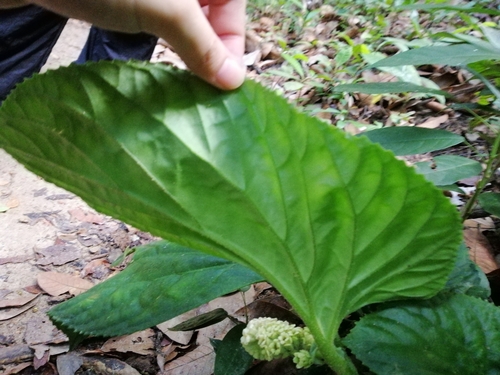
iNaturalist · cc-by-nc
(c) TAN KE XIN, some rights reserved (CC BY-NC)
(c) TAN KE XIN, some rights reserved (CC BY-NC)
What to Eat
Edible parts: Leaves
The leaves are eaten.
Where to Find It
A tropical plant.
Asia, Indonesia, Malaysia, Myanmar, SE Asia,
Countries: United Arab Emirates, Afghanistan, Armenia, Azerbaijan, Bangladesh, Bahrain, Brunei, Bhutan, China, Georgia, Indonesia, Israel, India, Iraq, Iran, Jordan, Japan, Kyrgyzstan, Cambodia, North Korea, South Korea, Kuwait, Kazakhstan, Laos, Lebanon, Sri Lanka, Myanmar, Mongolia, Maldives, Malaysia, Nepal, Oman, Philippines, Pakistan, Qatar, Saudi Arabia, Singapore, Syria, Thailand, Tajikistan, Timor-Leste, Turkmenistan, Turkey, Taiwan, Uzbekistan, Vietnam, Yemen
How to Identify
A fleshy herb in the Campanulaceae family, found as a cultivated food plant in tropical regions.
Other Information
It is a cultivated food plant.
Notes
Also put in the family Pentaphragmaceae.
References (5)
- Arora, R. K., 2014, Diversity in Underutilized Plant Species - An Asia-Pacific Perspective. Bioversity International. p 43, 107
- Burkill, I.H., 1966, A Dictionary of the Economic Products of the Malay Peninsula. Ministry of Agriculture and Cooperatives, Kuala Lumpur, Malaysia. Vol 2 (I-Z) p 1720
- Martin, F.W. & Ruberte, R.M., 1979, Edible Leaves of the Tropics. Antillian College Press, Mayaguez, Puerto Rico. p 180
- Terra, G.J.A., 1973, Tropical Vegetables. Communication 54e Royal Tropical Institute, Amsterdam, p 65
- Zeven, A. C. & de West, J. M. J., 1982, Dictionary of cultivated plants and their regions of diversity. Wageningen. p 61


