Penthorum sedoides
L.
Virginian Stonecrop, Ditch-stonecrop
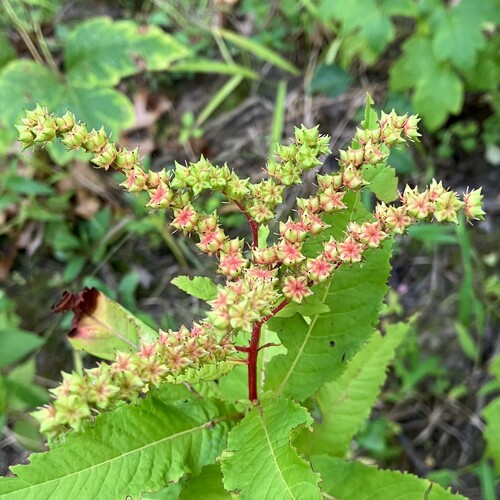
(c) Eric M Powell, some rights reserved (CC BY-NC), uploaded by Eric M Powell
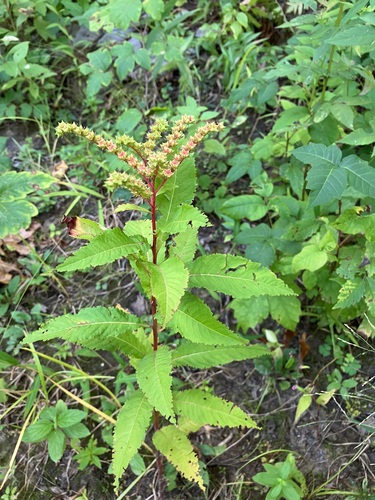
(c) Eric M Powell, some rights reserved (CC BY-NC), uploaded by Eric M Powell

(c) Jim Varnum, some rights reserved (CC BY-NC), uploaded by Jim Varnum
What to Eat
Edible parts: Leaves
The leaves are eaten cooked and used as a potherb.
Where to Find It
It grows in wet low ground such as flood plains and ditches.
Asia, Australia, Canada, China, Europe, France, Germany, Indochina, North America, SE Asia, USA, Vietnam.
How to Identify
A herb. It is fleshy and has underground runners. It grows 1 m tall. The leaves are alternate and they have short leaf stalks. The flowers are small with many together at the ends of the branches.
How to Grow
Suitable for the waterside or shallow water. This species is included in the family Crassulaceae by some botanists and placed in its own family by others.
Propagation: Sow seed in a cold frame in pots standing in approximately 3cm of water as soon as ripe where possible, otherwise in early spring. Once seedlings are large enough to handle, prick them into individual pots and grow them on in shallow water in the cold frame through their first winter. Plant into permanent positions in late spring or early summer, after the last expected frosts. The plant can also be divided in spring.
Medicinal Uses
A plant tincture is mildly astringent, demulcent, laxative, and tonic. The plant is particularly noted for its effectiveness against catarrhal conditions of various kinds, and has also been used successfully for diarrhoea, haemorrhoids, and infantile cholera. The seeds have been used in the preparation of cough syrups.
Other Uses
None known Special Uses
Wikipedia
Source ↗Penthorum sedoides, known by the common name ditch stonecrop, is a perennial forb native to the eastern United States and Canada which produces small white flowers in summer.
Notes
There is one genus in the Penthoraceae family and 2 species. It grows naturally in eastern North America.
Names & Synonyms
Ngutruc
References (6)
- Bodkin, F., 1991, Encyclopedia Botanica. Cornstalk publishing, p 771
- Heywood, V.H., Brummitt, R.K., Culham, A., and Seberg, O. 2007, Flowering Plant Families of the World. Royal Botanical Gardens, Kew. p 249
- MacKinnon, A., et al, 2009, Edible & Medicinal Plants of Canada. Lone Pine. p 218
- Moerman, D. F., 2010, Native American Ethnobotany. Timber Press. p 385
- Plants for a Future database, The Field, Penpol, Lostwithiel, Cornwall, PL22 0NG, UK. http://www.scs.leeds.ac.uk/pfaf/
- READ,