Penstemon confertus
Douglas
Yellow beard tongue, Small-flowered penstemon

(c) Jason Headley, some rights reserved (CC BY-NC), uploaded by Jason Headley
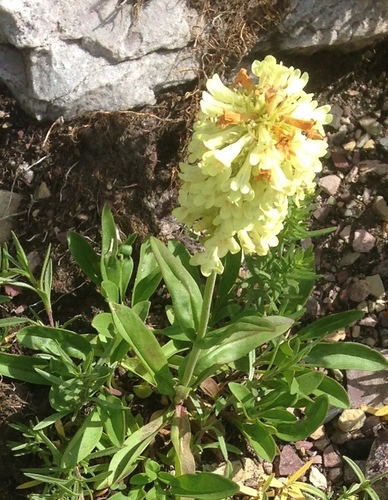
(c) terrydad2, some rights reserved (CC BY-NC), uploaded by terrydad2
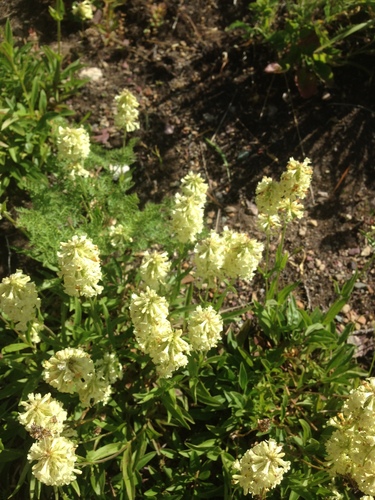
(c) terrydad2, some rights reserved (CC BY-NC), uploaded by terrydad2
What to Eat
Edible parts: Leaves - tea
A tea-like beverage is made by boiling the dried leaves and stems briefly. If brewed too strong, it can have a purgative effect.
Where to Find It
It is a temperate plant. It grows on dry grassland and thin woodland.
Canada, North America, USA,
How to Identify
A slender stemmed plant. It grows 10-50 cm high. The leaves are opposite and simple. They are narrow and 5-12 cm long. The flowers are small and yellow. They are 12 mm long. They occur in dense rings on the upper part of the stem. The fruit is a small dry capsule. It contains many seeds.
How to Grow
Succeeds in ordinary rich garden soils so long as they are well-drained. Succeeds in dry soils. Requires a position in full sun. Very cold hardy, but some protection from winter wet is beneficial for this plant. Plants are evergreen in mild winters.
Propagation: Sow seed in late winter in a greenhouse. Prick seedlings into individual pots when large enough to handle and plant out in late spring. Alternatively, sow in early summer in a greenhouse, overwinter the seedlings under glass, and plant out the following spring. The plant can also be divided in autumn, or cuttings taken throughout the growing season — August and September are the best months for this.
Medicinal Uses
A strong decoction of the root is purgative. A decoction of the outer bark has been used to treat stomach complaints. The stems and leaves, roasted and ground to a powder, can be applied as a dressing on sores, cuts, and wounds.
Other Uses
The flowers can be boiled and then rubbed onto items to produce a permanent blue colouring.
Wikipedia
Source ↗Penstemon confertus is a species of flowering plant in the plantain family; its common name is the Yellow beardtoungue. It is native to the US states of Washington, Idaho, and Montana, and the Canadian provinces British Columbia and Alberta.
References (6)
- Beckstrom-Sternberg, Stephen M., and James A. Duke. "The Foodplant Database." http://probe.nalusda.gov:8300/cgi-bin/browse/foodplantdb.(ACEDB version 4.0 - data version July 1994)
- Cormack, R. G. H., 1967, Wild Flowers of Alberta. Commercial Printers Edmonton, Canada. p 310
- Edward's Bot. Reg. 15: t. 1260. 1829
- Facciola, S., 1998, Cornucopia 2: a Source Book of Edible Plants. Kampong Publications, p 230
- Kermath, B. M., et al, 2014, Food Plants in the Americas: A survey of the domesticated, cultivated and wild plants used for Human food in North, Central and South America and the Caribbean. On line draft. p 627
- Moerman, D. F., 2010, Native American Ethnobotany. Timber Press. p 383