Piper cubeba
L. f.
Pepper Cubeb, Tailed pepper, Java pepper

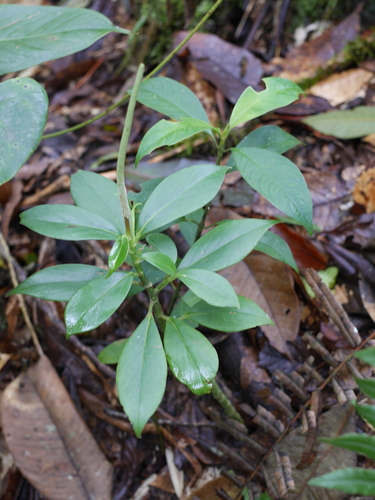
(c) Dinesh Valke, some rights reserved (CC BY-SA)

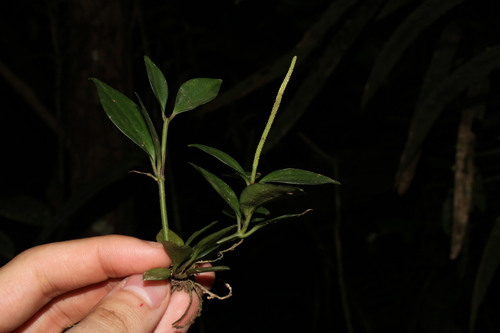
(c) Dinesh Valke, some rights reserved (CC BY-SA)

(c) Dinesh Valke, some rights reserved (CC BY-SA)
What to Eat
Edible parts: Fruit, Herb, Spice
In Europe, cubeb was one of the valuable spices during the Middle Ages. It was ground as a seasoning for meat or used in sauces. A medieval recipe includes cubeb in making sauce sarcenes, which consists of almond milk and several spices. As an aromatic confectionery, cubeb was often candied and eaten whole. Ocet Kubebowy, a vinegar infused with cubeb, cumin and garlic, was used for meat marinades in Poland during the 14th century (Dembinska 1999, p. 199). Cubeb can be used to enhance the flavor of savory soups. Cubeb reached Africa by way of the Arabs. In Moroccan cuisine, cubeb is used in savory dishes and in pastries like makrouts, little diamonds of semolina with honey and dates. It also appears occasionally in the list of ingredients for the famed spice mixture Ras el hanout. In Indonesian cuisine, especially in Indonesian gulés (curries), cubeb is frequently used.
Where to Find It
A tropical plant.
Asia, Australia, India, Indochina, Indonesia, Malaysia, Mediterranean, Morocco, Myanmar, North Africa, SE Asia, Singapore, Vietnam,
How to Identify
A vine or climber. The leaves are oval or oblong. The female fruit spikes are 3.5-4 cm long. The fruits are berries. They are 2.5 mm across. They are like a black pepper with a stalk.
Medicinal Uses
Physicians in the Islamic Golden Age distilled "water of al butm" (turpentine) from a mixture of herbal products, including cubeb. In Victorian and Edwardian England, cubeb was an antiseptic for gonorrhea treatment. William Wyatt Squire wrote in 1908 that cubeb berries "act specifically on the genitourinary mucous membrane. (They are) given in all stages of gonorrhea" and The National Botanic Pharmacopoeia printed in 1921 stated that cubeb was "an excellent remedy for flour albus or whites". A tincture of the compound appeared in the British Pharmacopoeia, and a gum with 1% cubebin, roughly equivalent to 30-60 grains of cubeb fruit, had become standardized as a drug, also called cubeb.
Other Uses
Cubeb oil, an essential oil obtained from the fruit, is a component in perfumes and soap perfumes. Frequently planted as secondary culture on shade trees in coffee and other plantations.
Wikipedia
Source ↗Piper cubeba, cubeb or tailed pepper is a plant in the genus Piper, cultivated for its fruit and essential oil. It is mostly grown in Java and Sumatra, hence sometimes called Java pepper. The fruits are gathered before they are ripe, and carefully dried. Commercial cubeb consists of the dried berries, similar in appearance to black pepper, but with stalks attached – the "tails" in "tailed pepper". The dried pericarp is wrinkled, and its color ranges from grayish brown to black. The seed is hard, white and oily. The odor of cubeb is described as agreeable and aromatic and the taste as pungent, acrid, slightly bitter and persistent. It has been described as tasting like allspice, or like a cross between allspice and black pepper. Cubeb came to Europe via India through the trade with the Arabs. The name cubeb comes from Arabic kabāba (كبابة) by way of Old French quibibes. Cubeb is mentioned in alchemical writings by its Arabic name. In his Theatrum Botanicum, John Parkinson tells that the king of Portugal (Possibly either Philip IV of Spain or John IV of Portugal, as that year was marked by the start of the Portuguese Restoration War) prohibited the sale of cubeb to promote black pepper (Piper nigrum) around 1640. It experienced a brief resurgence in 19th-century Europe for medicinal uses, but has practically vanished from the European market since. It continues to be used as a flavoring agent for gins and cigarettes in the West, and as a seasoning for food in Indonesia.
Other Information
It is a cultivated food plant.
Notes
There are between 1000-2000 Piper species. They are mostly in the tropics.
Names & Synonyms
Bala menasu, Chabai berekur, Chalava-miriyalu, Chini, Himsi mire, Kabab, Kababa chini, Kababchim, Kankola, Kemukas, Lada berekur, Lada ekur, Nga-yok-kaung-gyi, Peik-chin, Rinu katenchar, Tadamiri, Tieu that, Tokamiriyalu, Valmilaku
References (18)
- Ambasta, S.P. (Ed.), 2000, The Useful Plants of India. CSIR India. p 460
- Arora, R. K., 2014, Diversity in Underutilized Plant Species - An Asia-Pacific Perspective. Bioversity International. p 107
- Bodkin, F., 1991, Encyclopedia Botanica. Cornstalk publishing, p 804
- Bremness, L., 1994, Herbs. Collins Eyewitness Handbooks. Harper Collins. p 283
- Burkill, I.H., 1966, A Dictionary of the Economic Products of the Malay Peninsula. Ministry of Agriculture and Cooperatives, Kuala Lumpur, Malaysia. Vol 2 (I-Z) p 1772
- Facciola, S., 1998, Cornucopia 2: a Source Book of Edible Plants. Kampong Publications, p 171
- Hedrick, U.P., 1919, (Ed.), Sturtevant's edible plants of the world. p 499
- Hemphill, I, 2002, Spice Notes. Macmillan. p 299
- Kiple, K.F. & Ornelas, K.C., (eds), 2000, The Cambridge World History of Food. CUP p 1864
- Kybal, J., 1980, Herbs and Spices, A Hamlyn Colour Guide, Hamlyn Sydney p 158
- Pham-Hoang Ho, 1999, An Illustrated Flora of Vietnam. Nha Xuat Ban Tre. p 295
- Purseglove, J.W., 1968, Tropical Crops Dicotyledons, Longmans. p 436
- Suppl. pl. 90. 1782 ("1781")
- van Wyk, B., 2005, Food Plants of the World. An illustrated guide. Timber press. p 298
- Wiersema, J. H. & Leon, B., 2013, World Economic Plants. A Standard Reference CRC Press. 2nd Ed. p 535
- World Checklist of Useful Plant Species 2020. Royal Botanic Gardens, Kew
- Zeven, A.C., 1979, Black Pepper, in Simmonds, N.W., (ed), Crop Plant Evolution. Longmans. London. p 234
- Zeven, A. C. & de West, J. M. J., 1982, Dictionary of cultivated plants and their regions of diversity. Wageningen. p 62