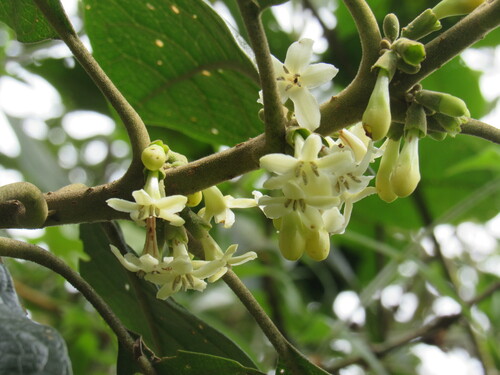
Plectranthus amboinicus
(Lour.) Spreng.
Indian borage
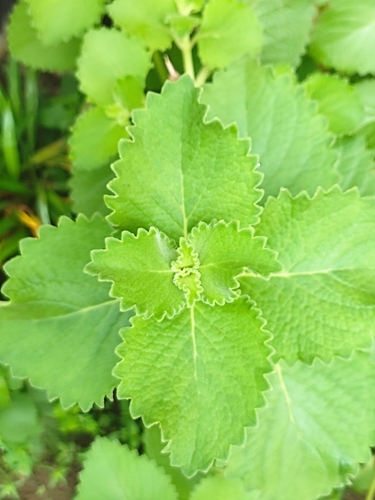
(c) Jelly Lozada, some rights reserved (CC BY-NC)

(c) Vipin Baliga, some rights reserved (CC BY-NC-SA)
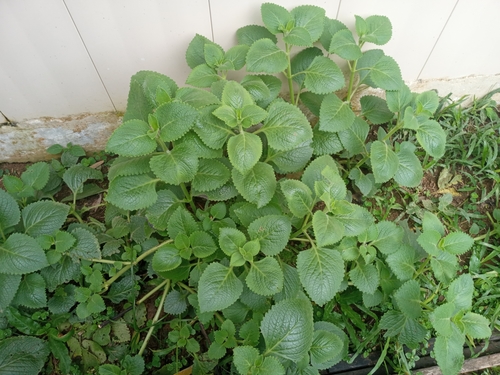
(c) Yerania Quintero, some rights reserved (CC BY-NC)
What to Eat
Edible parts: Leaves, Spice, Herb
The leaves are strongly flavored. The herb is used as a substitute for oregano to mask the strong odors and flavors of fish, mutton, and goat. It may be batter-fried to make pakodas or rasam. In the Caribbean, leaves are commonly used when seasoning meats for its pungent aroma. Fresh leaves are used to scent laundry and hair. It is also grown as an ornamental plant.
Where to Find It
It needs warm subtropical climates. It suits hardiness zone 10. In Fiji it grows from sea level to 250 m altitude. It often grows in rocky and sandy areas.
Africa, Andes, Angola, Asia, Australia, Brazil, Cambodia, Central Africa, Central America, China, Colombia, Costa Rica, Cuba, Dominican Republic, East Africa, Eswatini, Fiji, Guyana, Haiti, Hawaii, India, Indochina, Indonesia, Jamaica, Kenya, Lesser Antilles, Malaysia, Marquesas, Middle East, Mozambique, Nauru, North America, Pacific, Papua New Guinea, PNG, Philippines, Puerto Rico, Saudi Arabia, SE Asia, Solomon Islands, South Africa, Southern Africa, South America, St Lucia, Swaziland, Thailand, Tonga, Tuvalu, USA, Vietnam, Virgin Islands, Wallis & Futuna, West Indies, West Timor, Zimbabwe,
How to Identify
A small hairy rather succulent herb. It keeps growing from year to year. It is erect. It grows up to about 50 cm high. The base of the stem becomes woody when old. The fleshy leaves are in opposite pairs. They are egg shaped with teeth around the edge. The leaves are yellowish green and hairy. The flowers are around a central stalk and are small and pale purple. The leaves have a sweet smell.
Nutrition Score: 10/100
| Part | Moisture | kJ | kcal | Protein | Vit A | Vit C | Iron | Zinc |
|---|---|---|---|---|---|---|---|---|
| Leaves | 95.3 | — | — | 0.6 | — | — | 2.6 | 0.3 |
How to Grow
Plectranthus amboinicus is a plant that ranges from warm temperate areas with dry, mild winters to tropical areas with dry to wet climates. It grows best in areas where annual daytime temperatures are within the range 22 - 28°c, but can tolerate 10 - 36°c. It prefers a mean annual rainfall in the range 2,000 - 2,600mm, but tolerates 700 - 4,000mm. Succeeds in full sun or shade. Prefers a fertile well-drained soil in partial shade. Grows best in a light soil. A rampant-growing, creeping plant, succeeding well in a woodland. Prefers a pH in the range 6 - 6.5, tolerating 5 - 7. The plant is widely cultivated for ornament, food and medicines. It sometimes escapes from cultivation and becomes naturalised on disturbed ground. It can form dense carpets in shaded dry forest and is said to be invasive on some Pacific Islands. There is at least one named variety.
Propagation: Seed - sow in well-drained soil, covering lightly with a thin layer of sand, and place in a warm but shaded spot. The seed germinates in about three weeks. Cuttings - very easy, shoots put in a pot of water will root quickly. Division.
Medicinal Uses
Country borage is a strongly aromatic herb with a sage-like flavour. It is known to reduce inflammation, though little else is known of its effects. The antibacterial and antiseptic properties of the plant have been attributed to the presence of a number of compounds in the plant, including carvacrol, codeine, flavones, phenols, tannins and aromatic acids. The leaves have been found to have bronchodilator activity and anti-Mycobacterium tuberculosis activity. The plant has been shown to have antimicrobial activity, and is reported to have antiviral activity against Herpes simplex virus-1, and anti-HIV inhibition activity. The leaves are said to be antibacterial, antitussive and febrifuge. They are taken internally in the treatment of a range of digestive problems such as dyspepsia, indigestion, diarrhoea and wind. An infusion or syrup made from the aromatic leaves is prescribed to treat coughs. The leaves are also used to treat a wide range of other complaints including epilepsy, convulsions, meningitis, congestive heart failure, fevers, colds, bronchitis, asthma, cholera, menstrual pains, labour pains, delayed labour, post-partum pain and to aid expulsion of the afterbirth. The leaves are frequently utilized in the treatment of urinary diseases in the Amazon and India. This species is also reported to relieve kidney troubles, treat vaginal discharges and is drunk after childbirth. Applied externally, the leaves are used to treat headaches, inflammations, skin allergies, wounds, burns, sores and ulcers. When rubbed on the skin, they will quickly bring relief to bites and stings. The leaves are harvested as required and used fresh. The seed oil is a treatment for acute edematous otitis acuta in Polynesia, whereas in India its leaves are rubbed onto the eyes to alleviate conjunctivitis. The plant has cytotoxic and anti-tumour promoting activity and can be used in the treatment of cancer. The plant is used to treat snakebites. The plant is antiinflammatory. It is used for treating stiff neck and backache.
Other Uses
The spicy fresh leaves are used to scent laundry and the hair. The leaves are rubbed into the hair and body after bathing. Preparations of the leaves can be used for washing clothes and the hair. The leaves are rubbed on the body to act as an insect repellant. An essential oil obtained from the plant is rich in carvacrol. It is used medicinally. The essential oil obtained from the leaves and stems is used as a skin conditioner in commercial cosmetic preparations.
Other Information
It is cultivated.
Notes
There are about 250 Plectranthus species. They are mainly in the tropics.
Names & Synonyms
Acherang, Ai reag supo, Ajerang, Bangun-bangun, Can day la, Can Day, Chi sloek kra, Coleus, Country borage, Cuban oregano, Daun bangun-bangun, Daun kambing, Daun kuching, False oregano, Five seasons herb, Five-in-one, French thyme, Hati-hati, Hom duan huu suea, Hortela-de-galinha, Hung chanh, Husia, Indian borage, Indian mint, Jamaikathymian, Karpuravalli, Mexican mint, Niam huu suea, Oregano, Pashanabhedi, Patherchur, Pathorchur, Pathurchur, Pok-hor, Pudina, Rau cang, Sivumba, Soup mint, Spanish mint, Spanish thyme, Suganda, Tan la day, Thick-leaf-thyme, Thom long, Three-in-one herb, Yin dub bo he
References (46)
- Ambasta, S.P. (Ed.), 2000, The Useful Plants of India. CSIR India. p 136b (As Coleus amboinicus)
- Anderson, E. F., 1993, Plants and people of the Golden Triangle. Dioscorides Press. p 207 (As Coleus amboinicus)
- Arora, R. K., 2014, Diversity in Underutilized Plant Species - An Asia-Pacific Perspective. Bioversity International. p 108
- Bernal, 2016, Catalogo de Plantas y Liquenes de Colombia, Volumen 1 p 1435
- Borrell, O.W., 1989, An Annotated Checklist of the Flora of Kairiru Island, New Guinea. Marcellin College, Victoria Australia. p 87
- Brouk, B., 1975, Plants Consumed by Man. Academic Press, London. p 284
- D'Ambrosio, U., & Puri, R. K., 2016, Foodways in transition: food plants, diet and local perceptions of change in a Costa Rican Ngäbe community. Journal of Ethnobiology and Ethnomedicine (2016) 12:3 p 26
- Facciola, S., 1998, Cornucopia 2: a Source Book of Edible Plants. Kampong Publications, p 133
- Foo, J.T.S.(ed), 1996, A Guide to Common Vegetables. Singapore Science Foundation. p 80
- French, B.R., 2010, Food Plants of Solomon Islands. A Compendium. Food Plants International Inc. p 371
- Gupta, S., et al, 2005, Analysis of nutrient and antinutrient content of underutilized green leafy vegetables. LWT 38:339-345
- Hedrick, U.P., 1919, (Ed.), Sturtevant's edible plants of the world. p 211 (As Coleus aromaticus)
- Hibbert, M., 2002, The Aussie Plant Finder 2002, Florilegium. p 236
- Hutton, W., 1997, Tropical Herbs and Spices of Indonesia. Periplus. p 15
- Hu, Shiu-ying, 2005, Food Plants of China. The Chinese University Press. p 652
- Keng,, , 1978, Labiatae in Flora Malesiana Series 1 Vol 8(2) p 387
- Kermath, B. M., et al, 2014, Food Plants in the Americas: A survey of the domesticated, cultivated and wild plants used for Human food in North, Central and South America and the Caribbean. On line draft. p 671
- Kiple, K.F. & Ornelas, K.C., (eds), 2000, The Cambridge World History of Food. CUP p 1789 (As Coleus amboinicus)
- Lawton, B.P., 2002, Mints. A Family of Herbs and Ornamentals. Timber Press, Portland, Oregon. p 173
- Long, C., 2005, Swaziland's Flora - siSwati names and Uses http://www.sntc.org.sz/flora/
- Lukhoba, C. W., et al, 2006, Plectranthus: A review of ethnobotanical uses. Journal of Ethnopharmacology 103 (2006) 1–24
- Martin, F.W. & Ruberte, R.M., 1979, Edible Leaves of the Tropics. Antillian College Press, Mayaguez, Puerto Rico. p 195 (As Coleus aromaticus)
- Miguel, E., et al, 1989, A checklist of the cultivated plants of Cuba. Kulturpflanze 37. 1989, 211-357
- Norrington, L., & Campbell, C., 2001, Tropical Food Gardens. Bloomings Books. p 80
- Ochse, J.J. et al, 1931, Vegetables of the Dutch East Indies. Asher reprint. p 348 (As Coleus amboinicus)
- Omawale, 1973, Guyana's edible plants. Guyana University, Georgetown p 66
- Ong, H.C. et al, 2012, Traditional knowledge and usage of edible plants among the Temuan villagers, Malaysia. Indian Journal of Traditional Knowledge. 11(1) pp 161-165
- Phon, P., 2000, Plants used in Cambodia. © Pauline Dy Phon, Phnom Penh, Cambodia. p 168 (As Coleus amboinicus)
- Plants of Haiti Smithsonian Institute http://botany.si.edu/antilles/West Indies
- PROSEA handbook Volume 13 Spices. p 279
- Purseglove, J.W., 1968, Tropical Dicotyledons. Longmans. p 634
- Recher, P, 2001, Fruit Spirit Botanical Gardens Plant Index. www.nrg.com.au/~recher/ seedlist.html p 1 (As Coleus amboinicus)
- Samydurai, P., et al, 2012, Wild habits of Kolli Hills being staple food of inhabitant tribes of eastern Ghats, Tamil Nadu, India. Indian Journal of Natural Products and Resources. 3(3) September 2012 pp 432-437 (As Coleus aromaticus)
- Smith, A.C., 1991, Flora Vitiensis Nova, Lawaii, Kuai, Hawaii, Volume 5 p 226
- Srichaiwong, P., et al, 2014, A Study of the Biodiversity of Natural Food Production to Support Community Upstream of Chi Basin, Thailand. Asian Social Science 10 (2):
- Staples, G.W. and Herbst, D.R., 2005, A tropical Garden Flora. Bishop Museum Press, Honolulu, Hawaii. p 360
- Syst. veg. 2:690. 1825
- Tanaka, Y & Van Ke, N., 2007, Edible Wild Plants of Vietnam. Orchid Press. p 85
- Thaman, R. R, 2016, The flora of Tuvalu. Atoll Research Bulletin No. 611. Smithsonian Institute p 95
- Tindall, H.D., 1983, Vegetables in the Tropics, Macmillan p 239
- van Wyk, B., 2005, Food Plants of the World. An illustrated guide. Timber press. p 301
- Wiersema, J. H. & Leon, B., 2013, World Economic Plants. A Standard Reference CRC Press. 2nd Ed. p 540
- Woodward, P., 2000, Asian Herbs and Vegetables. Hyland House. p 114
- World Checklist of Useful Plant Species 2020. Royal Botanic Gardens, Kew
- Yuncker, T.G., 1959, Plants of Tonga, Bernice P. Bishop Museum, Hawaii, Bulletin 220. p 235
- Zeven, A. C. & de West, J. M. J., 1982, Dictionary of cultivated plants and their regions of diversity. Wageningen. p 56 (As Coleus amboinicus)