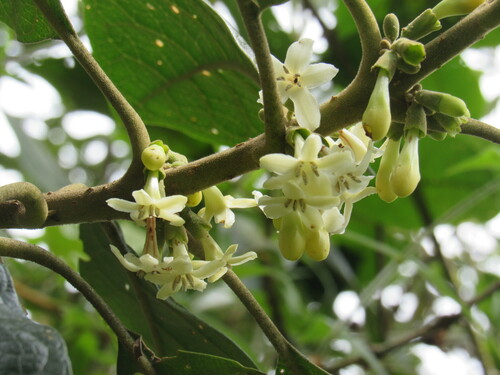
Plectranthus kamerunensis
Gurke

Royal Botanic Gardens, Kew

MBG

Royal Botanic Gardens, Kew
What to Eat
Edible parts: Leaves
The leaves are edible. No further details
Known Hazards
Where to Find It
A tropical plant.
Africa, Central Africa, Congo,
How to Identify
A tropical herbaceous plant in the mint family (Lamiaceae) with edible leaves.
How to Grow
Propagation: Seed - sow in well-drained soil, covering lightly with a thin layer of sand, and place in a warm but shaded spot. The seed germinates in about three weeks. Cuttings of Plectranthus species generally root easily - soft tips root faster than semi-hardwood growth. The cuttings are best taken 60 - 100mm long with three or four nodes, making the cut just below a node. Place them in sand, perlite, vermiculite or peat, or any mixture of these, keep them moist and shaded and they should root in 2 - 3 weeks
Medicinal Uses
The plant is used in the treatment of digestive complaints and skin problems.
Other Uses
A decoction of the leaves is used in bathing newborn babies.
Notes
There are about 250 Plectranthus species. They are mainly in the tropics.
References (2)
- Jardin, C., 1970, List of Foods Used In Africa, FAO Nutrition Information Document Series No 2.p 95
- Martin, F.W. & Ruberte, R.M., 1979, Edible Leaves of the Tropics. Antillian College Press, Mayaguez, Puerto Rico. p 196