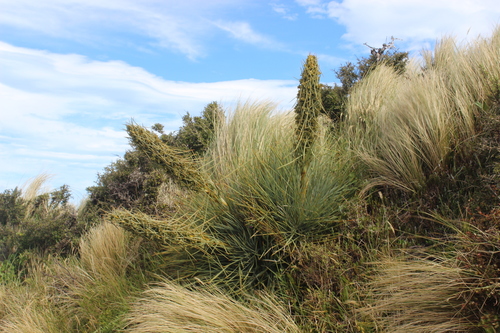
Prangos pabularia
Lindl.
Prangos

(c) vladimir_epiktetov, some rights reserved (CC BY-NC), uploaded by vladimir_epiktetov
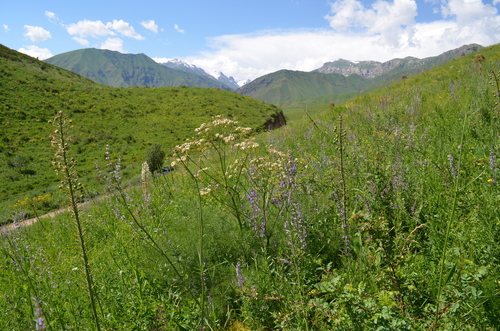
(c) Aleksandr Naumenko, some rights reserved (CC BY-NC), uploaded by Aleksandr Naumenko
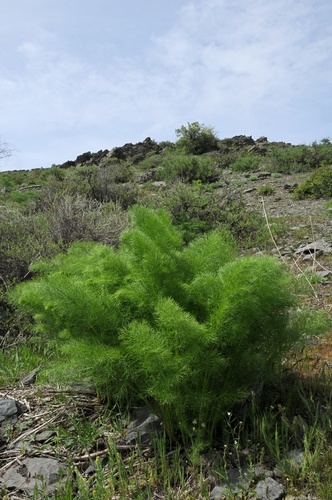
(c) vladimir_epiktetov, some rights reserved (CC BY-NC), uploaded by vladimir_epiktetov
What to Eat
Edible parts: Leaves
The leaves and young shoots are edible, though available sources provide no further details on preparation or use.
Where to Find It
It is a subtropical plant. It grows between 2,100-3,300 m above sea level in the Himalayas. It grows in stony places.
Afghanistan, Asia, Britain, Central Asia, Europe, France, Germany, Himalayas, India, Iran, India, Middle East, Pakistan, Tajikistan, Turkey, Türkiye,
How to Identify
A herb. It grows 1 m tall. It keeps growing from year to year. The leaves have 4-6 leaflets along the stalk. The segments are narrow and 1-3 cm long. The flowers are yellow. The fruit are oblong and 1-2 cm long.
How to Grow
We have very little information on this species and do not know if it will be hardy in Britain, though judging by its native range it should succeed outdoors at least in the milder areas of the country. It is likely to require a well-drained soil and a sunny position.
Propagation: No specific information is available for this species. It is suggested to sow seed in a cold frame as soon as it is ripe, or in spring if ripe seed is unavailable. Once seedlings are large enough to handle, prick them out into individual pots and grow on in a greenhouse through at least their first winter, then plant out in late spring or early summer after the last expected frosts. Division in spring may also be possible.
Medicinal Uses
The fruit is carminative, diuretic, emmenagogue, stimulant, and stomachic, and its use promotes expulsion of the foetus from the womb. The seeds are aphrodisiac and stomachic. The roots are diuretic and emmenagogue, and are used to treat itch.
Other Uses
The fresh plant contains about 2% essential oil, which has medicinal applications.
Wikipedia
A perennial herb growing to 1 meter tall. The hermaphroditic plant is self-fertile and insect-pollinated. It thrives in light sandy to medium loamy soils with good drainage, tolerates mildly acid to mildly alkaline pH, and grows in semi-shade or full sun. The plant prefers moist soil conditions.
Names & Synonyms
Cagsir, Caksir, Carsir, Fetrasalium, Heliz, Hiltik, Hitik, Kerkur, Komal, Kurungas, Prangos
References (7)
- Ambasta, S.P. (Ed.), 2000, The Useful Plants of India. CSIR India. p 488
- Dogan, A., et al, 2014, A review of edible plants on the Turkish Apiaceae species. J. Fac. Pharm. Istanbul, 44(2) pp 251-262
- Dogan, A. & Tuzlaci, E., 2015, Wild Edible Plants of Pertek (Tunceli-Turkey). Marmara Pharmaceutical Journal 19: 126-135
- Ertug, F, Yenen Bitkiler. Resimli Türkiye Florası -I- Flora of Turkey - Ethnobotany supplement
- Hedrick, U.P., 1919, (Ed.), Sturtevant's edible plants of the world. p 515
- Plants for a Future database, The Field, Penpol, Lostwithiel, Cornwall, PL22 0NG, UK. http://www.scs.leeds.ac.uk/pfaf/
- Quart. J. Sci. Lit. Arts 19:7. 1825