Primula elatior
(L.) Hill
Oxlip

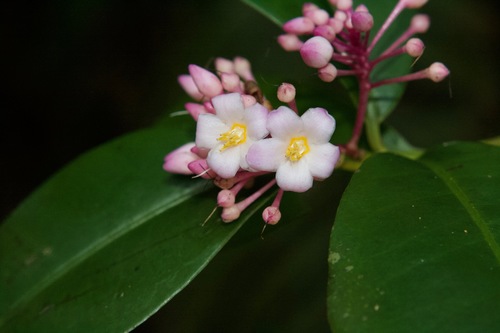
(c) François-Xavier Taxil, some rights reserved (CC BY-NC), uploaded by François-Xavier Taxil

(c) AnneTanne, some rights reserved (CC BY-NC-SA)
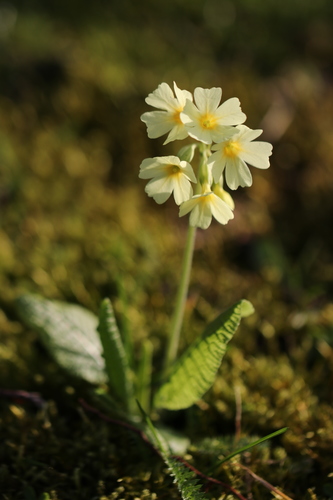
(c) dyrk, some rights reserved (CC BY-NC), uploaded by dyrk
What to Eat
Edible parts: Leaves, Flowers - nectar
Young leaves can be eaten raw or cooked in soups. They have a mild flavour and are a useful addition to the kitchen in late winter.
Where to Find It
It is a temperate plant. It suits hardiness zones 5-9.
Asia, Australia, Britain, Europe, Latvia, Luxembourg, Slovenia, Spain, Switzerland, Ukraine,
How to Identify
A herb which keeps growing from year to year. It forms a clump. The leaves are in a ring at the base. They have long stems and teeth along the edge. The flower stem is wiry. The flowers are pale yellow and in heads.
How to Grow
Propagation: Seed is best sown as soon as ripe in a cold frame. Stored seed can be sown in early spring in a cold frame — germination is inhibited by temperatures above 20°C. Prick out seedlings into individual pots when large enough to handle and plant out in summer. Divide in autumn, ideally every other year.
Medicinal Uses
The root is diuretic and expectorant, used in treating coughs, flu and other febrile conditions, insomnia and migraine. It can be harvested in spring or autumn and dried for later use.
Other Uses
None known.
Wikipedia
Source ↗Primula elatior, the oxlip (or true oxlip), is a species of flowering plant in the family Primulaceae, native to nutrient-poor and calcium-rich damp woods and meadows throughout Europe, with northern borders in Denmark and southern parts of Sweden, eastwards to the Altai Mountains and on the Kola Peninsula in Russia, and westwards in the British Isles.
Other Information
The flower nectar is especially sucked by children.
Notes
There are about 400 Primula species.
Names & Synonyms
Bragas de cuco, Gailpiesi, Visoki jeglič
References (10)
- Cundall, P., (ed.), 2004, Gardening Australia: flora: the gardener's bible. ABC Books. p 1080
- http://www.botanic-gardens-ljubljana.com/en/plants
- Marinelli, J. (Ed), 2004, Plant. DK. p 302
- Pardo-de-Santayana, M., et al, 2005, The gathering and consumption of wild edible plants in the Campoo (Cantabria, Spain). International Journal of Food Sciences and Nutrition. 56(7): 529-542
- Pardo-de-Santayana, M., et al, 2007, Traditional knowledge of wild edible plants used in the northwest of the Iberian Peninsula (Spain and Portugal): a comparative study. Journal of Ethnobiology and Ethnomedicine 2007, 3:27
- Plants for a Future database, The Field, Penpol, Lostwithiel, Cornwall, PL22 0NG, UK. http://www.scs.leeds.ac.uk/pfaf/
- Pruse, B., et al, 2021, Active Wild Food Practices among Culturally Diverse Groups in the 21st Century across Latgale, Latvia. Biology 2021, 10, 551.
- Stryamets, N. et al, 2015, From economic survival to recreation: contemporary uses of wild food and medicine in rural Sweden, Ukraine and NW Russia. Journal of Ethnobiology and Ethnomedicine (2015) 11:53
- Tardio, J., et al, Ethnobotanical review of wild edible plants in Spain. Botanical J. Linnean Soc. 152 (2006), 27-71
- Veg. syst. 8:25. 1765